AIDS stands for acquired immune deficiency syndrome and is the final stage of the infection caused by the virus called HIV or Human Immunodeficiency Virus. The virus causes severe damage to the immune system.
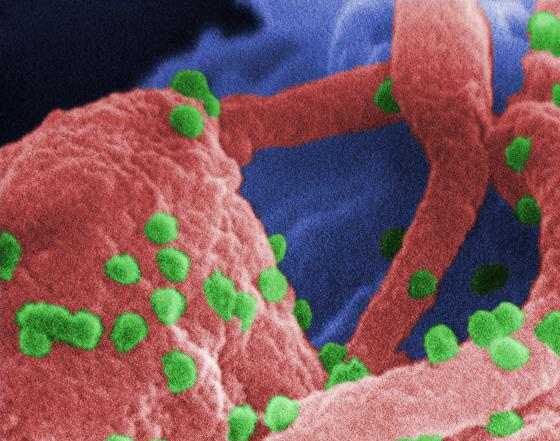
A retrovirus, the Human Immunodeficiency Virus (HIV) was identified in 1983 as the pathogen responsible for the Acquired Immunodeficiency Syndrome (AIDS). AIDS is characterized by changes in the population of T-cell lymphocytes that play a key role in the immune defense system. In the infected individual, the virus causes a depletion of T-cells, called “T-helper cells”, which leaves these patients susceptible to opportunistic infections, and certain malignancies. Credit: CDC/ C. Goldsmith, P. Feorino, E. L. Palmer, W. R. McManus
How many people does HIV/AIDS affect?
AIDS is the sixth leading cause of death among people aged 25 - 44 in the United States. This is an improvement since it was the number one killer in 1995.
At the end of 2010, an estimated 91,500 people in the UK were living with HIV. Of these, around 1 in 4 (22,000 in total) did not know they were infected.
The World Health Organization (WHO) estimates that around 34 million people in the world are living with HIV. The virus is particularly widespread in sub-Saharan African countries, such as South Africa, Zimbabwe and Mozambique.
Cause of AIDS
AIDS is caused by HIV infection. The virus attacks the immune system leaving the individual susceptible to life-threatening infections and cancers. Common bacteria, yeast, parasites, and viruses that usually do not cause serious disease in people with healthy immune systems can turn deadly for AIDS patients.
How is HIV transmitted
HIV is found in all the body fluids including saliva, nervous system tissue and spinal fluid, blood, semen, pre-seminal fluid, which is the liquid that comes out before ejaculation, vaginal secretions, tears and breast milk. Only blood, semen, and breast milk have been shown to transmit infection to others.
The virus is transmitted by sexual contact including unprotected oral, vaginal, and anal sex and via transfusion of contaminated blood that contains HIV.
Another mode of transmission is sharing needles or injections with HIV infected individuals.
A pregnant woman can transmit the virus to her unborn baby through their shared blood circulation, or a nursing mother can transmit it to her baby in her breast milk.
HIV infection does not spread by casual contact, mosquitoes, touching or hugging.
Who is at risk?
Those at highest risk include injection drug users who share needles, babies born to mothers with HIV (especially if the mother had not received anti- HIV therapy during pregnancy), those engaging in unprotected vaginal or anal sex with HIV positive individuals, and those who received blood transfusions or clotting products between 1977 and 1985 (before screening for HIV became standard practice).
Symptoms of HIV/AIDS
HIV infection may cause no symptoms for a decade or longer. At this stage carriers may transmit the infection to others unknowingly. If the infection is not detected and treated, the immune system gradually weakens and AIDS develops.
Acute HIV infection takes a few weeks to months to become a non-symptomatic HIV infection. Then it becomes early symptomatic HIV infection and later it progresses to AIDS.
How is the progress of the disease marked?
With advancing HIV infection the blood shows higher viral load and CD4 T-cell count drops below 200 cells/mm3. CD4 cells are a type of T cell. T cells are cells of the immune system. They are also called "helper cells."
There is a small group of patients who develop AIDS very slowly, or never at all. These patients are called nonprogressors, and many seem to have a genetic difference that prevents the virus from significantly damaging their immune system.
Opportunistic infections
These are infections that normally do not affect an individual with a healthy immune system but AIDS patients are susceptible to these infections. These include viral infections like:
- herpes simplex virus
- herpes zoster infection
- cancers like Kaposi sarcoma, non-Hodgkin’s lymphoma
- fungal infections like candidiasis
- bacterial infections like tuberculosis
Other infections include Bacillary angiomatosis, Candida esophagitis, Pneumocystic jiroveci pneumonia, AIDS dementia, Cryptosporidium diarrhea, cryptococcal meningigits and Toxoplasma encephalitis.
Treatment of AIDS
There is no cure for AIDS once it develops. There are agents available that can help keep symptoms at bay and improve the quality and length of life for those who have already developed symptoms.
Drugs against HIV include antiretroviral therapy. These prevent the replication of the HIV virus in the body. A combination of several antiretroviral drugs, called highly active antiretroviral therapy (HAART), has been very effective in reducing the number of HIV particles in the bloodstream. Preventing the virus from replicating can improve T-cell counts or CD4 cell counts and help the immune system recover from the HIV infection.
Medicines are also prescribed to prevent opportunistic infections if the CD4 counts are low.
Outcome of HIV
AIDS is almost always fatal without treatment. HAART however has dramatically increased the amount of time people with HIV remain alive.
Prevention of HIV
Safe sex measures with use of condoms, shunning use of illicit drugs or shared needles or syringes, avoidance of contact with blood and fluids by wearing protective clothing, masks, and goggles etc. helps prevent transmission.
HIV-positive women who wish to become pregnant may need therapy while they are pregnant to prevent transmission to their babies. The Public Health Service recommends that HIV-infected women in the United States avoid breastfeeding to prevent transmitting HIV to their infants through breast milk.
List of abbreviations
AIDS: Acquired immune deficiency syndrome
HIV: Human immunodeficiency virus
CD4+: CD4+ T helper cells
CCR5: Chemokine (C-C motif) receptor 5
CDC: Centers for Disease Control and Prevention
WHO: World Health Organization
PCP: Pneumocystis pneumonia
TB: Tuberculosis
MTCT: Mother-to-child transmission
HAART: Highly active antiretroviral therapy
STI/STD: Sexually transmitted infection/disease
|
Sources
- https://www.ncbi.nlm.nih.gov/
- http://www.nhs.uk/conditions/HIV/Pages/Introduction.aspx
- http://www.patient.co.uk/doctor/The-Human-Immunodeficiency-Virus-(HIV).htm
- https://www.bbc.com/
- https://cpha.ca
- https://www.trc-chennai.org/
Further Reading
Last Updated: Jul 6, 2023
 Study debunks "No Nut November" claims: Abstinence shows no health benefits or harms