Mar 15 2005
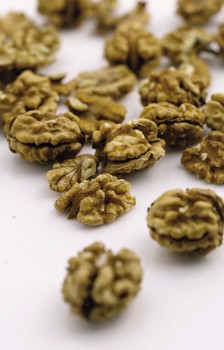 The recently-announced USDA dietary guidelines stress the need for consumers to be more aware of the benefits of polyunsaturated essential omega-3 fatty acids in order to achieve a healthy diet. Many people look to fish, such as salmon, for omega-3s, but plant sources such as walnuts are also specifically noted in the USDA recommendations.
The type of omega-3s found in walnuts, and other plant sources such as flaxseed and dark leafy field greens, are different from the type of omega-3s found in fish. However, according to Penny Kris-Etherton, Ph.D., Distinguished Professor of Nutrition at The Pennsylvania State University, "The omega-3 fatty acids from plants have many similar benefits to those found in fish."
The American Heart Association recommends eating fish at least two times a week. However, according to the National Marine Fisheries Service, most Americans consume only about one serving of fish per week. "Obviously, Americans are not getting enough omega-3s from fish sources alone. Thus, an additional intake of omega-3 fatty acids from plant sources such as walnuts is important for heart health," says Frank Hu, M.D., Ph.D., Associate Professor of Nutrition and Epidemiology, Harvard School of Public Health.
Plant sources provide an omega-3 fatty acid called alpha-linolenic acid (ALA), which the body converts to eicosapentaenoic acid (EPA) and some to docosahexaenoic acid (DHA) -- both found in fish. ALA and linoleic acid (LA) -- an omega-6 fatty acid -- are the only true "essential" fatty acids. "Marine source omega-3s are not essential because the body can create them from the plant source variety," Dr. Kris-Etherton explains.
Some say the conversion need means it takes more plant source omega-3s to be absorbed by and to be equally effective in the body. However, Dr. Kris-Etherton points out that, "Emerging research is showing that the effects of plant sources are similar and independently beneficial in comparison to marine sources. Omega-3 fatty acids have numerous physiologic benefits, including potent cardioprotective effects. These effects have been demonstrated for ALA as well as EPA and DHA."
Dr. Kris-Etherton refers to her recently published clinical study, which shows that the ALA found in walnuts reduces C-reactive protein, a marker of inflammation (Journal of Nutrition, November 2004). Similar findings were observed in a recent epidemiologic study reported by Dr. Hu and colleagues at Harvard. In this study, the intake of ALA was inversely related to C-reactive protein, a finding that was similar to that observed for fish-derived omega-3 fatty acids. Additionally, a recent study conducted by Dr. Sheila G. West and associates at The Pennsylvania State University found that the meals containing plant- and fish-derived omega-3 fatty acids (ALA compared with EPA + DHA) improved blood vessel function similarly.
High in antioxidants and proven heart-healthy in clinical studies, walnuts are also the most versatile and palatable of the plant sources of omega-3s, which show benefits for many health concerns.
http://www.walnuts.org/
 AI-based ECG interpretation outperforms standard diagnosis of occlusive myocardial infarction