Mar 16 2005
Doctors working at the edge of extreme are set to climb the world’s tallest mountain to look death in the face – and take its pulse. The medical research team will make the first ever measurements of blood oxygen in the ‘death zone’, at altitudes above 8,000 metres where the human body has struggled - and frequently failed - to survive.
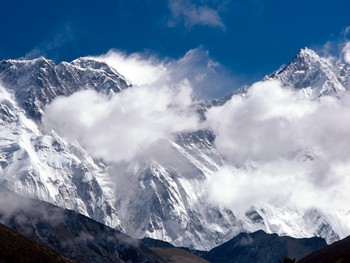
The Centre for Aviation, Space and Extreme Environment Medicine (CASE) team, based at University College London (UCL), will lead the expedition to Mount Everest’s 8,850m peak in 2007. At the summit, clinicians will measure the amount of oxygen in their own blood along with running tests to see how well their brains, lungs and metabolisms are working at extreme altitude. The experiments alone entail a risk of thrombosis and other complications; combined with the harsh mountain conditions, only the toughest are likely to finish the job.
The summiting team, all of whom work with anaesthesia, intensive care or remote medicine, hope to draw parallels between the human body pushed to its limits during critical illness and changes that occur in extreme environments. Low levels of oxygen in the blood of high altitude climbers is similar to levels in critically ill patients on breathing machines with severe heart and lung conditions, “blue babies” and cystic fibrosis sufferers.
The summiteers will also test a prototype closed-circuit breathing system. This type of circuit has only once previously - and unsuccessfully - been used by climbers attempting the summit. The equipment, adapted from firefighters’ apparatus, will be redesigned to cope with icy conditions.
Overall, the Xtreme Everest expedition will consist of research teams exploring the following science themes: Hypoxia (oxygen deficiency); Brain; Breathing Systems and Genetics. High altitude laboratories set up en route, including one on Everest’s South Col (8,000m), will enable collaborating scientists to investigate many aspects of extreme altitude physiology including illnesses such as fluid on the brain and lungs and acute mountain sickness. The genetics project will track and compare the genetic profile of high altitude natives, lowlanders and summiteers to identify genes that aid survival in extreme altitudes.
A separate initiative called Project Everest will recruit over 1000 volunteers to take part in cardiovascular fitness research at UCL in the run up to the expedition. Participants will undergo Cardiopulmonary Exercise Testing (CPEX) which will measure their heart rate and breathing to determine their maximum exercise potential and endurance, which can then be used to tailor fitness training programmes.
CASE director and expedition leader Dr Mike Grocott says: “If you reached the top of Everest without acclimatizing you would be unconscious within two minutes, and death would follow rapidly. Acclimatization has allowed human beings to survive and thrive in the most extreme conditions, but it remains a poorly understood process. Our goal is to study life at the very limit.”
The core climbing group of seven, two of whom have yet to be recruited, include cardiovascular geneticist Dr Hugh Montgomery, GP Dr Sundeep Dhillon, high altitude clinician Dr Mike Grocott, clinician Dr Roger McMorrow and diving expert Dr Denny Levett. Space expert Dr Kevin Fong along with Dr Levett will act as medics for the expedition teams.
Dr Dhillon is the only participant who has experience of climbing above 8,000m. The others will test their aptitude along with the equipment in two dry runs to Cho Oyu (8,201m) scheduled for the autumns of 2005 and 2006.
For the big push, the expedition plans to set off in the spring of 2007 before the monsoon season, with a ‘window in the weather’ of only a few days when conditions are good enough to attempt the summit. Along with the usual climbing dangers of rockfalls and avalanches, the group will be risking medical complications such as high altitude illness, frostbite, hypothermia and brain damage.
Details of the expedition will be discussed at a conference to be held in London on 27th April 2005. The conference, Lessons Learnt from Life at the Limits, will discuss the parallels between extreme environment physiology and critical care along with the history and future of extreme high altitude research.
For more information visit http://www.xtreme-everest.co.uk/Events/main.html
 UK air ambulance critical care expands but unequal access still limits lifesaving treatment