Mar 28 2005
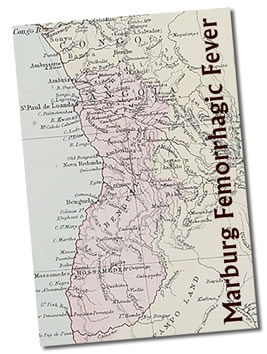 Carlos Alberto, a spokesman for the Angolan health ministry, says the death toll in the Marburg hemorrhagic fever outbreak in Angola has now risen to 122, just one fewer than in the largest previous outbreak of the disease, in the Democratic Republic of the Congo from 1998 to 200 and killed 123 of 149 people infected.
This latest report does not give the total number of cases in the outbreak, which began last October. A Mar 23 report from the World Health Organization (WHO) said 95 of 102 patients had died, for a case-fatality rate of 93% at that point.
75% of those infected in Angola have been children under 5 years old, and most of the cases have occurred in the north-eastern province of Uige. Seven have occurred in the capital, Luanda, on the Atlantic coast, and two of the seven - an Italian doctor and a 15-year-old boy, both of whom had been to Uige - have died.
The Italian doctor identified as Maria Bonino, worked in Africa for the United Nations for 11 years. A Vietnamese doctor has also died in the outbreak, but has not been identified.
The disease has been spreading from children to parents and vice-versa and many victims died because they first consulted traditional healers, called Kimbandeiros, and didn't go to a hospital until it was too late Alberto said.
A travel clinic in Johannesburg, South Africa, is warning travellers to stay away from Angola for at least a week and a clinic spokesman, Andrew Jamieson, said many people were considering evacuating their families from Angola.
The European Union has pledged to give 500,000 euros ($650,000) to the Spanish arm of Médecins Sans Frontières to help battle the outbreak.
There is at present no vaccine or cure for Marburg fever. Besides fever and weakness, early symptoms include severe diarrhoea, abdominal pain, nausea and vomiting, severe chest pain, sore throat, and cough.
The incubation period is 3 to 9 days, and most deaths in the current outbreak have occurred between 3 and 7 days after symptoms appeared. Contact with bodily fluids of infected people increases the risk of infection.
The disease first appeared in 1967 in German and Yugoslavian laboratory workers who had been exposed to green monkeys imported from Uganda. Because outbreaks are rare researchers have not been able to identify its primary animal reservoir.
The WHO says it has sent an outbreak response team to work with the Angolan health ministry to support case management, contact tracing and surveillance, infection control, and raising community awareness of the disease.
 Not all children with autism benefit from early language therapy