Mar 29 2005
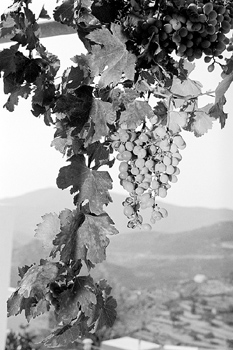 Components in grapes, including some newly identified ones, work together to dramatically inhibit an enzyme crucial to the proliferation of cancer cells, say scientists at the University of Illinois at Urbana-Champaign.
The work - done using advanced molecular tools with grape-cell cultures and the target enzyme for new anti-cancer strategies - helps to identify which flavonoids in grapes and red wine are most responsible for anti-cancer qualities, said Mary Ann Lila, a professor in the department of natural resources and environmental sciences.
Flavonoids are a group of organic compounds that include numerous water-soluble plant pigments responsible for colors. They are more abundant in red than in white grapes.
The Journal of Agricultural and Food Chemistry has posted the Illinois study online ahead of regular publication. The study details a dozen newly discovered constituents in grape-cell culture extracts and how some of them work synergistically against an enzyme known as human DNA topoisomerase II. The enzyme is necessary for the spread of cancer and commonly used in cancer research to screen plant chemicals.
"The findings add to the argument for eating whole foods," said Elvira Gonzalez de Mejia, a professor in the department of food science and human nutrition. "It's very clear that the synergy is critical. When a cell becomes malignant that enzyme is expressed 300 times more than in a normal cell. If we can find a compound or mixture of compounds that can reduce the activity of that enzyme, the cancerous cells will die."
The synergistic activity involves specific phytochemicals from the proanthocyanidin and anthocyanin classes of the varied flavonoid family. They worked more effectively against the enzyme than do the previously identified flavonoids quercetin and resveratrol. Alone, the individual compenents had less effect on the enzyme.
"We definitely had very potent activity against the particular antibody system we were using, which was that of the critical proliferation stage of carcinogenesis," Lila said. "In our subsequent studies now under way in animal models, we are getting direct evidence that these components in grapes work synergistically in fighting cancer. They have to work together to obtain the potency that works."
The researchers are tracking where specially radiolabeled flavonoids congregate in rats, in a project funded by the U.S. Department of Agriculture. "We are finding that these flavonoids are very bioavailable," de Mejia said. "By eating the fruit, we know that the bioactive component involved goes into your bloodstream and relocates to other regions. Before now, we didn't really know that."
Lila, de Mejia and co-author Jeong-Youn Jo, a doctoral student in Lila's lab, produced the grape-cell cultures they tested from red-grape plants specifically bred for their pigmentation and provided by Cornell University researchers.
Using vegetative samples of the plants, rather than the fruit itself, the Illinois team was able to quickly produce the whole range of grape flavonoids in greater quantity. The researchers then extracted individual flavonoids intact. Their analytic work involved the use of reversed phase high-performance liquid chromatography and LC-electrospray ionization (ESI)/mass spectrometry to profile the most bioactive components.
Eventually, Lila said, researchers may be able to determine reasonable dosages for therapeutic consumption of flavonoid-rich grapes. Supplements containing specific flavonoids probably won't result in desired benefits, de Mejia said, because complementary components required for synergistic activity may be missing.
"Some of the compounds we identified have not been reported in cell culture and grapes," de Mejia said. "Some have high inhibitory activity in the promotion and progression stages of cancer and have a high probability to work against the disease."
 New study frames altered protein modifications as cancer drivers