May 2 2005
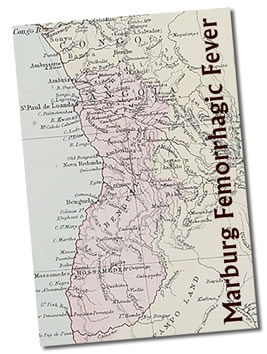 The World Health Organization (WHO) and health authorities in Angola have confirmed 275 cases including 255 deaths, in an outbreak of Marburg virus in north-western Angola since April 27 this year.
Cases have been recorded in the provinces of Uige, Luanda Cabinda, Malange, Kuanza Norte, Kuanza Sul and Zaire. All cases are at present concentrated in the north-western part of the country with 90% of the cases and deaths having been recorded in the province of Uige.
Currently under investigation is a suspected case in the Democratic Republic of Congo and the WHO and other multi-disciplinary international teams are supporting the Ministry of Health, in Angola, in the assessment and management of the outbreaks.
The Marburg virus is an animal-borne disease that affects humans and certain non-human primates, such as the African green monkey, although the source of the virus is unknown. It has an incubation period of up to 7 days and the onset of the disease is sudden, symptoms include high fever, malaise, and muscle pain, and a rash may develop around the trunk roughly five days after symptom onset. Nausea, vomiting, chest pain, sore throat, abdominal pain, and diarrhoea may also occur. Symptoms increase in severity and may progress to include jaundice, inflammation of the pancreas, severe weight loss, delirium, shock, liver failure, massive haemorrhaging, and multi-organ dysfunction.
Marburg virus is acquired by direct contact with blood, body fluids, respiratory secretions and organs of infected human and non-human primates. Casual transmission of this virus from person-to-person has not been reported. Hospital acquired infections have occurred due to contaminated syringes and needles.
There is no vaccine, preventative medication or curative treatment for Marburg virus and treatment aims to maintain kidney function, electrolyte balance and combat haemorrhage and shock.
Marburg virus was first identified in 1967, in laboratory workers in Germany and in Yugoslavia when they developed an acute viral haemorrhagic fever after contact with infected African green monkeys imported from Uganda. The outbreak resulted in 31 cases including seven deaths.
In 1975 the virus surfaced again in a traveller exposed to the virus in Zimbabwe. The traveller transmitted the virus to his travelling companion and also to a nurse who was caring for him during his hospitalization in South Africa. Although the traveller/man died, both the travellers companion and the nurse recovered.
The virus has surfaced in Kenya in 1980 and in 1987 but only very small numbers were affected.
Between 1998 and late 2000, the Democratic Republic of Congo recorded the largest outbreak of Marburg virus on record, when 149 cases were reported with 123 deaths.
 COVID-19 immunity stays specific and barely boosts protection against common cold coronaviruses