May 3 2005
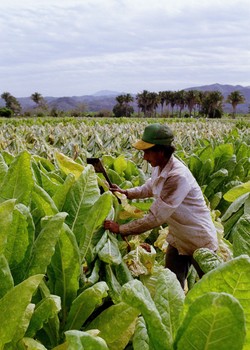 Scientists at Jefferson Medical College are using tobacco plants to produce monoclonal antibodies – tiny guided protein missiles – that can target and hunt down cancer cells. The plants promise to provide a cheaper, faster method of producing anticancer antibodies, raising hopes that the technology can one day be used in humans.
Scientists, led by Hilary Koprowski, M.D., professor of microbiology and immunology and director of the Biotechnology Foundation Laboratories and the Center for Neurovirology at Jefferson Medical College of Thomas Jefferson University in Philadelphia and Kisung Ko, Ph.D., an instructor in the Department of Microbiology and Immunology at Jefferson Medical College, inserted DNA coding for an antibody against colorectal cancer into tobacco plants. The plants, in turn, become factories churning out antibody.
The report appears online this week in the Proceedings of the National Academy of Sciences.
Standard mouse-made monoclonals recognize a particular type of protein antigen on human colorectal cancer cells and have been used in treating metastatic disease and in preventing recurrence in certain high-risk patients. But the technology to produce large amounts of antibody is expensive, and researchers would like to find alternatives.
Dr. Koprowski, Dr. Ko and their co-workers had previously shown that tobacco plant-made monoclonal antibodies could neutralize rabies virus and prevent disease in infected mice. They wanted to find out if plant-made antibodies could be effective for cancer immunotherapy.
They first showed that plant-made monoclonal antibody purified from tobacco leaves could recognize, or bind to, human colorectal cancer cells. Next, they grafted human colorectal cancer cells onto the backs of nude mice – mice stripped of their immune systems, and subsequently injected the animals with the plant-derived antibodies. Then they watched for tumor growth for as many as 40 days.
The researchers found that tumor growth was inhibited in a similar manner to that of mammalian-made monoclonal antibodies, Dr. Ko says.
“These results indicate that plant biotechnology can be a useful alternative to produce monoclonal antibodies,” he says.
“The antibody produced in tobacco is as good as the antibody produced in animal cells,” says Dr. Koprowski, noting that tobacco-derived antibody should be safer and less expensive to produce.
The Jefferson scientists are seeking industry partners to begin mass production of the antibody. The next step in the work, Dr. Koprowski notes, would be to conduct a phase 1 clinical trial of the monoclonal antibody in colorectal cancer patients. In the meantime, they are studying the effectiveness of monoclonal antibodies against other types of cancer, including breast tumor and lung tumor cells, in laboratory animals.
 Researchers identify key factor to help improve treatment for glioblastoma