Aug 2 2005
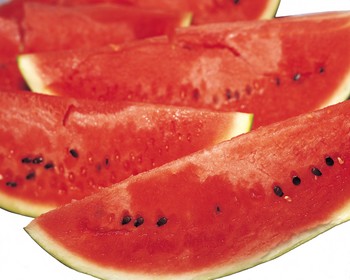
On a hot summer day, nothing refreshes quite like a crisp, juicy slice of cool watermelon. Whether you're chomping into watermelon, enjoying it as part of a fruit salad or slurping on a watermelon smoothie, that red pulp provides a powerhouse of nutritional value.
Good source of vitamin A: Vitamin A helps your eyes see normally in the dark, promotes the growth and health of cells and protects against infection by helping to maintain healthy skin and tissues. Vitamin A also is involved in hearing, taste, growth, and the normal development of fetuses. A 2-cup serving of watermelon provides 20 percent of the recommended daily intake for vitamin A.
Good source of vitamin C: Probably vitamin C's most well known role is as an antioxidant protecting body cells from damage by free radicals. Studies have shown that cell damage by free radicals may lead to chronic health problems, including cancer and heart disease. Vitamin C also boosts the body's ability to fight infection and helps keep capillaries and gums healthy. A 2-cup serving of watermelon supplies one-fourth of the recommended daily intake of vitamin C.
Contains lycopene: Watermelon contains 15-20 milligrams of the plant pigment lycopene per 2-cup serving. Lycopene is thought to have powerful antioxidant capabilities that may help reduce the risk of cancer and other diseases. Found only in a few red plant foods like tomatoes and watermelon, lycopene, like vitamin C, neutralizes cell-damaging free radicals.
Provides potassium: Watermelon, like most fruits and vegetables, is a good source of potassium. Foods high in potassium seem to help protect against high blood pressure. Potassium also helps regulate fluids and mineral balance in and out of body cells, aids in muscle contraction and helps transmit nerve impulses.
Fat and cholesterol-free: Among its other health benefits, watermelon is naturally low in fat and is cholesterol-free. Research suggests that diets moderate in fat and cholesterol promote health and may aid in the prevention of certain chronic diseases.
Low in calories, yet filling: A 2-cup serving of watermelon has only 100 calories. However, as a result of its high water content, watermelon is quite filling. Because of these qualities, Weight Watchers named watermelon its Pick of the Season Product Item this spring.
Selection tips. How do you know you're getting a good watermelon? The National Watermelon Promotion Board offers these tips: 1) Look it over - choose a melon that's symmetrical and free of bruises, cuts and dents; 2) Lift it up - it should be heavy for its size; 3) Turn it over - it should have a creamy yellow spot on the underside where it sat on the ground and ripened in the sun.
Safety reminder. As a fresh agricultural product, it's important to wash the outside of a watermelon with tap water before you cut it open. This will help prevent the spread of bacteria from the outside surface to the interior of the melon.
by Pat Kendall, Ph.D., R.D., Food Science and Human Nutrition Specialist, Colorado State University, Cooperative Extension.
 Unusual i-DNA structure shown to regulate genes and cancer