Apr 6 2006
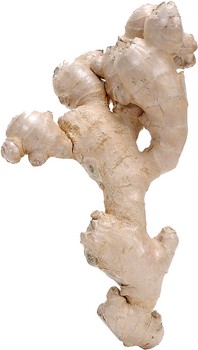 Ginger is known to ease nausea and control inflammation. But researchers at the University of Michigan Comprehensive Cancer Center are investigating a new use for this age-old remedy: treating ovarian cancer.
In laboratory studies, researchers found ginger caused ovarian cancer cells to die. Further, the way in which the cells died suggests ginger may avoid the problem common in ovarian cancer of cells becoming resistant to standard treatments.
The researchers are presenting their results in a poster session at the American Association for Cancer Research annual meeting.
Researchers used ginger powder, similar to what is sold at grocery stores, only a standardized research grade. The ginger powder was dissolved in solution and applied to ovarian cancer cell cultures. Ginger induced cell death in all the ovarian cancer cell lines tested.
Moreover, the researchers found that ginger caused two types of cell death. One type, known as apoptosis, results from cancer cells essentially committing suicide. The other type of cell death, called autophagy, results from cells digesting or attacking themselves.
"Most ovarian cancer patients develop recurrent disease that eventually becomes resistant to standard chemotherapy - which is associated with resistance to apoptosis. If ginger can cause autophagic cell death in addition to apoptosis, it may circumvent resistance to conventional chemotherapy," says study author J. Rebecca Liu, M.D., assistant professor of obstetrics and gynecology at the U-M Medical School and a member of the U-M Comprehensive Cancer Center.
Study results are very preliminary, and researchers plan to test whether they can obtain similar results in animal studies. The appeal of ginger as a potential treatment for ovarian cancer is that it would have virtually no side effects and would be easy to administer as a capsule.
Ginger is effective at controlling inflammation, and inflammation contributes to the development of ovarian cancer cells. By halting the inflammatory reaction, the researchers suspect, ginger also stops cancer cells from growing.
"In multiple ovarian cancer cell lines, we found that ginger induced cell death at a similar or better rate than the platinum-based chemotherapy drugs typically used to treat ovarian cancer," says Jennifer Rhode, M.D., a gynecologic oncology fellow at the U-M Medical School.
Liu's lab is also looking at the effects on ovarian cancer of resveratrol, a substance found in red wine, and curcumin, the active ingredient in the curry spice turmeric. In addition, researchers at the U-M Comprehensive Cancer Center are investigating ginger to control nausea from chemotherapy and ginger to prevent colon cancer.
"Patients are using natural products either in place of or in conjunction with chemotherapy, and we don't know if they work or how they work. We don't know how these products interact with chemotherapy or other cancer treatments. There's no good clinical data," Liu says.
http://www.med.umich.edu/
 Reprogrammed neutrophils promote tumor growth