May 20 2009
Bacteria are experts at adaptation: as soon as they have infected an organism, they adapt their metabolism to that of their host and produce substances which protect them from the body's immune defences. How they do this is still unknown in the case of many types of bacteria.
Researchers in the "Molecular Infection Biology group" at the Helmholtz Centre for Infection Research (HZI) in Braunschweig and the Braunschweig Technical University could now demonstrate for the first time that bacteria of the Yersinia genus possess a unique protein thermometer - the protein RovA - which assists them in the infection process. RovA is a multi-functional sensor: it measures both the temperature of its host as well as the host's metabolic activity and nutrients. If these are suitable for the survival of the bacteria, the RovA protein activates genes for the infection process to begin. These results have now been published in the current online edition of the 'PLoS Pathogens' science magazine.
Yersinia can trigger various different diseases: best well-known is the Yersinia pestis type which caused the Plague in medieval times. This led to the death of around a third of Europe's population. The Yersinia enterocolitica and Yersinia pseudotuberculosis species cause an inflammation of the intestines following food poisoning: the bacteria infect the cells of the intestines, leading to heavy bouts of diarrhoea. The Yersinia bacteria contain invasin as a surface protein to help them penetrate the intestinal cells. The immune cells quickly identify this so-called virulence factor as a danger and launch an immune response. To avoid this, the bacteria quickly lose the invasin soon after entering the body. The germs then adapt their metabolism and feed on the nutrients prepared by the host cells. They also produce substances which kill off the body's defence cells, such as phagocytes. Little was known about how Yersinia is able to regulate these individual stages of infection until now.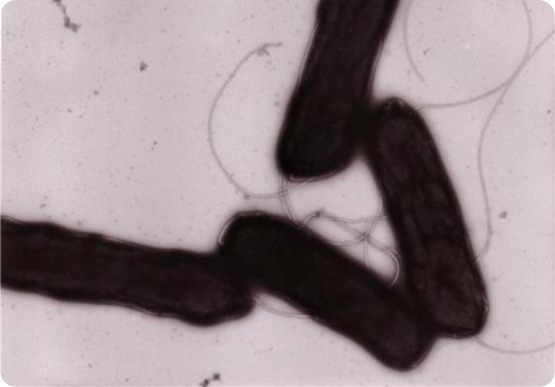
Researchers at the HZI, led by Petra Dersch, have now identified how these mechanisms work. The RovA protein plays a key role. The protein reads the temperature for the bacteria. Depending on the environment of the bacteria, this protein either contains the factors required for the infection to begin or else adapts to life within the host. "The functioning of RovA in this way is unique among bacteria," says Petra Dersch.
If inhabiting an environment of around 25°C, the protein RovA ensures that the Yersinia bacteria form invasin as a surface protein. This ensures that the Yersinia can penetrate the intestinal cells immediately upon reaching the 37°C intestine via food. In this warm environment, the RovA alters its form and de-activates the gene for invasin production. Without invasin on their surface, the Yersinia bacteria are invisible to the body's immune system. In its new form, the RovA can now activate other genes in the bacteria to adapt the Yersinia metabolism to that of the host.
Until now, little was known about RovA and the fact that it reacts to temperature. Researchers were presented with a puzzle: "We have long been searching for the mechanisms which regulate RovA activity," says Petra Dersch. "It was therefore all the more surprising to discover that RovA controls various processes by acting as a thermometer and as such is self-regulating". At the end of the process, the RovA is responsible for its own decomposition. If the initial stages of infection prove successful, the Yersinia bacteria no longer need the RovA: in its modified form at 37°C, enzymes in the bacteria can attack and break down the RovA.
 Liver-derived protein supports bone health in males