The needle-free nanopatch vaccine delivery system is coming soon after a consortium of investors put up $15 million for its development. The money will enable University of Queensland's Professor Mark Kendall to continue his work on the technology. It is described as the biggest breakthrough in vaccine delivery since the invention of the syringe more than 150 years ago.
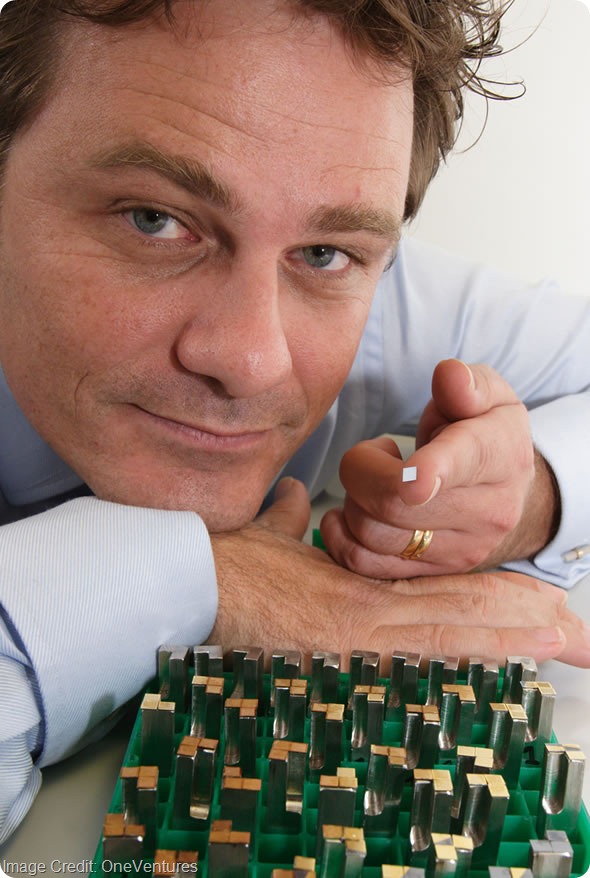 The nanopatch has thousands of small projections to deliver vaccines to abundant immune cells in the skin, doing away with needles plunged into muscle where there are few immune cells. Early stage testing in animals has shown a nanopatch-delivered flu vaccine is effective with only 1/150th of the dose compared to a syringe. The nanopatch is also expected to cut needle stick injuries and cross contamination. This would avoid needle borne diseases like HIV and hepatitis. And it does not need refrigeration like traditional vaccines.
Prof Kendall of the Australian Institute for Bioengineering and Nanotechnology, said that's one of the most exciting things about the new technology because it will dramatically cut costs and make transportation easier. He said, “In Africa about half of vaccines aren't working properly because of a breakdown in the cold chain…The nanopatch also offers a way to stop needle-stick injuries during vaccination.” He explained that the idea came to him about eight years ago when he was bored at a conference and “started doodling”.
Money from the Federal Government's innovation investment fund has helped establish the new company Vaxxas, which will commercialise the nanopatch. The investment is led by OneVentures, with co-investors Brandon Capital, the Medical Research Commercialisation Fund (MRCF) and US-based HealthCare Ventures.
OneVentures General Partner Dr Paul Kelly said the significance of the million investment was not just in its size. “This investment syndicate includes both local and international investors, which is a real vote of confidence in the Nanopatch approach and an appreciation of the potential of the technology to revolutionize vaccine delivery worldwide,” Dr Kelly said. Dr Kelly will join the Board of Directors of Vaxxas, along with Brandon Capital Partners Managing Director Dr Stephen Thompson; HealthCare Ventures Managing Director Douglas E. Onsi; and UniQuest General Manager of Life Sciences Dr Dean Moss.
Dr Thompson said launching Vaxxas as a company was a critical next step for the Nanopatch technology. “In Australia, we invest heavily in our excellent research and development capability but have a relatively poor record of taking those technologies to world markets,” he said. “The syndicate's investment in Vaxxas is consistent with its willingness to work with Australia's leading research institutes, including the AIBN, to transform this exciting research effort into a commercially useful product. We need to convert the promise of the technology into a reality.”
Mr Onsi said the Nanopatch had the potential to transform vaccine delivery for the pharmaceutical industry and for patients around the world. “HealthCare Ventures searches globally for the most promising innovations in life sciences and we are very pleased to make our first Australian investment in Vaxxas,” he said.
 Congo faces unprecedented Ebola outbreak without approved vaccine protection