There have been clinical studies evaluating if acupuncture actually works. There is research on mechanisms involved and how the therapy works and also provides important information on efficacy.
The World Health Organization report
According to the World Health Organization report on the efficacy of acupuncture, studies have shown that acupuncture is effective in inducing analgesia, protecting the body against infections and regulating various physiological functions.
It is found that although acupuncture is most often used as a measure to allay symptoms such as pain, it can alter the pathogenesis of the disease to provide relief from the disease as well.
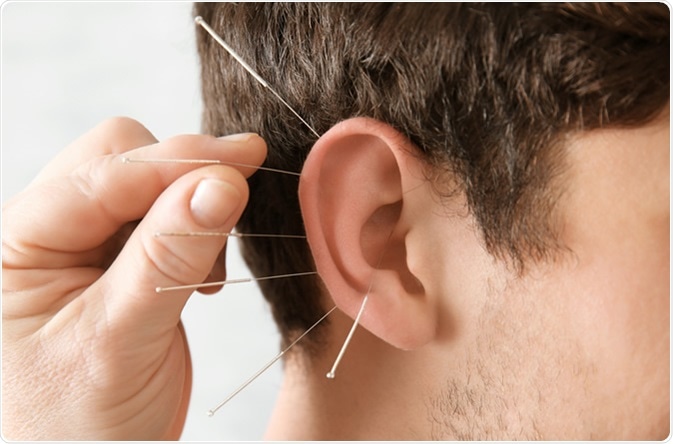
Acupuncture in man's ear, closeup. - Image Image Credit: Africa Studio / Shutterstock
Difficulties in understanding how acupuncture works
What is difficult is the fact that acupuncture can act in both ways. For example it lowers the blood pressure in patients with hypertension and elevates it in patients with hypotension or low blood pressure. Therefore, acupuncture itself seldom makes the condition worse.
The danger lies in inappropriate application of the therapy. Acupuncture has limitations. Even under conditions where acupuncture is indicated, it may not work especially if the individual is not suitably mobilized to his or her full potential.
Examples of acupuncture efficacy
Some examples of efficacy of the condition include:
Pain relief
The effectiveness of acupuncture analgesia has already been established in clinical studies. When compared to dummy treatments of placebo, acupuncture is effective in treatment of chronic pain. In chronic pain it may be comparable to morphine as well.
Because of the side-effects of long-term drug therapy for pain and the risks of dependence, acupuncture is emerging as the analgesia or pain reliever of choice in long term joint or arthritis pain as well. This includes cervical spondylitis or neck pain, periarthritis of the shoulder, fibromyalgia, fasciitis, epicondylitis (tennis elbow), low back pain, sciatica, osteoarthritis with knee pain etc.
Acupuncture is beneficial in the treatment of rheumatoid arthritis as well. Compared to standard treatment with drugs like allopurinol, acupuncture has been shown to be effective in gout as well. Plum-blossom needling together with cupping (depressurized cup application on skin) has been recommended for treating gouty arthritis.
The use of acupuncture for treating chronic pain of the head and face has been studied. Acupuncture has been shown to work in tension headache, migraine and other kinds of headache. Chronic facial pain, including craniomandibular disorders of muscular origin may also be treated with acupuncture.
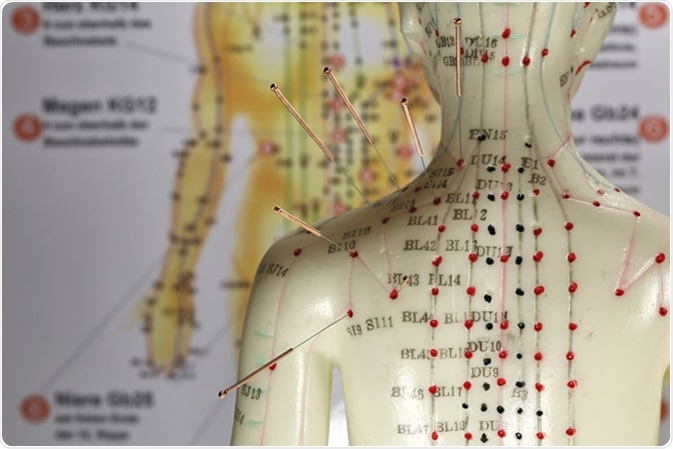
Female acupuncture model with needles in the shoulder - Image Credit: Bjoern Wylezich / Shutterstock
Biliary and renal colic
Acupuncture is suitable for treating acute pain abdomen. Biliary and renal colic are two conditions for which acupuncture can be used not only as pain reliever but also as an antispasmodic. This prevents the spasms and pain associated with it.
Pain after injury or trauma or surgery
For injuries such as sprains acupuncture is not only useful for relieving pain but also additionally does not pose the risk of drug dependence and hastens recovery.
Acupuncture analgesia to relieve postoperative pain is well studied and proven in studies. Acupuncture has been widely used in dentistry. Acupuncture helps relieve postoperative pain from various dental procedures, including tooth extraction, pulp devitalization and periodontitis.
Childbirth
In childbirth, acupuncture analgesia may ease labour pain and also reduce the duration of labour. In the case of weakened uterine contractions it can stimulate the uterine muscles as well. Episiotomy and subsequent suturing of the perineum can be undertaken under acupuncture pain relief.
Infections
Acupuncture has been reported to be effective for treating acute bacillary dysentery. However, according to the WHO the use of acupuncture as first line against this disease is not practicable. The effect of acupuncture on the immune system has been tested in hepatitis B virus carriers. Acupuncture may be useful in treating whooping cough, by relieving cough as well as promoting a cure.
Nerve disorders
Strokes are an indication for acupuncture use.
Respiratory disorders
Acupuncture has been used successfully in respiratory disorders such as allergic rhinitis. The acute symptoms of tonsillitis can also e relieved with acupuncture.
Digestive disorders
Acupuncture provides relief in upper abdominal or epigastric pain. For gastrointestinal spasm, acupuncture is indicated. Morning sickness, postoperative vomiting, and nausea and vomiting related to chemotherapy may be treated with acupuncture. Irritable colon syndrome and chronic ulcerative colitis can be treated with acupuncture as a complementary or alternative therapeutic measure.
Blood disorders
Leukopenia or low white blood cell count is the most suitable for acupuncture.
Urological problems
Acupuncture works in urinary retention and other urological problems as well. Acupuncture is not only useful for relieving renal colic but also for expulsion of renal or kidney stones. Sexual disorders are often treated with acupuncture but there is lacking evidence of efficacy.
Gynaecological and obstetric diseases and conditions
Acupuncture is useful in dysmenorrhoea. Acupuncture relieves pain and also regulates the motility of the uterus to facilitate menstrual bleeding and easing pain. Premenstrual syndrome may also be treated with acupuncture.
Heart disease
Acupuncture is suitable for treating low blood pressure. For mild and moderate essential hypertension or high blood pressure, acupuncture is effective. In coronary heart disease, acupuncture has been shown by various authors to be effective in relieving angina pectoris.
Psychiatric disorders
Acupuncture is being increasingly used in psychiatric disorders. It helps in depression (including depressive neurosis), schizophrenia, alcohol dependence and drug dependence. Many substance-abuse programmes use acupuncture as an adjunct to conventional treatment.
Skin diseases
There are few controlled studies related to acupuncture efficacy in skin diseases. Some evidence favouring acupuncture treatment of herpes zoster has been reported. Acupuncture also has an anti-itching effect. Acupuncture with dermal needles (seven-star or plum-blossom needles) can be used in neurodermatitis.
Other conditions
Other conditions that may be treated with acupuncture according to scientific evidence include non-insulin-dependent diabetes, high blood cholesterol, obesity, Sjögren syndrome (sicca syndrome), Raynaud syndrome, Stein–Leventhal syndrome (polycystic ovary syndrome), Tietze syndrome (costochondritis) etc. There are single or a couple of studies only that prove efficacy of acupuncture in these conditions.
Data on Acupuncture's Efficacy and Effectiveness
Further Reading
Last Updated: Jun 20, 2023
 Acupuncture regulates immune function through specific neural circuit activation