Generally according to the World Health Organization statement, acupuncture treatment is safe if it is performed by a licensed and well trained practitioner.
Unlike several drug therapies, it is relatively non-toxic with minimal side effects. The WHO states that this may be the reason why acupuncture is so popular for chronic and acute pain states in many countries.
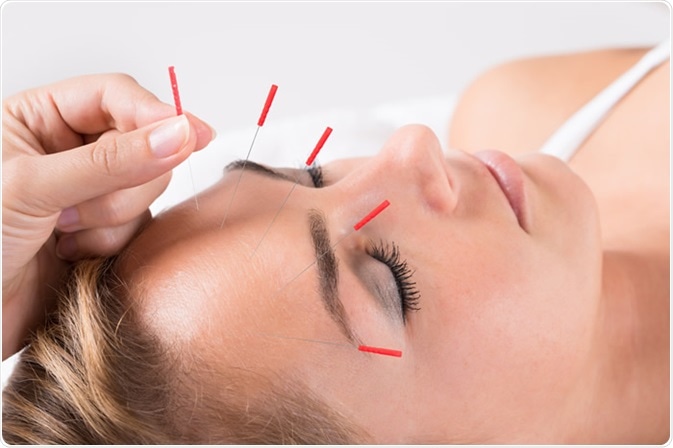
Closeup of hand performing acupuncture therapy on head at salon - Image Credit: Andrey_Popov / Shutterstock
Side effects
Due to its comparable efficacy with major groups of pain relievers like NSAIDs (Non steroidal anti-inflammatory drugs) and opioids (e.g. morphine) without significant side effects like dependency and its wide range of applicability that makes acupuncture lucrative.
It is believed that despite lower efficacy compared to conventional treatments for many disorders, the potential for low toxicity makes it popular.
Safety concerns
The acupuncture needles penetrate the skin and are therefore it is an invasive procedure. Consequently there is a risk of complications, especially if not performed by a well trained licensed practitioner.
There have been a reported 671 minor adverse events per 10,000 treatments, and no major ones with acupuncture.
Some risks of acupuncture use include:
- Risk of injury - injuries to vital nerves and structures are rare among patients treated by trained practitioners.
- With an invasive procedure there is a risk of injury and bleeding. This is rare with trained practitioners. To overcome the risk of invasive procedures the Japanese styles of acupuncture use non-inserted needling which involves the needle being brought to the skin and the skin being tapped or stroked along the meridians. Notable examples of these styles are Tōyōhari and the pediatric acupuncture style Shōnishin.
- The laws require that the needles used for acupuncture be sterile, disposable and used only once. There is a risk of passage of infections that can be carried on needles if reused. This includes Hepatitis B and C and HIV infections.
- Other risks include minor adverse events including bleeding, bruising, dizziness, fainting. There may be nausea, paresthesia or altered sensation over the site of application, increased pain etc.
- There is a risk of injury to the unborn fetus and termination of pregnancy with the use of certain acupuncture points during pregnancy. This is a rare adverse event in the hands of a licensed practitioner.
- Another major risk is due to omission of allopathic and traditional care. This may lead to inadequate diagnosis or treatment of conditions. Many acupuncturists and doctors thus prefer to consider acupuncture a complementary therapy rather than an alternative therapy.
Acupuncture: Is It Safe?
Further Reading
Last Updated: Jul 1, 2023
 Insurance-supported integrative oncology symptom management program benefits cancer patients