Ribavirin is a broad-spectrum antiviral nucleoside that is currently used in combination with interferon-alpha (IFN-α) to treat hepatitis C virus infection. Ribavirin is also employed as a monotherapy to treat severe cases of respiratory syncytial virus infection and Lassa fever virus infection.
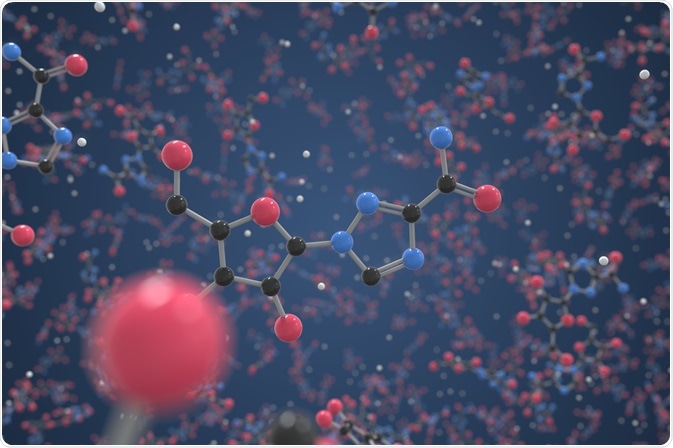
Image Credit: Irina Anasova / Shutterstock.com
The mechanism of action of ribavirin has been studied for decades. Shortly after its discovery in 1972, it was suggested that the antiviral activity of ribavirin is achieved through inhibition of the cellular protein inosine monophosphate dehydrogenase (IMPDH).
Further studies have suggested that the antiviral activity of ribavirin may be related to its ability to inhibit the capping of viral transcripts, inhibit viral polymerase, or suppress cellular and humoral immune responses. In recent years, it has been considered that ribavirin’s primary antiviral mechanism is lethal mutagenesis of the viral RNA genomes.
Polymerase inhibition
As ribavirin is a nucleoside analog of guanosine, the simplest mechanism would be to act as an inhibitor of the viral polymerase. Indeed, the direct inhibition of viral polymerases has been shown in vesicular stomatitis virus, La Crosse encephalitis virus, reovirus, influenza virus, and hepatitis C virus.
Since viral polymerases use intracellular nucleotides to replicate their genome, ribavirin triphosphate is potentially recognized by the viral polymerase. Subsequent elongation is then inhibited due to chain termination or prevention of the binding of other endogenous nucleotides essential for the completion of genome replication.
Arguments against this mechanism of action include weak inhibition of the hepatitis C virus polymerase and sustained antiviral activity against most strains with mutations in the polymerase region. That is the reason why co-administration of IFN-α is obligatory in the treatment of hepatitis C.
Lethal mutagenesis
An additional strategy of ribavirin is lethal mutagenesis, also termed “error catastrophe,” in the recognition of its conceptual origins. This mechanism consists of achieving large reductions of viral load and, in ideal cases, virus extinction by increasing the mutation rate of the virus over the critical error rate.
This proposed mechanism of action would not select for a particularly resistant strain, as mutations would occur randomly throughout the genome. Evidence for this mechanism is controversial, as certain laboratories have published conflicting studies on the number of mutations generated during exposure to ribavirin.
Still, this mechanism is consistent with the fact that various RNA viruses exist as highly heterogeneous “quasispecies” due to high mutation frequency. This is often considered an evolutionary advantage, but results in a viral population that is close to the edge of "error catastrophe." More specificaly, a small increase in the error rate would lead to a drastic loss of genome viability and infectivity.
Other mechanisms
As previously mentioned, ribavirin can specifically bind to the substrate-binding site of the IMPDH enzyme, limiting access of the enzyme to its endogenous substrate inosine-5-monophosphate. This ultimately leads to decreased levels of intracellular guanosine triphosphate (GTP) pools required for viral replication.
More recently, different research groups have suggested that ribavirin may serve an immunomodulatory role, particularly on adaptive immune responses. To this end, these groups have found that ribavirin can act as an inducer of the helper-T-cell type 1 (Th1) cytokine response, as well as a suppressor of the type 2 (Th2) cytokine phenotype.
Ribavirin is also thought to have certain antitumor activity through its inhibition of eIF4E, which is the rate-limiting component of the translation initiation complex. That has been associated with decreased protein levels of several eIF4E targets, such as cyclin D1 and NBS1. Consequently, some researchers are evaluating the efficacy of ribavirin in the setting of advanced breast cancer.
References
- http://www.cancerci.com/content/14/1/63
- https://www.lji.org/
- http://www.ncbi.nlm.nih.gov/pmc/articles/PMC3682505/
- http://www.sciencedirect.com/science/article/pii/S0042682203001521
- http://www.researchgate.net/profile/Johan_Neyts/publication/221969747_Ribavirin_for_the_treatment_of_chronic_hepatitis_C_virus_infection_a_review_of_the_proposed_mechanisms_of_action/links/54461cee0cf22b3c14de06c2.pdf
Further Reading
Last Updated: Mar 11, 2023