Lipids are molecules that contain hydrocarbons and make up the building blocks of the structure and function of living cells. Examples of lipids include fats, oils, waxes, certain vitamins (such as A, D, E and K), hormones and most of the cell membrane that is not made up of protein.
Lipids are not soluble in water as they are non-polar, but are thus soluble in non-polar solvents such as chloroform.
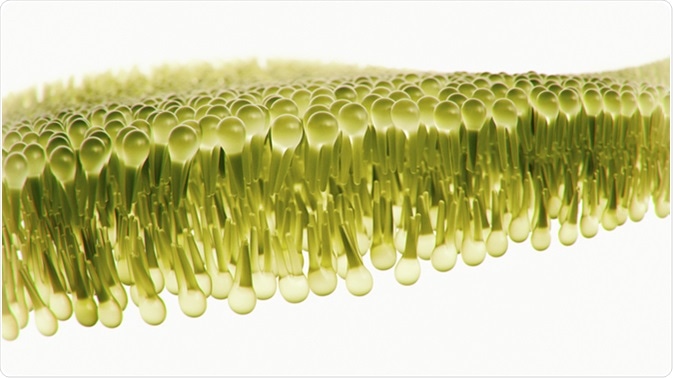
Human lipid bilayer - 3D Rendering. Image Credit: Crevis / Shutterstock
What do Lipids Consist of?
Lipids are mainly composed of hydrocarbons in their most reduced form, making them an excellent form of energy storage, as when metabolized the hydrocarbons oxidize to release large amounts of energy. The type of lipid found in fat cells for this purpose is a triglyceride, an ester created from glycerol and three fatty acids.
Where do Lipids Come From?
Excess carbohydrates in the diet are converted into triglycerides, which involves the synthesis of fatty acids from acetyl-CoA in a process known as lipogenesis, and takes place in the endoplasmic reticulum. In animals and fungi, a single multi-functional protein handles most of these processes, while bacteria utilize multiple separate enzymes. Some types of unsaturated fatty acids cannot be synthesized in mammalian cells, and so must be consumed as part of the diet, such as omega-3.
Acetyl-CoA is also involved in the mevalonate pathway, responsible for producing a wide range of isoprenoids, which include important lipids such as cholesterol and steroid hormones.
Hydrolysable and Non-hydrolysable Lipids
Lipids that contain an ester functional group are hydrolysable in water. These include neutral fats, waxes, phospholipids, and glycolipids. Fats and oils are composed of triglycerides, made up of glycerol (1,2,3-trihydroxypropane) and 3 fatty acids to form a triester. Triglycerides are found in the blood, and stored in fat cells. Complete hydrolysis of triacylglycerols yields three fatty acids and a glycerol molecule.
Non-hydrolyzable lipids lack such functional groups and include steroids and fat-soluble vitamins (A, D, E, and K).
Fatty Acids
Fatty acids are long chain carboxylic acids (typically 16 or more carbon atoms) which may or may not contain carbon-carbon double bonds. The number of carbon atoms are almost always an even number and are usually unbranched. Oleic acid is the most abundant fatty acid in nature.
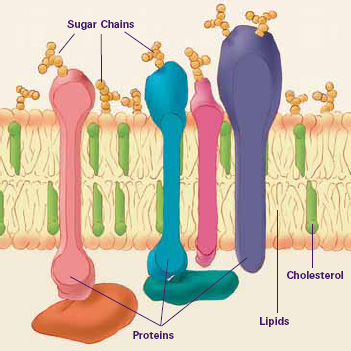
The membrane that surrounds a cell is made up of proteins and lipids. Depending on the membrane’s location and role in the body, lipids can make up anywhere from 20 to 80 percent of the membrane, with the remainder being proteins. Cholesterol, which is not found in plant cells, is a type of lipid that helps stiffen the membrane. Image Credit: National Institute of General Medical Sciences
Waxes/Fats and Oils
These are esters with long-chain carboxylic acids and long-alcohols. Fat is the name given to a class of triglycerides that appear as solid or semisolid at room temperature, fats are mainly present in animals. Oils are triglycerides that appear as a liquid at room temperature, oils are mainly present in plants and sometimes in fish.
Mono/Poly Unsaturated and Saturated
Those fatty acids with no carbon-carbon double bonds are called saturated. Those that have two or more double bonds are called polyunsaturated. Oleic acid is monounsaturated, as it possesses a single double bond.
Saturated fats are typically solids and are derived from animals, while unsaturated fats are liquids and usually extracted from plants.
Unsaturated fats assume a particular geometry that prevents the molecules from packing as efficiently as they do in saturated molecules, leading to their propensity to exist as a liquid rather than a solid. Thus, the boiling point of unsaturated fats is lower than that of saturated fats.
Synthesis and Function of Lipids in the Body
Lipids are utilized directly, or otherwise synthesized, from fats present in the diet. There are numerous biosynthetic pathways to both break down and synthesize lipids in the body.
The main biological functions of lipids include storing energy, as lipids may be broken down to yield large amounts of energy. Lipids also form the structural components of cell membranes, and form various messengers and signaling molecules within the body.
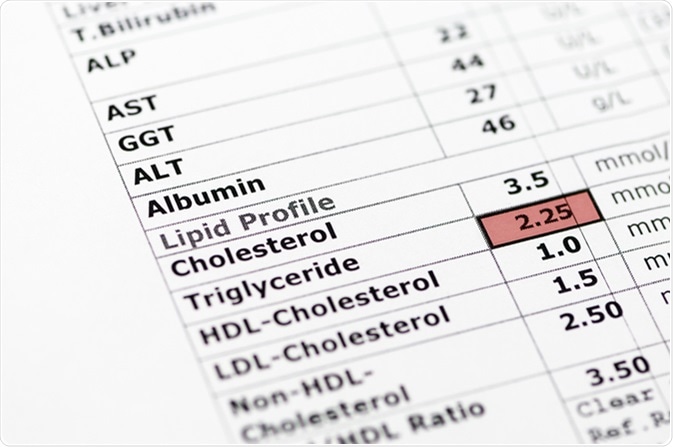
Blood chemistry report showing normal liver function tests, and a lipid profile with high triglyceride levels. Image Credit: Stephen Barnes / Shutterstock
Further Reading
Last Updated: Jul 20, 2023
 People with diabetes may have another reason to protect their cardiovascular health