Insulin is a hormone that helps the body utilize glucose as a source of energy from food.
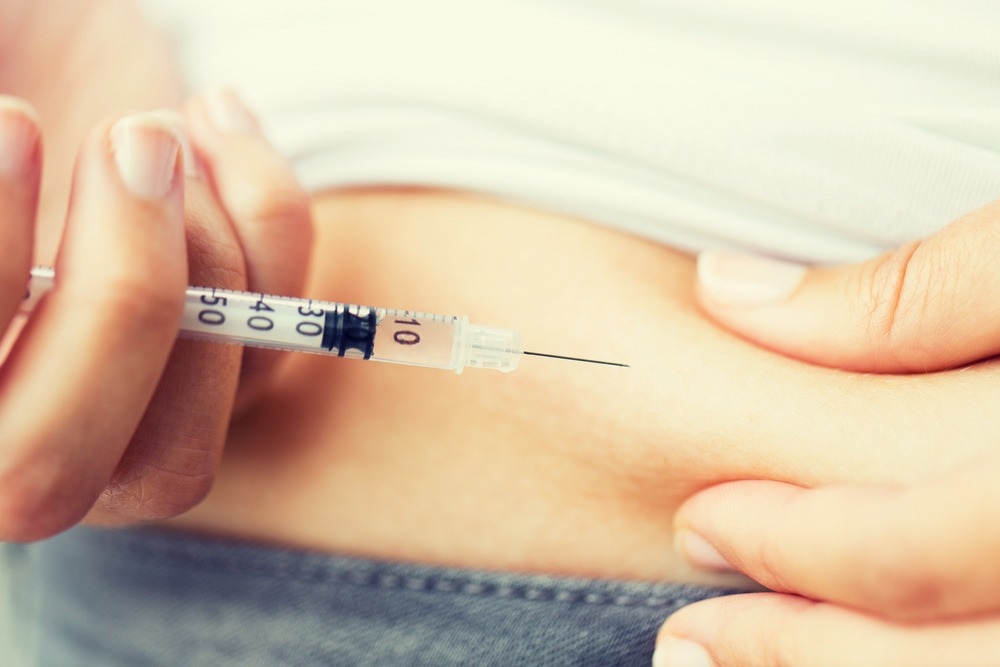
Close up of woman with syringe making insulin injection to himself at home. Image Credit: Ground Picture/Shutterstock.com
There are several diseased conditions associated with disturbed insulin secretion and utilization by the body. These include:
Diabetes mellitus
This is an all-encompassing term for hyperglycemia or excessive blood sugar. There are further classifications of diabetes mellitus. These include:
- Type 1 diabetes or insulin-dependent diabetes mellitus (IDDM): In these patients, there are auto-immune mechanisms in which the body’s own immune cells attack the insulin-producing beta cells of the pancreas. This leads to an absolute insulin deficiency. These patients need to be supplemented with insulin injections from outside.
- Type 2 or Non insulin dependent diabetes mellitus (NIDDM) – This is a condition where the body fails to produce the required amount of insulin. Thus, there is a relative insulin deficiency. Genetic susceptibility, environmental factors, obesity, lack of physical exercise, insulin resistance, etc., may lead to relative insulin deficiency.
- Gestational diabetes – Some pregnant women require more insulin than their body can produce during pregnancy. This is also a state of relative insulin deficiency.
- Impaired glucose tolerance and prediabetes - Prediabetes is a condition in which blood glucose levels are higher than normal but not high enough for a diagnosis of diabetes. This condition is sometimes called impaired fasting glucose (IFG) or impaired glucose tolerance (IGT). People with prediabetes are at increased risk of developing type 2 diabetes.
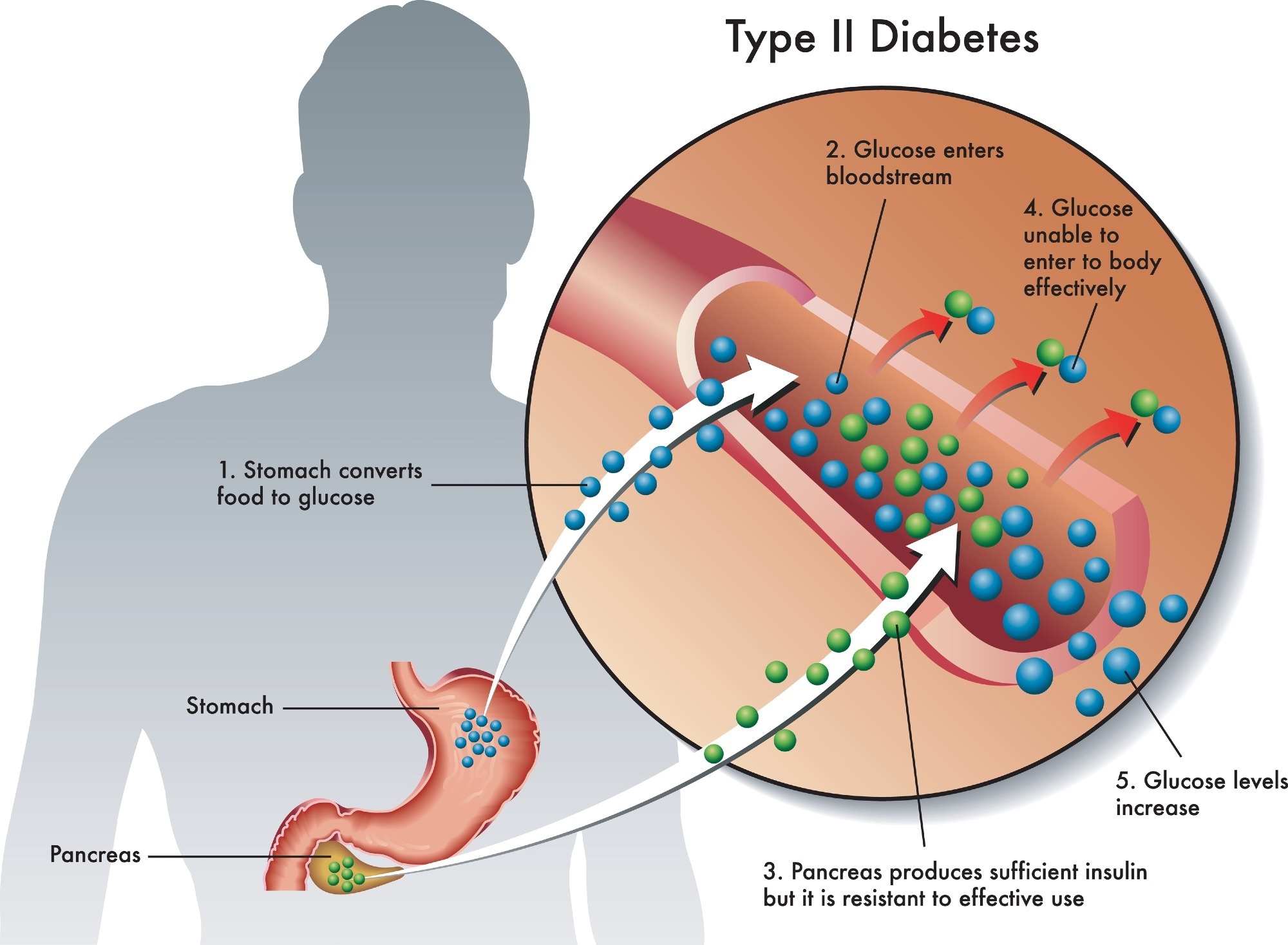
Medical illustration of the symptoms of type 2 diabetes. Image Credit: rob9000/Shutterstock.com
Insulinoma
These are tumors of the pancreatic beta cells that lead to excess production of insulin, and this results in hypoglycemia. However, blood glucose level alone is not diagnostic of insulinoma. Fasting insulin level of greater than 24 mU/mL is found in approximately 50% of patients with insulinoma.
Values of insulin greater than 7 mU/mL after a more prolonged fast in the presence of blood glucose less than 40 mg/dL also should raise suspicion of insulinomas.
Measurements of proinsulin and C peptide also have proven to be valuable in patients suspected of having organic hypoglycaemia.
Metabolic syndrome is a combination of multiple clinical disorders that form a syndrome. It was initially called Syndrome X by Gerald Reaven, Reaven's Syndrome after Reaven, CHAOS in Australia (from the signs that seem to travel together), and sometimes prediabetes. The basic underlying cause may be the insulin resistance of type 2 diabetes.
Metabolic syndrome is defined as the presence of any three of the following conditions:
- A waist measurement of 40 inches or more for men and 35 inches or more for women
- Dyslipidemia or deranged blood cholesterol. This means either:
- triglyceride levels of 150 mg/dL or above, or taking medication for elevated triglyceride levels
- HDL, or “good,” cholesterol level below 40 mg/dL for men and below 50 mg/dL for women, or taking medication for low HDL levels
- Blood pressure levels of 130/85 or above or taking medication for elevated blood pressure levels
- Fasting blood glucose levels of 100 mg/dL or above or taking medication for elevated blood glucose levels
Polycystic ovarian syndrome or PCOS is a complex syndrome in women that includes features of anovulation (non-production of eggs from the ovary), excess androgens, hirsutism (excess facial hair), infertility, etc.
Most women with PCOS also exhibit features of metabolic syndrome, including insulin resistance, obesity, and disturbed blood lipid or cholesterol levels. There is a high risk of type 2 diabetes as well.
Further Reading
Last Updated: May 13, 2024
 Can ketogenic diets help PCOS? New analysis points to weight and insulin gains