Salmonella is a ubiquitous human and animal pathogen which causes almost a hundred million cases of gastroenteritis each year throughout the world. Salmonellosis in humans usually presents as self-limiting food poisoning (gastroenteritis), albeit it can occasionally manifest as a severe systemic infection (enteric fever) that requires swift antibiotic treatment.
Most cases of salmonellosis in humans occur after the consumption of contaminated food products such as poultry meat, pork, beef, eggs, vegetables, juices, and other types of foods. Therefore, prudent use of antimicrobials in human medicine and agriculture is pivotal in minimizing the emergency aspects and spread of resistant Salmonella.
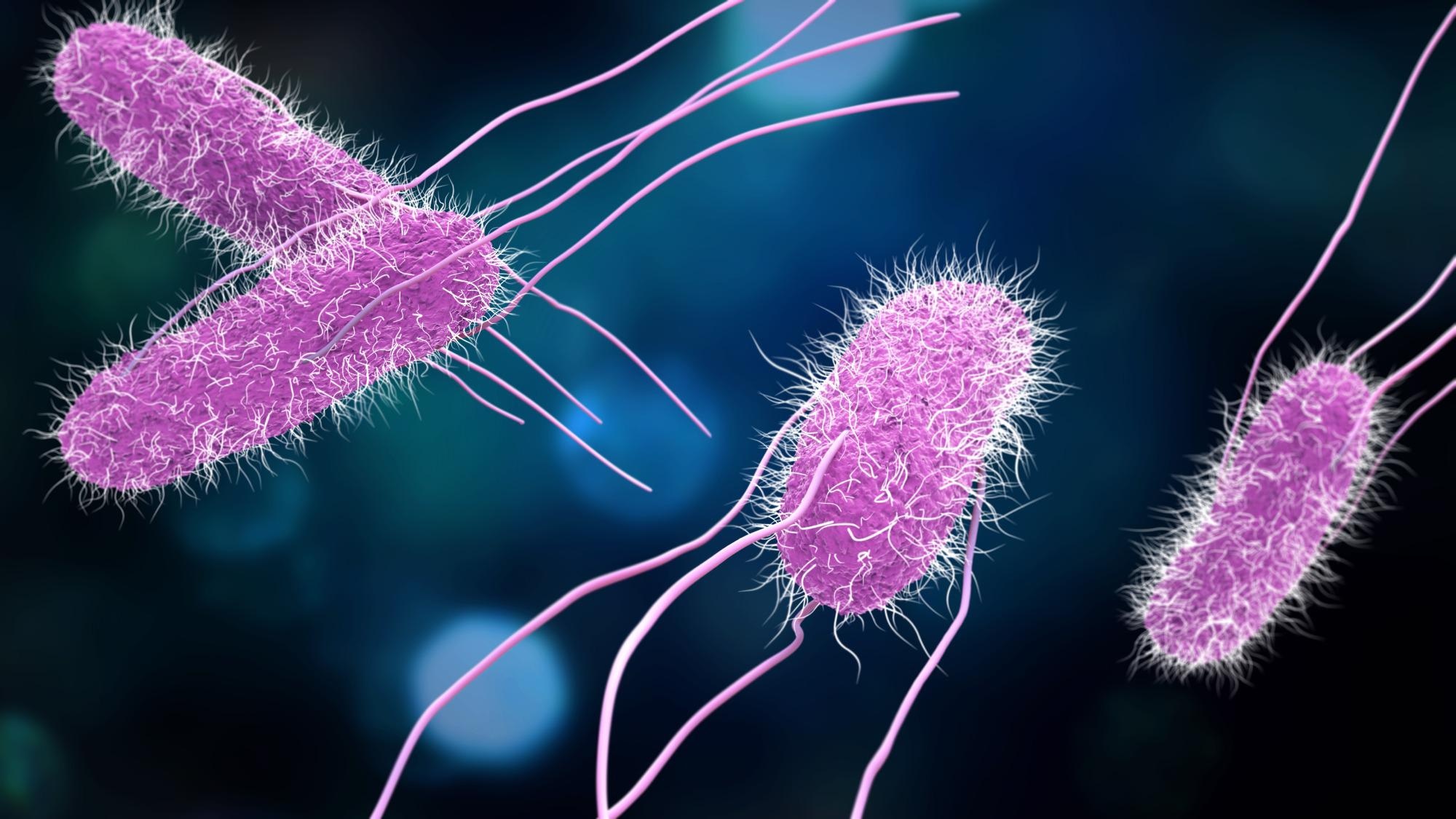 3D illustration of Salmonella Bacteria. Image Credit: urfin / Shutterstock
Structure and virulence factors
Salmonellae are Gram-negative, flagellated, facultative anaerobic bacilli that contain three significant antigens: H or flagellar antigen, O or somatic antigen, and Vi antigen (possessed by only a few serovars). In addition, the cell envelope contains a complex lipopolysaccharide (LPS) structure that is released upon lysis of the cell.
Salmonella is a prime example of an intracellular bacterium; thus, it can be found within various phagocytic and non-phagocytic cells in the human body. After successful intestinal colonization, this organism enters enterocytes, M cells and dendritic cells in the intestinal epithelium, subsequently reaching the submucosa and disseminating through the bloodstream.
Virulence factors of salmonellae are encoded on so-called pathogenicity islands found on the chromosome. Invasion of host cells and intracellular survival are dependent on two type III secretion systems. Still, other virulence factors (such as ion transporters and superoxide dismutase) also play a role in exploiting the intracellular niche.
Salmonella can also form complex surface-associated communities (also known as biofilms), which contribute to its persistence in host and non-host environments and is especially important in food processing environments. Fimbriae, flagella, cellulose, colanic acid, anionic O-antigen capsule, and fatty acids are important structural components for biofilm formation.
Clinical presentation
Species and serovars of the Salmonella genus are responsible for two distinct syndromes. Nontyphoidal salmonellae are common causes of food-borne gastroenteritis in the community. Typhoidal Salmonella causes enteric fever, which represents an important differential diagnosis in any traveler returning from a tropical country with a fever.
Nontyphoidal salmonellosis is caused by ingesting contaminated food or water or occasionally by contact with an infected person. Symptoms occur 6-72 hours after ingestion of pathogenic organisms, and the illness lasts between 2 and 7 days. Most cases are self-limiting, and the focus of management is adequate rehydration.
Although antibiotic therapy is seldom warranted, some important exceptions include neonates, immunocompromised individuals, and (in certain instances) the elderly. Enteric fever always necessitates antibiotic treatment, with the notification to the appropriate health authority to investigate possible outbreaks.
Mayo Clinic Minute: Know the symptoms of salmonella infection
Diagnosis
Identification of salmonellae in the microbiological laboratory is not demanding. Direct plating and inoculation of standard enrichment broths are employed to recover Salmonella species from fecal samples. Rectal swabs are not used, as they are considered inferior to fecal specimens.
Many selective agar plates are available for Salmonella; MacConkey agar has low selectivity, whereas xylose lysine deoxycholate (XLD) agar or Hektoen enteric agar have higher selectivity. More-selective chromogenic agars are sometimes used, and salmonellae grow well on automated systems for the culture of blood samples.
The biochemical reactions of suspicious colonies are determined on triple sugar iron agar and lysine-iron agar, with a presumptive identification being made. Such biochemical identification can then be confirmed by antigenic analysis of O and H antigens with the use of polyvalent and specific antisera.
Polymerase chain reaction (PCR) and plasmid profiling can be used for the identification and typing of Salmonella isolates. In addition, phage typing and restriction fragment length polymorphism analyses are convenient tools to investigate Salmonella outbreaks and conduct case-control studies.
Further Reading
Last Updated: Apr 22, 2022
 Machine learning predicts pathogen risks in drinking water sources