In this new episode of the omg OMx podcast, Kate Stumpo speaks to Bram Heijs, Tharan Srikumar and Mariangela Kosmopoulou about software in Life Sciences, and the approach the Bruker team uses when it comes to developing new processes. Read selected highlights or watch the full podcast below:
Tharan Srikumar, Bram Heijs and Mariangela Kosmopoulou | omg OMx Podcast | Ep. 15
Can you please introduce yourself and your current role at Bruker?
Bram Heijs: As a Product Owner on the Skills Lab team, I focus on Bruker’s software for analyzing MALDI imaging data. My role bridges the gap between managers, customers, and developers, ensuring that ideas and feedback are effectively gathered and translated into actionable improvements. I design and prioritize new features to enhance the user experience and optimize the software’s overall functionality.
I provide support to customers, helping them resolve any issues they encounter. My role also involves attending meetings to align with team goals and ensure everyone is on the same page. This combination of tasks makes my job both creative and varied, allowing me to tackle challenges and contribute to innovative solutions daily.
Tharan Srikumar: As the Product Manager and Product Owner for ProteoScape, Bruker’s software for analyzing proteomics data, my primary responsibility is to understand the needs of scientists and other users. I translate these requirements into clear, actionable goals for developers, ensuring the software delivers value and meets user expectations.
I also collaborate closely with sales and management teams to align the software’s development with broader business objectives. My role focuses on bridging the gap between users and developers while maintaining a strong emphasis on achieving business goals and advancing the software's capabilities.
Mariangela Kosmopoulou: I am the Project Manager for Omniscape, a tool designed to analyze top-down proteomics data. My role is unique because I function as both a user and a manager of the software. By working directly with Omniscape to process data, I gain firsthand insight into its strengths and areas for improvement.
This dual perspective enables me to collaborate effectively with the development team, providing practical suggestions for enhancements and features that address real user needs. In addition to offering input, I oversee development projects, ensuring that objectives are met on schedule and that the software evolves in meaningful and impactful ways.
What is Scrum, and how do you use it in your work?
Tharan Srikumar: Scrum is a method used in software development that is part of the Agile approach. It breaks large goals into smaller, manageable steps called sprints. A sprint typically lasts two to four weeks.
During this time, the team focuses on achieving specific objectives that contribute to the overall project. At the end of each sprint, the team demonstrates what they have accomplished, and stakeholders provide feedback. This feedback helps the team make improvements and stay aligned with user needs.
In our teams, we adjust Scrum to fit our specific requirements. For instance, we set sprint goals based on upcoming deadlines like conferences or product launches. Each sprint ends with a review meeting where we discuss what went well and what did not.
We also hold conversations to analyze our workflow and identify areas for improvement. This iterative process not only refines our development practices but also helps to ensure that we remain focused on delivering value to users.
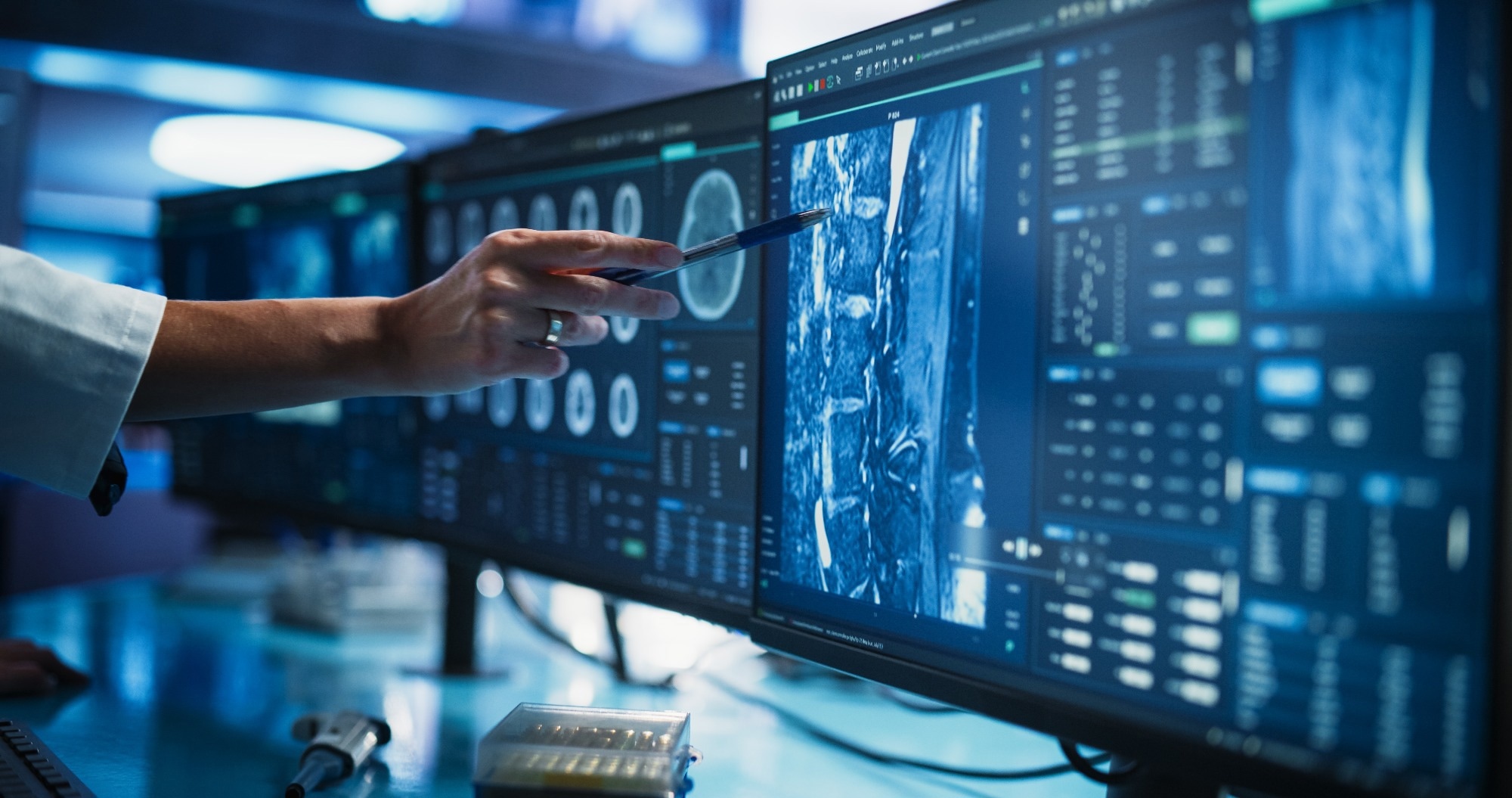 Image Credit: Gorodenkoff/Shutterstock.com
How do you give feedback to the development team to improve the software?
Mariangela Kosmopoulou: As an active user of Omniscape, I test the software with real data to evaluate its performance. This hands-on approach helps me identify issues and suggest improvements to the development team. For example, if an algorithm does not provide the expected results, we analyze it together to find ways to improve its accuracy and reliability.
I also share insights based on user feedback and my own experience, which helps prioritize features that are most beneficial to the community. This back-and-forth process of testing and refining is essential for ensuring the software evolves to meet user needs effectively. By processing real-world data, I can provide practical feedback that makes a tangible difference.
What are the biggest challenges in your role?
Bram Heijs: Managing time is one of the biggest challenges I face because my role involves so many different tasks. I need to balance development work with meetings and other responsibilities, which requires careful planning and prioritization. It is important to stay organized and focused to ensure all aspects of my job are handled effectively.
Mariangela Kosmopoulou: I completely agree with Bram. Balancing time and responsibilities can be difficult, especially when juggling multiple roles. Another challenge is being realistic about what can be achieved. It is important to communicate clearly with the development team and set achievable goals.
This helps maintain trust and ensures the project progresses smoothly. Additionally, staying organized and managing expectations are critical for keeping everything on track. The ability to prioritize tasks and adapt to changing circumstances is essential for success.
Tharan Srikumar: Managing expectations is a significant challenge in my role. I must balance the needs of users, managers, and sales teams, which often have different priorities. Finding common ground and setting realistic goals that satisfy everyone is not always easy, but it is essential for delivering a useful product.
About the Speakers
Bram Heijs is the Product Owner of the SCiLS Lab software at Bruker Daltonics, where he pursues his passion for spatial biology and spatial multiomics through mass spectrometry imaging (MSI). This role allows him to make a significant impact on the research community by providing essential tools for their work.

Dr. Mariangela Kosmopoulou specializes in mass spectrometry, with a focus on top-down proteomics and metabolomics. She currently serves as the Project Manager for Omniscope, a tool designed to analyze top-down proteomics data. In this role, she leads the development and implementation of advanced analytical solutions to enhance the understanding of complex protein structures.
 Tharan Srikumar, Ph.D. is the Product Manager and Product Owner for ProteoScape, Bruker’s cutting-edge software for proteomics data analysis. With a deep understanding of scientific workflows, he bridges the gap between researchers and developers, translating user needs into actionable product goals. His expertise ensures that ProteoScape delivers meaningful value to scientists, driving innovation in proteomics data analysis.
omg OMx host: Kate Stumpo, Senior Market Manager at Bruker
LinkedIn
About Bruker Daltonics
Empowering Science – Improving Life
Bruker Daltonics delivers cutting-edge mass spectrometry solutions and workflows that help scientists and industry leaders tackle real-world challenges and make new discoveries. From life sciences and pharmaceutical research to food and contaminant analysis, environmental monitoring, forensics, and industrial quality control, our technologies and instruments provide the precision and reliability you need to make confident decisions.
Our innovative platforms - such as timsTOF, scimaX, neofleX, and DART-TQ - combined with advanced software like SCiLS™ Lab, MetaboScape®, and Biopharma Compass®, transform complex data into actionable insights. Breakthrough innovations like Trapped Ion Mobility (TIMS), Omnitrap®, and dual ionization GC-HRMS are redefining what’s possible in mass spectrometry.
Trusted by leading research institutes, universities, government agencies, and industrial partners worldwide, Bruker Daltonics is committed to driving scientific progress and delivering solutions that matter.
(For Research Use Only. Not for use in clinical diagnostic procedures).
 Lipid Nanoparticles (LNPs) and DNA delivery – unlocking the future of medical research