Endangered species in the wild is an inherently emotional subject. Overzealous farming or hunting can damage a habitat or species of wildlife. Fortunately, various research groups throughout the world are working diligently to save species from extinction.
One such institution is the White Oak Research Center, which is located on the St Mary's River in North Florida. The Center covers 600 acres and is surrounded by 6800 acres of pine and hardwood forest and wetlands.
White Oak Conservation Center, founded in 1982 by donor Howard Gilman, promotes long-term conservation solutions by preserving genetically varied populations of imperiled animals. The facility is housed in expansive, natural settings and includes research, husbandry, education, and conference facilities.
The Center directs professional efforts to improve veterinarian treatment, create holistic animal management approaches, and get a better understanding of the biology of critically endangered species.
The Center's mission statement claims that it conserves rare and endangered wildlife species by maintaining scientifically managed captive populations that allow for study, training, reintroduction, and participation in field conservation projects.
There are many strategies that could be used to achieve these goals. One technique is to work in the wild with animals in their natural environment to learn about their way of life and breeding habits.
Some of this work is conducted in continental Africa, including projects focused on gerenuk in Kenya, with plans to expand to include okapi in the Congo (Figure 1).
This article will look at how genetically managing populations of at-risk species in captivity can help preserve choices for future conservation action.

Figure 1. A male okapi. Image Credit: Linkam Scientific Instruments
White Oak Conservation Centre has now developed assisted reproductive techniques such as artificial insemination which allows transportation of genetic material collected from wild animals for use in captive populations.
The goal is to support genetic diversity while reducing the need to bring additional animals in from the wild.
Dr. Penfold discovered the suitability of employing the Linkam cryo microscope stage for the examination of sperm while working at London Zoo with reproductive biologist Professor Bill Holt and has recently added a system to facilitate her research studies at White Oak Conservation Center.
Over several years of research, Dr. Penfold has developed a basic experimental protocol. Her Linkam BCS196 cryo stage is attached to an Olympus BX60 fluorescence microscope equipped with a Nikon digital camera. The BCS196 cryo stage has previously been validated to determine the consistency and repeatability of cooling rates used in freezing protocols.
A 4 µl sample of sperm suspension is placed in the center of a petroleum jelly ring (10 mm diameter) on a 22 mm coverslip and overlaid with a second coverslip. The preparation is then placed on the cryo stage and held for one minute before cooling at the rate entered into the control unit.
Samples are held at the specified temperatures under investigation for a further minute before being cooled or warmed at programmed rates. After rewarming, they are maintained at 36.0 °C (okapi body temperature) for one minute before reassessing motility and plasma membrane integrity.
The ability to maintain such precise and reproducible temperature control led Dr. Penfold to include the Linkam cryo stage in her instrumentation. Without that level of stability, obtaining clear images of sperm and confirming continued motility after freezing would be far more challenging.
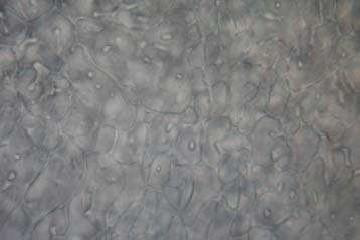
Figure 2. Ice crystal formation in the okapi sperm can be clearly seen in the above. Image Credit: Linkam Scientific Instruments
Cryomicroscopy, as a technique, allows users to carry out numerous tests on small amounts of semen while also identifying crucial temperatures during the freeze-thaw process.
In the second example, you can clearly see the ice crystal formation in the okapi sperm.
About Linkam Scientific Instruments
Linkam develops and manufactures a broad range of temperature and environmental control stages for both OEMs and end-users. From high to cryo temperatures as well as humidity, electrical connections, gas purging, vacuum, and pressure, for enhanced sample analysis. Linkam stages are used with light microscopes and a wide range of analytical techniques including Raman, FTIR, WAX/SAX, and many more to visualize and characterize the properties of materials.
Linkam has stages for research applications including Pharmaceutical, Chemical, Biological, Materials Science, Geology, Food Science and many more. The hot stages, environmental control add-ons, electronics, and software are all designed and built on-site thereby enabling us to quickly respond to suggestions made by current Linkam users, and so enabling us to continually develop and improve our designs as well as offering custom solutions.
Linkam stages are found in thousands of laboratories worldwide with the most successful microscope heating stage, the THMS600, selling over 6,000 units alone. Linkam is the market leader in temperature-controlled microscopy.
Sponsored Content Policy: News-Medical.net publishes articles and related content that may be derived from sources where we have existing commercial relationships, provided such content adds value to the core editorial ethos of News-Medical.net, which is to educate and inform site visitors interested in medical research, science, medical devices and treatments.