The NanoLabSizer is an analytical instrument for offline particle sizing based on Spatially Resolved Dynamic Light Scattering (SR-DLS).
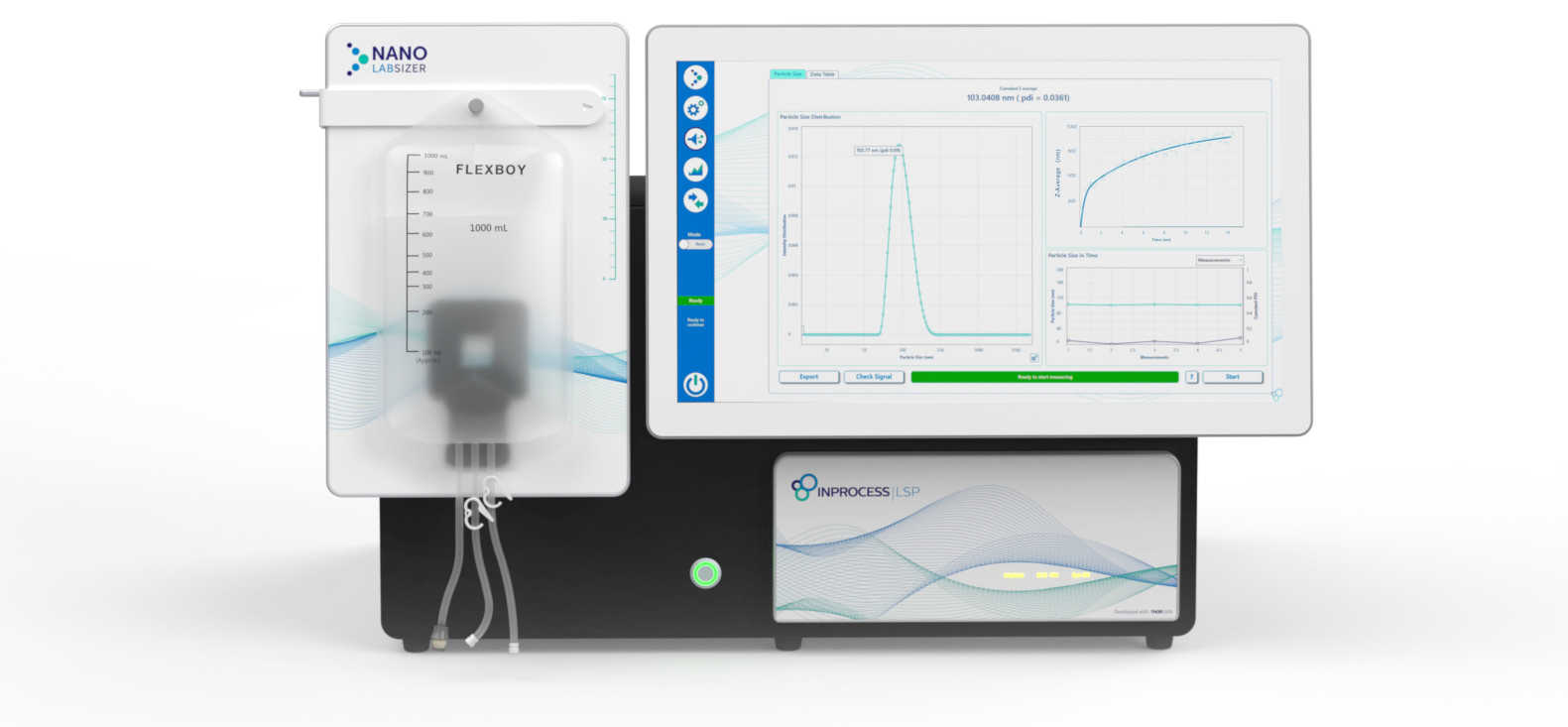
Image Credit: InProcess-LSP
SR-DLS operates in full backscattering mode and resolves scattering as a function of depth, enabling measurements inside closed containers, even with curved geometries and at higher turbidities than conventional DLS workflows typically tolerate.
- Measure inside closed containers
- No sampling, no dilution
- Maintain sterility
System features. Source: InProcess-LSP
|
NANOLABSIZER |
| Measurement principle: |
Spatially Resolved DLS (SR-DLS) |
| Particle Size Range: |
3 nm - 5000 nm |
| Turbidity: |
Very low to very high |
| Measure: |
Static |
| Measurement Mode: |
Offline, at-line |
| Data collection: |
5-10 sec/datapoint |
| Nanoparticles: |
LNPs, transfection complex, (in)organic particles,
most other nanoformulations |
| Software: |
XsperGo + GMP features, OPC-UA, PhaSR |
| Dimensions: |
78 x 50 x 55 cm (W x H x D) |
Non-destructive particle size analysis
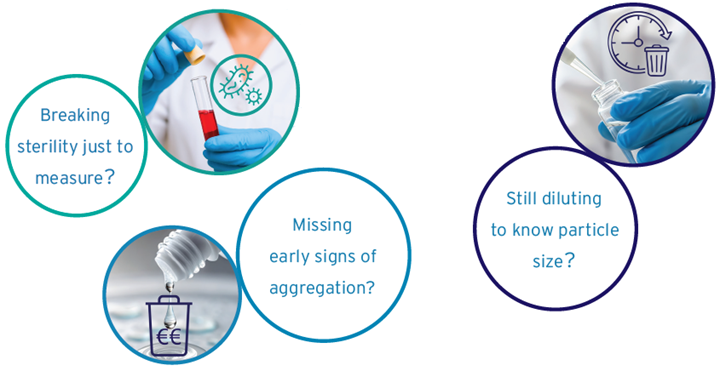
Image Credit: InProcess-LSP
The NanoLabSizer - Offline benefits compared to DLS systems. Source: InProcess-LSP
| Feature |
SR-DLS + imaging |
Conventional DLS |
| Non-destructive analysis: |
Yes |
No |
| Closed containers: |
Yes |
No |
| Sample handling: |
No |
Yes |
| Waste: |
No |
Yes |
| Sample stays intact: |
Yes |
At risk |
Large Particle Detection:
(Aggregates) |
Yes
size + imaging |
Low-Medium |
| Automation: |
High |
Medium |
Transfection complex size monitoring
What do you get?
A critical - but often under-monitored - step happens before any cells are transfected: the complexation reaction, where DNA/RNA and the transfection reagent form particles (transfection complexes) during mixing and incubation.
The NanoLabSizer is a dedicated, benchtop (offline) system for noninvasive monitoring of transfection complex size formation during upstream process development and validation.
- Real-time size measurements during complex formation
- Direct, non-invasive measurements directly in closed bags, flasks, or tubes (no sampling)
- Maintains sterility and reduces sampling delays and handling variability
- Development scale flexibility (up to 3 L) and rapid comparisons during DoE studies
- Supports studying the relationship between complex size and transfection efficiency and yield
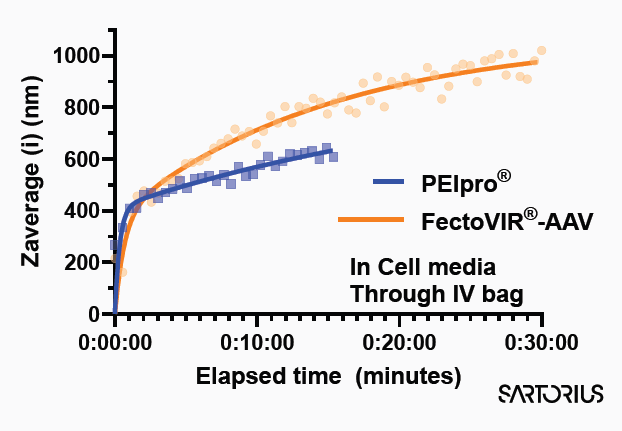
Complex growth is monitored in real-time by SR-DLS. Image Credit: Sartorius
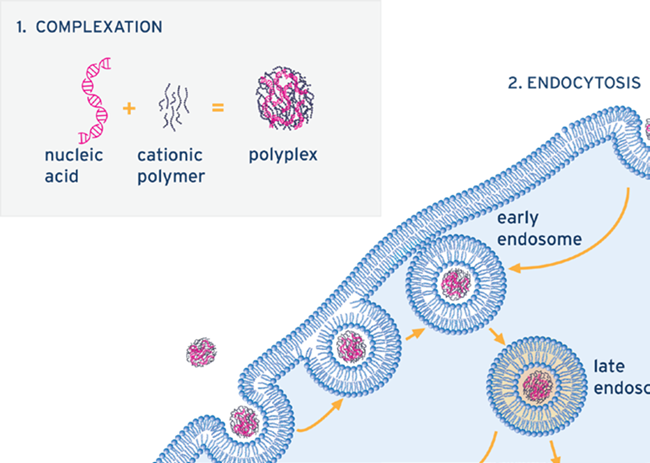
Complexation reaction before transfection of cells. Image Credit: InProcess-LSP