Sponsored Content by Bruker BioAFMReviewed by Emily MageeFeb 26 2026
Could you briefly share your background and how you came to focus on AFM technologies within the cosmetics industry?
My name is Alexander Dulebo, and I’m a Bio Sales Application Engineer at Bruker, specializing in biological applications of AFM.
My role involves helping researchers implement and refine AFM techniques for life science studies, ensuring optimal instrument performance through guidance on imaging modes, sample preparation, and data quality.
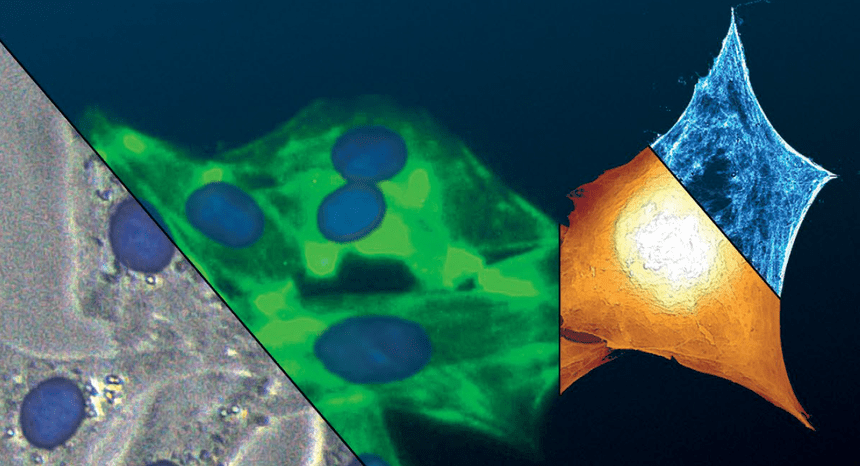 Correlated QI and optical images of live 3T3 fibroblast cells in cell culture medium at 37°C. Image Credit: Bruker BioAFM
What specific advantages does AFM offer over other analytical techniques when it comes to evaluating cosmetic formulations or surface interactions?
AFM stands out because it provides both topographical and mechanical information at nanometer resolution, without requiring complicated sample preparation. This is particularly useful for soft, hydrated samples, such as skin models, emulsions, or gels. Unlike SEM or TEM, AFM can operate in liquid environments, making it ideal for studying cosmetics in conditions that mimic real-world use.
Why do you believe AFM is particularly well-suited for applications in cosmetic science, especially compared to more traditional surface characterization methods?
Cosmetic products often involve complex, multi-phase systems and soft materials. Traditional techniques lack the resolution or environmental compatibility to analyze these effectively. AFM, on the other hand, can measure surface roughness, adhesion, stiffness, viscoelastic properties, and even molecular interactions – all under ambient or physiological conditions. This makes it an invaluable tool for investigating and understanding the effects and performance of a care product, e.g., for skin or hair.
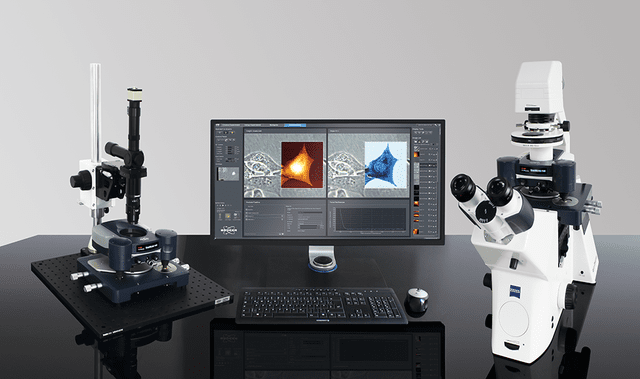
NanoWizard PURE Bio (right) and Standard (left) configurations. Image Credit: Bruker BioAFM
In your experience, where do you see the most impactful or promising applications of BioAFM in cosmetic research and product development?
Firstly, BioAFM is not limited to research and product development; it also serves as a valuable tool in quality control. Key applications include analyzing the effects of skin care products, evaluating the mechanical and frictional properties of hair fibers, and characterizing emulsions or nano/micro-carrier systems.
BioAFM supports the development of long-lasting formulations by studying how products adhere to and interact with biological surfaces over time.
What are the main challenges you encounter when applying AFM in cosmetics R&D?
Although relatively simple compared to other techniques, sample preparation can be a challenge, especially when working with fluids and soft samples. Sample immobilization can be tricky and investigating soft, sticky, or heterogeneous samples can be challenging and time-consuming as AFM is inherently a point-by-point technique. However, advances like automated mapping and correlative imaging are helping to overcome these limitations.
Can you explain how combining optical techniques with AFM enhances your understanding of cosmetic materials? Are there any case studies or results that highlight this synergy?
Integrating AFM with optical methods such as fluorescence imaging or super-resolution techniques like STED enables comprehensive correlative analysis. This approach links nanoscale topography and mechanical properties with chemical composition or biological markers. The optical overlay facilitates rapid identification of regions of interest and supports automation of AFM workflows, leveraging AI for intelligent image analysis.
How has the cosmetics industry’s approach to nanoscale research evolved in recent years, and what role do tools like AFM play in this shift?
There’s been a clear shift toward understanding and engineering materials at the nanoscale – whether it’s for better delivery systems, improved textures, or enhanced efficacy. AFM has become a key tool in this evolution, enabling researchers to visualize and quantify nanoscale features that directly influence product performance.
Are there any recent trends – such as personalized skincare, sustainability, or biotech integration – that are shaping how AFM is used in the cosmetics field?
Absolutely. Personalized skincare is driving demand for detailed skin profiling, where AFM can assess individual skin topographies and mechanical properties. In sustainability, AFM helps evaluate biodegradable materials or natural alternatives to microplastics. Biotech integration, such as using bioengineered peptides or encapsulated actives, also benefits from AFM’s ability to characterize nano-carriers and their interactions with biological surfaces.
Looking ahead, what innovations or improvements in AFM technology do you think will further advance its applications in cosmetic research?
I see great potential in large area mapping capabilities and in combining AFM with machine learning for automated data acquisition and interpretation. Additionally, advancements in faster, high-throughput AFM systems offer higher throughput and deeper insights into dynamic processes.
Discover More BioAFM Applications in Cosmetics and Healthcare
About Alexander Dulebo
Alexander Dulebo is a Bio Sales Application Engineer at Bruker, based in Berlin, Germany, with more than a decade of experience supporting advanced scientific instrumentation in biological research environments. Since joining Bruker in 2012, he has worked closely with researchers and industry partners to help them adopt, optimize, and apply cutting-edge analytical technologies to complex biological and biophysical challenges.
Alexander holds a PhD in Biophysics from the University of South Bohemia in České Budějovice and an MSc in Radiobiology and Ecological Medicine from the International Sakharov Environmental University. His academic background underpins his strong application-focused approach, enabling him to bridge the gap between advanced instrumentation and real-world research needs.
About Bruker BioAFM
Bruker BioAFM, former JPK Instruments AG, is a leading manufacturer of nano-analytical instruments - particularly based on atomic force microscope (AFM) and optical tweezers systems - for life sciences and soft matter applications.
We combine the highest technical skills with visionary applications. Our work applies nanotechnology in ways to provide solutions to challenges facing researchers in life sciences and soft matter today. Driven by inspiration and ambition, it is our conviction that only the best tools are good enough for the research of life. We are listening with the ear of a scientist in detail to the current challenges of our customers and find individual solutions for individual problems. This is how we understand our business.
Primary activity
Material Manufacturer
Scanning Probe Technology for Soft Matter and Life Sciences
 University of Kaiserslautern uses JPK NanoWizard AFM to study bacterial interaction with microstructured surfaces