In this interview, industry expert Joanna Deek explores challenges in scientific data management, highlighting the need for flexible, integrated platforms that enable collaboration, avoid data silos, and support AI-ready, structured data.
Please can you start by giving us an overview of the biggest data management challenges in scientific research today, and why these challenges are a bottleneck in scientific progress?
One of the biggest challenges in scientific data management is finding software that truly supports the day-to-day workflows scientists rely on in the lab.
In many cases, no single platform provides all the required functionality, forcing teams to use multiple software solutions. That introduces additional complexity, from onboarding colleagues across different tools to building and maintaining seamless interfaces between them so that data does not end up in disconnected silos.
Another key issue is avoiding vendor lock-in. Researchers need the flexibility to move their data in and out of systems freely, and to use it across different platforms for analysis. When that flexibility is missing, it limits how data can be used and shared, ultimately slowing scientific progress.
Many scientific teams still rely on a patchwork of spreadsheets, local files, and disconnected tools. What kinds of risks or inefficiencies does that create, and what changes when data becomes structured, searchable, and shareable?
When data is spread across spreadsheets, local files, and disconnected systems, it creates several risks. One of the most significant is limited accessibility. If data is stored on individual machines, it becomes difficult for others to access it, especially if someone is unavailable or leaves the organization. This can lead to a loss of valuable knowledge.
There is also the issue of version control. Local file management often leads to confusion, with multiple versions of the same dataset and a higher risk of human error, such as overwriting raw data.
When data is centralized, structured, and searchable, these problems are addressed. Teams gain secure, shared access to data, and the full history of how that data was generated is preserved. This ensures transparency, traceability, and better collaboration, while significantly reducing errors associated with manual versioning.
One of CDD Vault’s key features is flexibility – instead of locking teams into rigid decisions from day one, the software can evolve as their workflows evolve. Why does that adaptability matter so much in fast-moving research environments?
It is very difficult to predict research outcomes from the outset. Workflows are inherently data-driven, and new findings often shape the next steps. That means teams need systems that can evolve alongside their research rather than constrain it.
A flexible and customizable platform like CDD Vault allows scientists to adjust how they capture and analyze data as new questions arise. It also enables them to incorporate different readouts or collaborate with external partners when needed. This adaptability is essential in fast-moving environments, where rigid systems can quickly become a bottleneck.
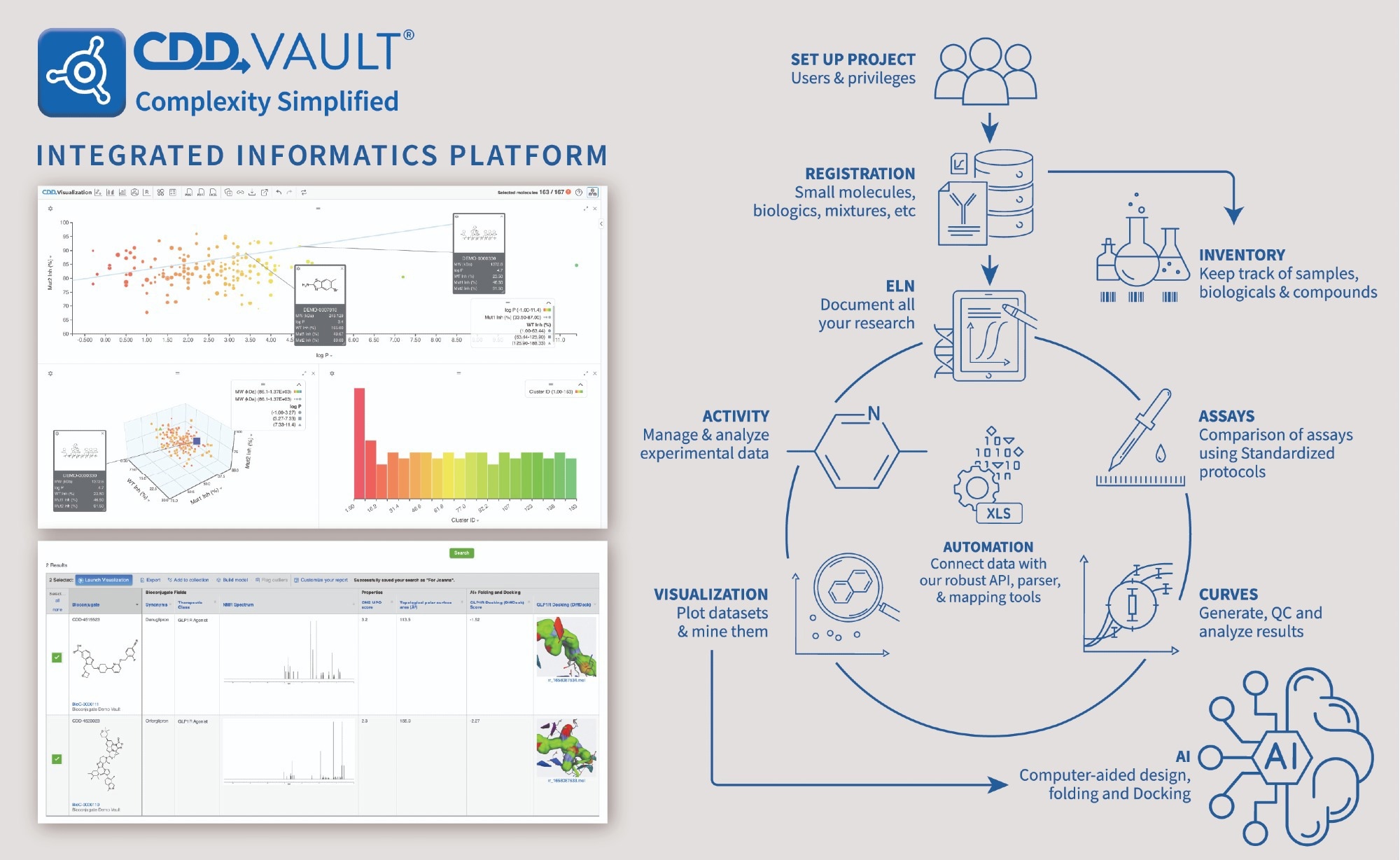
Image Credit: Collaborative Drug Discovery, Inc.
The platform is hosted and browser-based. How does that change the experience for teams adopting CDD Vault’s system?
A browser-based platform removes the limitations of on-site access. It allows teams to work remotely, collaborate across multiple locations, and engage with external partners such as suppliers or research collaborators.
This significantly broadens access to data and tools, making it easier for distributed teams to work together efficiently without being tied to a single physical location.
The platform spans a broad set of capabilities, from assay data management to visualization, ELN, inventory, automation, and AI. How do those pieces work together to support better scientific decision-making?
All of these capabilities work together to provide a complete view of the data lifecycle. Scientists can store data, understand how it was generated, and track how it evolves over time within a single system.
This integration creates full visibility and transparency across research programs. With all relevant information connected and accessible, teams can make more informed decisions about their next steps, relying directly on the data rather than fragmented insights.
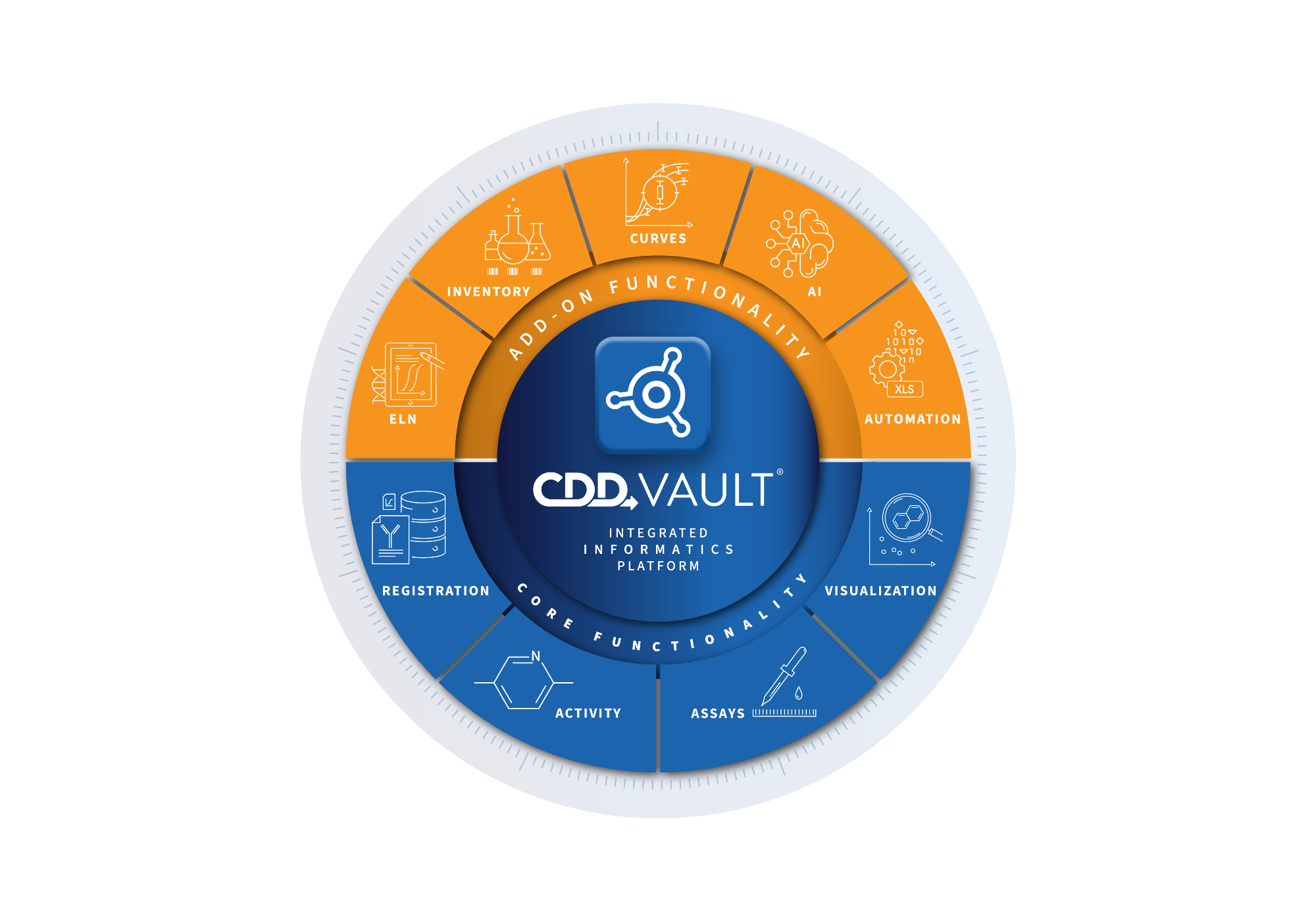
Image Credit: Collaborative Drug Discovery, Inc.
How does the platform adapt to the needs of very different industries like drug discovery, agritech, and foodtech, and what advantages make it valuable across such different areas?
The platform is highly customizable and agnostic to data types, which means it can accommodate a wide range of experimental workflows across different industries. Whether teams are working in drug discovery, agritech, or foodtech, they can organize and manage their data to suit their specific needs.
Importantly, the user interface is designed to be intuitive, allowing scientists with limited IT or software backgrounds to adapt the platform themselves. This eliminates the need for niche tools and enables diverse teams to use a single, unified system.
Beyond cost alone, what should organizations consider when evaluating a scientific data management platform?
Organizations should look closely at the company behind the platform. This includes its experience, longevity, and commitment to continuous improvement. A strong provider will actively evolve its software to meet changing data management needs rather than allowing it to become outdated.
Equally important is the level of customer support. Organizations should ensure that onboarding, training, and ongoing assistance are part of the offering, rather than additional paid services. A company that invests in its customers’ success will ultimately deliver greater long-term value.
What distinguishes CDD Vault from competing platforms, and why does that make a difference in real research settings?
One of the key differentiators is ease of use. The platform is designed so that scientists from different backgrounds can quickly adopt it without needing extensive technical expertise. This lowers the barrier to entry and encourages broader adoption across teams.
Another important factor is the company’s commitment to supporting its users. This includes initiatives such as providing access to researchers working on humanitarian projects, including those focused on neglected diseases. This level of support reflects a broader commitment to advancing scientific research beyond commercial interests.
As research becomes more data-rich and AI-driven, what do you think the next generation of scientific data management systems needs to integrate and deliver to help researchers move faster and make better decisions?
The first step toward being AI-ready is ensuring that data is structured and machine-readable. Systems need to support FAIR data principles, making data findable, accessible, interoperable, and reproducible. They should also allow flexible data tagging so that datasets remain usable as analytical methods evolve.
Another critical requirement is avoiding vendor lock-in. Researchers need the ability to move their data freely and connect it with other tools. An open API is essential for this, as it allows different software systems to work together. This ensures that teams can continuously expand their capabilities and apply new technologies without being restricted by their data infrastructure.
Want to see CDD Vault in action? Click here to read the case studies
About Joanna Deek 
Joanna Deek is Director of Sales and Business Development at Collaborative Drug Discovery (CDD), supporting global adoption of the CDD Vault platform. Before joining CDD, she served as Director of Business Unit for the Proteins, Biologics & Biophysics products at Proteros Biostructures GmbH, leading commercial initiatives across pharma and biotech.
From 2017 to 2021, she held leadership roles at Dynamic Biosensors (now Bruker Biosensors), including Head of Business Development USA, where she led teams, and facilitated U.S. expansion.
Joanna’s background is rooted in biosensor technology and biophysical assays, including four years as a Humboldt Postdoctoral Fellow at the Technische Universität München. She holds a PhD in Chemistry and Biochemistry from UC Santa Barbara.
About CDD Vault
Mission Statement
CDD’s mission is to provide an unparalleled software experience for humanitarian & commercial collaborative research and discovery, and it achieves it by focusing on its people, values, goals, innovation, and technology. CDD's greatest asset is its collaborative team. It's committed to customer success because when you succeed, the whole world benefits.
History
CDD was established in 2004, when founder & CEO Barry Bunin was an entrepreneur-in-residence at Eli Lilly & Co. Its flagship product, CDD Vault, was designed to address the inefficiencies of data management in biological and chemical research. Over the years, CDD has significantly expanded its platform's capabilities and user base. True to the name, CDD Vault is helping hundreds of organizations and thousands of scientists globally collaborate more effectively every day.
CDD Vault provides an unparalleled software experience for humanitarian & commercial collaborative research and discovery.