
Animal models have long been a key component of preclinical drug development, but their ability to predict human drug toxicity is limited.
Differences in metabolic pathways, enzyme expression, and immunological responses frequently result in unexpected toxicities during clinical trials, resulting in high attrition rates. In response, regulatory authorities are increasingly promoting new approach methods (NAMs) that use human-relevant data.
The FDA has issued draft advice to help validate NAMs as alternatives to animal testing, and funding organizations such as the NIH, ARPA-H, and Horizon Europe are actively investing in novel, human-based research methodologies.
In a recent webinar, Professor Shaochen Chen from UC San Diego presented findings from decades of pioneering biofabrication work, focusing on building physiologically relevant human tissues for regenerative medicine and drug development.
He also discussed a recent ARPA-H-funded project to develop a patient-specific, scalable bioprinted liver platform that combines stem cell biology, sophisticated bioprinting, and artificial intelligence.
Dr. Ting-Yu Lu also presented their recent work, published in Advanced Functional Materials, which demonstrates a bioprinted, perfusable multi-cellular liver model fabricated using DLP bioprinting on the BIONOVA X.
This platform combines iPSC-derived cells with an MMP-degradable, biofunctional hydrogel, enabling precise spatial organization, cell-driven matrix remodeling, and continuous liver function during dynamic perfusion.
The webinar explored:
- Bioprinted human tissues as a promising alternative to animal models for research
- How bioprinting, stem cell technology, and AI are driving future liver models
- Engineered hydrogels enabling precise tissue design and dynamic cell-matrix interactions
- How dynamic perfusion improves long-term liver function and predicts clinically relevant drug toxicity
About the speakers
Prof. Shaochen Chen, PhD
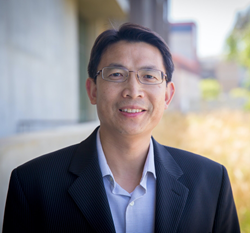
Dr. Shaochen Chen earned a Mechanical Engineering PhD from UC Berkeley in 1999.
Currently, he is the Zable Endowed Chair Professor in the Department of Chemical and Nano Engineering at UC San Diego, where he also served as Department Chair from 2019 to 2023.
Prior to joining UCSD, Dr. Chen was a Professor and Henderson Centennial Endowed Faculty Fellow at the University of Texas at Austin from 2001 to 2010. He was the US National Science Foundation's Program Director for Nanomanufacturing from 2008 to 2010.
He has published over 200 peer-reviewed papers in prestigious journals such as Nature and Nature Medicine, and his scientific interests include tissue engineering, biomaterials, and bioprinting.
He is a fellow of the National Academy of Inventors, a member of the European Academy of Sciences and Arts, and a Fellow of AAAS, AIMBE, ASME, SME, and SPIE.
Dr. Ting‑Yu Lu
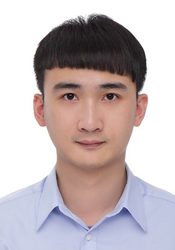
In 2025, Dr. Ting Yu Lu earned a PhD in Materials Science and Engineering and is now a postdoctoral researcher in Prof. Chen's lab at UC San Diego.
His research focuses on the use of advanced biomaterials and bioprinting technologies to engineer physiologically realistic tissue models for drug discovery and disease modeling, specifically focusing on liver systems.