In the context of the pharmaceutical industry's drug development trajectory, drug stability is more than just a quality metric; it plays a key role in keeping medicines safe, compliant with regulations, and ready for the market.
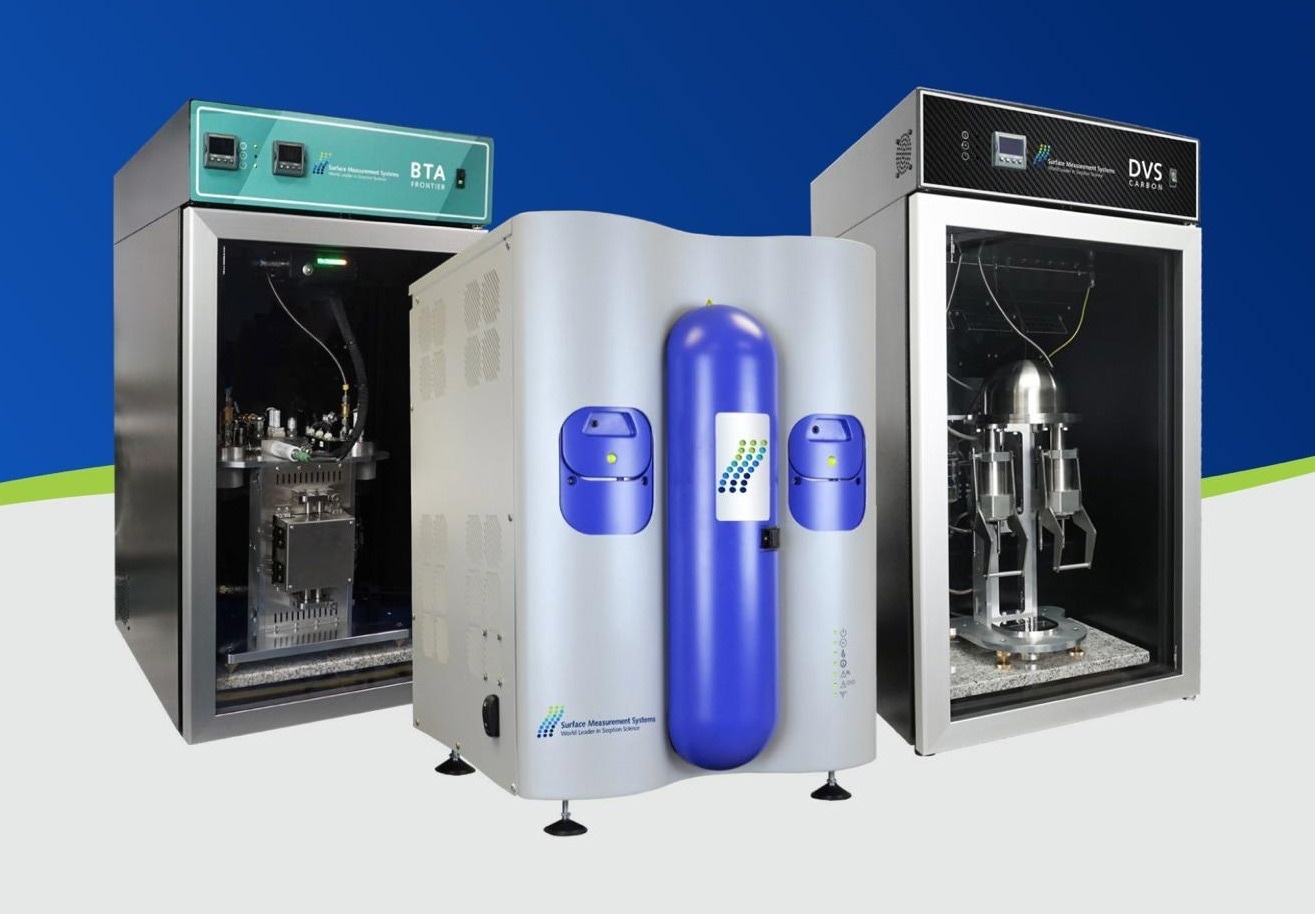
Image Credit: Surface Measurement Systems Ltd
Pharmaceutical companies follow strict quality standards, and if a drug’s stability falters at any point – whether during development, storage, or shipping, it can undo all the work that’s gone into it.
Stability isn’t fixed; it changes over time and is often affected by a mix of factors. In this article, Surface Measurement Systems Ltd. looks at five of those key influences to help drug formulators stay ahead of potential risks, make sound decisions, and protect the integrity of their products.
5 factors that impact drug stability
Solubility and bioavailability
The challenge of making drugs work where it matters most
One of the most persistent and long-standing challenges in drug formulation is the use of poorly soluble Active Pharmaceutical Ingredients (APIs), particularly in BCS Class II and IV drugs.
Even with suitable pharmacological profiles, such drugs have limited solubility and permeability, which makes absorption difficult. This dual challenge not only increases the bioavailability issues for these drugs, but it also has the potential to derail development timetables.
Why it matters
The formulation issues caused by such poorly soluble APIs not only raise prices but also alter timetables.
APIs that do not dissolve have poor absorption, resulting in subtherapeutic concentrations and pharmacokinetic problems. This, in turn, increases the likelihood of failure in the preclinical and clinical stages, thereby increasing overall development costs.
Innovative strategies at work
To address these difficulties proactively, scientists and researchers are employing advanced formulation technologies such as solid dispersion and amorphous transformation. Active polymorph screening is also intended to increase the solubility rates of poorly soluble substances.
Predictive solubility modeling is also used in the early stages of drug development to help researchers understand how a molecule behaves under various conditions, allowing them to make formulation decisions earlier on.
Stability under environmental conditions
Shielding formulations from environmental factors
The environment can have a significant impact on the quality and stability of pharmacological products during their entire life cycle. Moisture, heat, and oxygen are all potential hazards for APIs and excipients.
Many substances can degrade chemically during storage and processing as a result of moisture absorption from the environment, such as hydrolysis. Additionally, polymorphic transitions may occur during processing. Predicting shelf life becomes extremely difficult without first conducting rigorous stability modeling.
Importance of the issue
Setting formulation tactics aside, environmental destabilization is the primary formulation failure.
Deformulation or structural changes to a drug during its shelf life can have an impact on the product's safety, potency, and regulatory compliance, leading to costly recalls, reformulation, delayed marketing, or litigation.
Cutting edge solutions
To avoid the hazards mentioned above, stability profiling is incorporated into all stages of formulation development. Controlled trials at various temperature and humidity levels indicate how a material reacts to real-world extremes.
This technique also determines the moisture-protective package, excipients, and processing conditions required for optimal stability. With powerful modeling and proactive design, robust predictive shelf-life estimates can be obtained.
Drug-excipient interactions
Invisible chemistry that can make or break a formulation
Although excipients are commonly labeled as “inactive” ingredients, their interactions with active pharmaceutical ingredients (APIs) are far from insignificant. When drug–excipient interactions are not well understood, they can compromise a drug’s stability, alter its release profile, or reduce its therapeutic effectiveness.
Finding the right balance between choosing an excipient that enhances solubility and one that triggers no degradation is painstaking, and often impossible in early development stages due to shallow development screening tools.
Why does this matter?
Even the best formulations can be destroyed if the wrong excipients are used.
Formulators who don’t have accurate predictive models or an understanding of material interactions often find themselves falling into costly trial-and-error routines. This not only extends the timeline and budget but also increases the likelihood of formulation failure in the late phases.
What is happening now?
To improve accuracy and effectiveness, formulation scientists conduct compatibility tests and use accelerated screening techniques.
By investigating material moisture affinity, particle surfaces, and even reactivity, formulation scientists can now spot problematic interactions far earlier. This allows for more flexible excipient choices to assure drug stability in designs.
Process and scale-up challenges
From lab bench to production line: Ensuring formulations remain effective
It is rare for the success of a lab-scale formulation to translate directly into full-scale manufacturing.
As production volume increases, so does the risk of performance issues caused by inconsistencies in process parameters (things like granulation, drying temperature, and mixing intensity).
These variations can lead to noticeable problems: poor powder flow, low compressibility, and batch-to-batch inconsistencies, all of which point to challenges in scaling up the process effectively.
Why it matters
Unresolved reproducibility concerns during scaling up could result in nearly indistinguishable lots of drugs produced, but also in costly production halts, corrupted test batches, and extended regulatory clearance.
Regulations need uniform and consistent quality and accuracy in every batch; thus, consistent and reproducible processes are implemented during development to meet these standards.
Innovative strategies at work
Today’s formulation experts are addressing scale-up challenges much earlier in the development process. With the help of advanced material science software, they can measure key properties like particle size, distribution, morphology, surface energy, and even moisture levels during wet formulation stages.
By anticipating how a formulation is likely to behave, teams can make precise mid-development adjustments rather than scrambling later to fix problems under pressure. Designing with scale in mind from the outset not only reduces the need for last-minute changes but also helps speed up the path to market.
Moisture and sorption behavior
The silent influencer of stability and packaging
The effect of moisture on drug formulations is far from subtle. Many APIs and excipients are moisture sensitive, which can cause water absorption and crystallization, amorphization, or chemical degradation of certain chemicals.
To accurately forecast how these changes would affect a drug's stability, performance, and shelf life, developers must use exact sorption behavior models.
Why it matters
Uncontrolled moisture absorption and sorption might cause unplanned failures and shorten product life.
Inadequate understanding of how moisture behaves can influence drug packaging decisions, sometimes resulting in over-engineered solutions or, worse, under-engineered ones that fail to perform in the real world while protecting the drug.
Innovative strategies at work
To mitigate these risks, scientists are increasingly using humidity-controlled conditions to obtain exact sorption profiles of APIs and excipients.
Relative mapping of material interaction with moisture helps to understand moisture level interactions in APIs, packaging selection, storage settings, and even stability modeling. These strategies improve formulation design, making it more efficient and cost-effective.
The role of regulatory guidelines in drug stability
Key international authorities such as the FDA, EMA, and NMPA, along with major Pharmacopeias like the USP, Ph. Eur., and ChP, jointly shape the framework for stability testing across the pharmaceutical industry.
Their published guidelines lay out the full scope of stability evaluation, covering everything from study design and environmental conditions (like temperature and humidity) to kinetic modeling and the role of primary packaging.
Compliance with these recommendations not only supports the quality of stability data but also ensures regulatory acceptability, allowing for faster approval and introduction of products around the world.
Conclusion
With the rise of poorly soluble APIs, amorphous systems, and targeted delivery methods, pharmaceutical formulations have become more complex, necessitating earlier prediction and management of complex phenomena in material science and engineering.
Advanced solid-state characterization is one of the novel approaches to these problems, which include:
- The use of Dynamic Vapor Sorption (DVS) to measure hygroscopicity, moisture uptake, and even phase transitions.
- Inverse Gas Chromatography (iGC) surface energy profiling and excipient compatibility.
All of these are allowing for better predictive formulation approaches and strategies, faster troubleshooting, and higher regulatory confidence from preformulation to formulation, and finally to stability testing.
About Surface Measurement Systems Ltd
 Surface Measurement Systems Ltd develops and engineers innovative experimental techniques and instrumentation for physico-chemical characterisation of complex solids.
We are the world leaders in Dynamic Vapor Sorption technology and Inverse Gas Chromatography instrumentation and solutions, providing professional world-class scientific and technical support for our international customers.
By carefully controlling, measuring and analysing the physico-chemical interaction of vapors with solid samples such as powders, fibres and films, Surface Measurement Systems Ltd can help solve problems in research and development, such as stability studies and drying performance, through to manufacturing and quality control.
Our range of characterization instruments and scientific/engineering techniques has helped solve difficult problems in the pharmaceuticals, biomaterials, polymers catalysts, chemical, cosmetics and food industries, and are used by hundreds of leading laboratories and universities throughout the world.
Sponsored Content Policy: News-Medical.net publishes articles and related content that may be derived from sources where we have existing commercial relationships, provided such content adds value to the core editorial ethos of News-Medical.net, which is to educate and inform site visitors interested in medical research, science, medical devices and treatments.