How Ego Pharmaceuticals revolutionized its analytical lab through automation – Proving that better is always possible
When a 73-year-old Australian pharmaceutical producer chose to challenge the stubborn mindset of "we've always done it this way", the results were groundbreaking.
Hands-on analyst time for critical assays was reduced by up to 92 %, solvent consumption decreased by 58 %, and UV/Vis accuracy improved beyond what any manual technique could reliably deliver. This shift also enabled a laboratory-wide commitment to green chemistry and continuous innovation, ultimately earning national recognition.
Ego Pharmaceuticals achieved this through automation. Here, we explain how the company, in collaboration with both METTLER TOLEDO and ePrep, turned operational necessity into a strategic advantage, one automated workflow at a time.
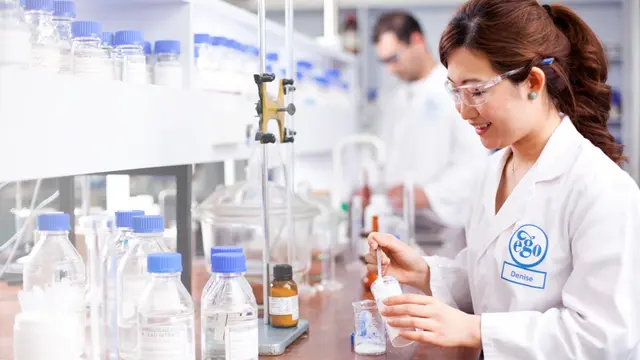
Image Credit: Ego Pharmaceuticals
About Ego Pharmaceuticals
Established in Melbourne, Australia, in 1953, Ego Pharmaceuticals has evolved from a small compounding lab into one of the most respected producers of dermatological, skincare, and topical pharmaceutical products in the country.
Ego Pharmaceutical’s product portfolio is built on reliable pharmaceutical-grade ingredients – including glycerin, liquid paraffin, and petroleum jelly – all of which require consistent, precise, and regulatory-compliant analytical assessment, day in and day out.
This consistent quality is ensured by a Quality Control (QC) laboratory that performs a wide range of compendial assessments, including appearance, pH, density, viscosity, Karl Fischer water determination, UV/Vis assays, titration, Loss on Drying, HPLC, and GC.
For the analysts working there, maintaining throughput while ensuring data integrity in accordance with British Pharmacopeia (BP), European Pharmacopeia (EP), and United States Pharmacopeia (USP) standards presents an ongoing challenge.
Coordinating that work and helping drive the revolution of how it’s done is Ego’s Analytical Development Team. They first posed the question that gave this project its name: why fix processes that are not broken? The answer proved to be compelling.
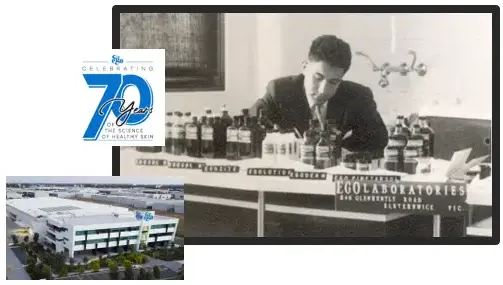
Image Credit: Ego Pharmaceuticals
Simplifying processes is just part of how we work. The real question is never whether something is working – it's whether it could work significantly better."
Helen Evans-Lemmo, Instrumentation Specialist, Ego Pharmaceuticals
A case for change: Challenging the status quo
Ego's automation program came from listening. Its employees sought continuous innovation in their processes and services: streamlined workflows, stronger collaboration, and a culture where process improvement was expected rather than an exception.
Simultaneously, Ego's laboratory leadership had committed to a threefold strategic vision: becoming Cleaner by optimizing process efficiency and cost-effectiveness; Greener by advancing sustainability and green chemistry in alignment with the Twelve Principles of Green Chemistry; and Future Focused by fueling continuous innovation through discovery and communication.
A systematic approach was necessary to translate that vision into practice. The analytical development team mapped existing workflows, pinpointed bottlenecks, identified the most manual-intensive tasks, and prioritized multi-step processes where automation could deliver the greatest gain. Two areas quickly stood out: UV/Vis spectrophotometric assays and titration for pharmaceutical ingredients such as glycerin.
UV/Vis spectrophotometry: Where automation delivered its first major return on investment (ROI)
UV/Vis spectrophotometry plays an essential role in pharmaceutical QC. For both active pharmaceutical ingredients and excipients, UV/Vis assays are essential instruments for validating identity, potency, and purity in accordance with pharmacopeial monographs.
Historically, Ego relied solely on manual workflows for these assays. Analysts prepared sample solutions and standards by hand, performed solvent extractions when necessary, and transferred the final solutions into cuvettes or flow cells for spectrophotometric analysis. Each stage introduced the potential for variability.
The main difficulty in pharmaceutical UV/Vis testing is in sample preparation, not the reading itself – modern instruments such as the METTLER TOLEDO UV7 are already extremely precise.
Methods such as liquid-liquid extraction, in particular, require accurate volumetric additions, precise timing of extraction steps, and consistent mixing. All of which are difficult to standardize when performed manually by multiple analysts under time constraints.
To address this, Ego paired the METTLER TOLEDO UV7 spectrophotometer with the ePrep ONE Sample Preparation Workstation, developing an integrated, validated end-to-end UV/UVis workflow. The ePrep ONE manages all liquid handling steps upstream of the measurement, including reagent preparation, precise volumetric additions, timed extraction steps, and final solution delivery.
The UV instrument then conducts the measurement under standardized, software-controlled conditions, dramatically reducing operator-to-operator variability and ensuring that analytical results reflect the quality of the technique.

Image Credit: METTLER TOLEDO - UV/Vis Spectrophotometer
The first automated UV assay workflow delivered to QC at Ego demonstrated a compelling return on investment, reducing out-of-specification events and rework across all transferred applications.
The UV/Vis automation program has been developed and validated through a unique model involving undergraduate and master's students from Monash University. As part of a student internship program, these students are placed at Ego under the guidance of the Analytical Development team.
The students conduct the development and optimization work under supervision, earning real-world pharmaceutical analytical experience, while Ego benefits from structured method development resources. The work has been formally published in peer-reviewed papers co-authored by Ego, ePrep, and METTLER TOLEDO – demonstrating the scientific rigor of the program.
The broader impact of this program was recognized in late 2025 when the Royal Australian Chemical Institute (RACI) honored Helen Evans-Lemmo, the program coordinator, with its Victorian Branch Industry Mentor of the Year Award. This honor acknowledged both the quality of the science and the social value of delivering meaningful industry placements to the next generation of analytical chemists.
Acknowledgements
Produced from materials originally authored by Anika Adams (Mettler-Toledo Technologies GmbH).
About METTLER TOLEDO
METTLER TOLEDO instruments are used in research, scientific and quality control labs, amongst many others in the pharmaceutical, chemical, food and cosmetics industries. They are a global market leader with the three instrument groups most frequently used in the laboratory, like balances, pipettes, and pH meters, and we are a pioneer in the field of Automated Chemistry.
METTLER TOLEDO industrial solutions cover the diverse steps in a host of manufacturing processes at many of the same customers as served for the laboratory. Solutions range from receiving raw materials, in-line process control and end-of-line packaging control, to logistics and shipping. Increasingly, these solutions are fully integrated into the customer's IT environment, helping automate their workflows.
METTLER TOLEDO
Sponsored Content Policy: News-Medical.net publishes articles and related content that may be derived from sources where we have existing commercial relationships, provided such content adds value to the core editorial ethos of News-Medical.net, which is to educate and inform site visitors interested in medical research, science, medical devices, and treatments.