Hot-melt extrusion (HME) has quickly gained value in the pharmaceutical sector thanks to the distinct benefits it offers compared with conventional manufacturing techniques.1 These benefits include a solvent- and dust-free process, fewer processing stages, reproducibility with low batch-to-batch variation, and support for continuous production.
HME offers an efficient method for incorporating APIs into polymer-based rods or tubes, which can be cut and shaped into customized implants for therapeutic delivery.
Subcutaneous implants have emerged in recent years as a cutting-edge therapeutic delivery system. These implants typically consist of cylindrical rods produced from a polymer matrix that incorporates the active pharmaceutical ingredient (API) for sustained release.
They enable site-specific and controlled release of API, supporting treatment durations ranging from weeks to years.
Furthermore, subcutaneous implants provide greater patient compliance compared to oral therapeutic delivery systems. Their applications cover a wide range, from contraception to the treatment of chronic disease. HME is proving to be an exceptional method for manufacturing a variety of these specialized therapeutic delivery implants.
Types of implant designs
Matrix-type implant design
In a matrix-type design, the therapeutic is uniformly dispersed within a polymer matrix. This implant type exhibits a high initial release rate, commonly termed a “burst” release, followed by a more gradual release. The release rate is affected by the API loading as well as its morphology and particle size. Matrix-type implants are generally employed for applications requiring a rapid onset of action followed by sustained release.
Reservoir-type implant design
In a reservoir-type design, the therapeutic is dispersed in a core surrounded by a pure polymer membrane. The core may consist of a solid dispersion or a solid solution of the API in the polymer.
Alternatively, the API can be dispersed in a lipid liquid filled into hollow tubes, which function as the release membrane. This implant type enables a more controlled and consistent release profile. Reservoir-type implants are ideal for applications in which precise control over the therapeutic release rate is required.
Use of hollow tubes in reservoir-type designs
Hollow tubes have received substantial attention in the field of controlled therapeutic delivery due to their unique capability to encapsulate and release therapeutic agents in a targeted and sustained manner.2 The production process for hollow tube-based implants is composed of three primary steps:
- Extrusion of capillary (hollow tube)
- Filling of capillary with liquid
- Sealing of open ends
These steps ensure that suitable high-quality hollow tubes are produced for their intended application. This article presents an in-depth overview of the process and advantages of hot-melt extrusion to manufacture hollow-tube implants, with particular emphasis on the key steps and conditions required for effective implementation.
Materials and methods
Materials
The findings presented here are based on several trials conducted with widely used biodegradable polymers, including polylactic-co-glycolic acid (PLGA). The PLGA RG502H powder blend was supplied by Evonik Industries AG (Darmstadt, Germany).
Methods
Several stages are involved in the HME process, including material feeding, plastification and compounding, extrusion and shaping, accurate diameter measurement, diameter control loop to conveying mechanism, and precise cutting.
All process steps were carried out using the Thermo Scientific™ Pharma™ 11 Twin-Screw Extruder, the gravimetric RotoTube feeder, and the Thermo Scientific™ CaliCut™ Post-Extrusion System (Figure 1).
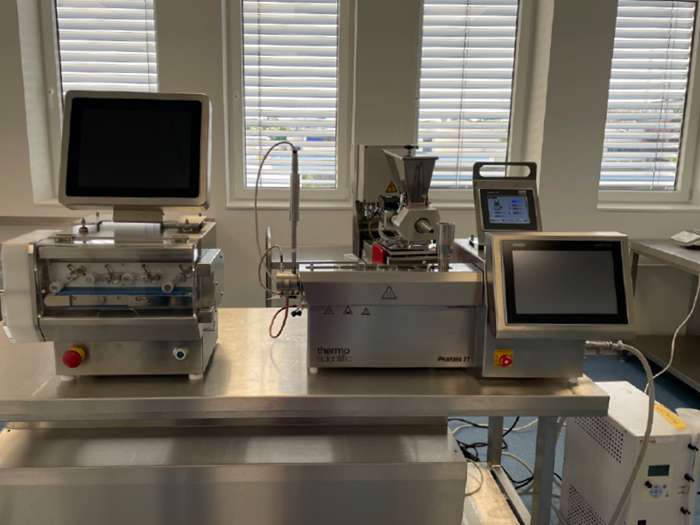
Figure 1. Extrusion setup for hollow-tube extrusion with Pharma 11 twin-screw extruder, gravimetric RotoTube feeder, Pharma 11 catheter die, and pulling and cutting to the required length and diameter control via the CaliCut post-extrusion system. Image Credit: Thermo Fisher Scientific – Materials Characterization
The material, made of a powder blend, was continuously fed into the co-rotating Pharma 11 twin-screw extruder using a gravimetric feeder control. The extruder had a functional length of 40 L/D, and the feeding system could control feed rates of approximately 100 g/hour. The Pharma 11 twin-screw extruder was fitted with a standard HME screw design incorporating two kneading blocks (30°, 60°, and 90°).
In addition, a cutting-edge Pharma 11 catheter die (Figure 2) with less dead volume was mounted to extrude the material as a hollow strand. The catheter die enables the production of different outer (OD) and inner (ID) diameters depending on the chosen inserts.
In this study, the material was extruded through a catheter die with defined inner and outer diameters of ID = 1.55 mm and OD = 2.3 mm to accurately shape the hollow implant to the targeted implant size.
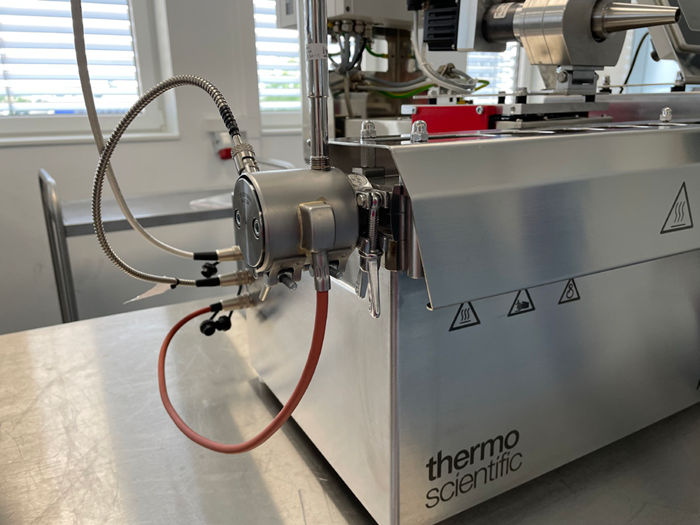
Figure 2. Pharma 11 catheter die. Image Credit: Thermo Fisher Scientific – Materials Characterization
The extrusion temperature increased gradually from 25 °C to 100 °C across the eight different zones of the catheter die. The screw speed was maintained at a constant 100 rpm.
The CaliCut post-extrusion system is a cutting-edge instrument designed to precisely calibrate polymer strands and cut them into well-defined pharmaceutical implants, ensuring adherence to GMP and 21 CFR Part 11 regulations.
The extrudate can be taken directly through a one-axis laser diameter measurement and onto the conveyor belt without a major cool-down. Based on the laser measurement, the belt speed can be modified to pull the strand, enabling adjustment of the diameter within established tolerances to maintain the outer diameter.
The belt length ensures adequate cooling for the strand before it enters the cutting section of the instrument, allowing cutting to be performed with maximum accuracy. Implant cutting is a critical step, with smooth cutting surfaces depending significantly on the polymer formulation and the cutting technique used.
For this configuration, the rotary cutter was used. The rotating knife was fitted to cut the hollow strand into 10 mm hollow tubes, which were subsequently gathered.
Results and discussion
The blended powder mixtures were successfully extruded within an optimal temperature range, ensuring stable process parameters, including extrusion and die temperatures, screw speed, and feed rate. Accurately feeding the powder blend was essential to maintain tight dimensional implant tolerances.
Preprocessing the powder blend using hot-melt extrusion for pellet fabrication enhanced flowability and ensured more precise material feeding in the second extrusion.
The polymer was melted and homogeneously compounded using a twin-screw extruder. Critical process parameters included barrel and die temperature, screw design and speed, and throughput. The maximum throughput was constrained by the resulting pressure of the extruded material.
The screw speed and temperature needed to be maintained at sufficiently high levels for processing, while remaining as low as necessary to prevent degradation and impurity generation. Excellent extrudability was linked to hollow tubes featuring the following properties:
- Maintained shape: The hollow tubes preserved their shape without collapsing or expanding after exiting the die.
- Consistent diameter: Both the inner diameter (ID) and outer diameter (OD) remained uniform.
- Smooth surface: The absence of pores ensured a consistent release profile.
The die temperature had a significant impact on the final shape stability of the hollow tube owing to the viscosity characteristics of the extruded melt. Elevated process temperatures at the die tended to result in collapse of the hollow strand shape.
A one-axis laser measurement was used to determine the diameter, and the conveying speed was adjusted according to the outer diameter value, resulting in corrections to the strand diameter. The inner diameter and wall thickness were adjusted via controlled airflow through the inner die pin insert, producing specimens with consistent wall thickness, as shown in the microscope image (Figure 3).
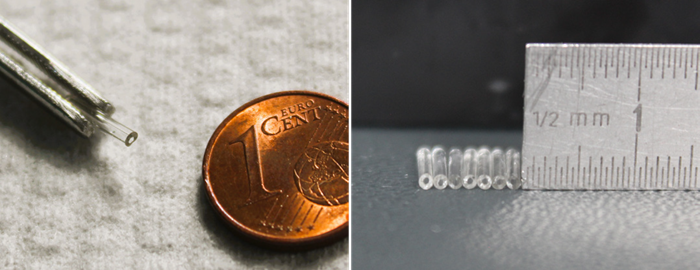
Figure 3. Extruded hollow tubes with an outer diameter of 1.5 mm, wall thickness of 0.4 mm, and length of 10 mm. Image Credit: Thermo Fisher Scientific – Materials Characterization
The temperature of the hollow strand was controlled in the CaliCut conveying chamber to ensure constant conveying and precise cutting. The resulting hollow-tube implants could be readily filled with a liquid via capillary forces (Figure 4) and were ready for the next possible processing step: sealing the openings.
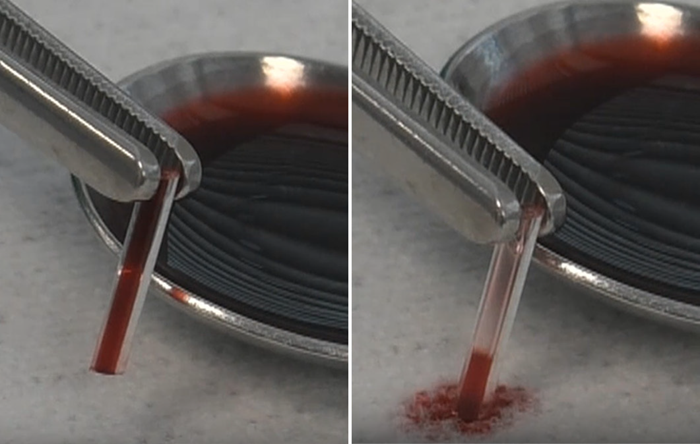
Figure 4. Hollow tube filled with colorant liquid demonstrating easy filling and emptying due to capillary forces. Image Credit: Thermo Fisher Scientific – Materials Characterization
Conclusion
Injectable hollow-tube implants are a promising parenteral therapeutic delivery system for the safe administration of highly potent drugs. The HME process delivers dependable technology for the continuous production of these implants while maintaining tight tolerances and exceptional content uniformity.
The capacity to fill these hollow tubes with lipid-based APIs using capillary forces highlights their potential for targeted and sustained therapeutic delivery.
This cutting-edge strategy improves patient compliance and widens the scope of applications, from contraception to chronic disease therapies. Future research should focus on further optimizing the HME process and exploring a broader range of polymers and APIs to expand the efficacy and flexibility of hollow-tube therapeutic delivery systems.
Acknowledgments
Produced from materials originally authored by Dirk Hauch, Product Support Specialist (Thermo Scientific), Margarethe Richter, Application Specialist (Thermo Scientific), and Ceren Yüce, Application Specialist (Thermo Scientific).
References
- Almeida, A., et al. (2012). Hot‐melt extrusion developments in the pharmaceutical industry. Hot‐Melt Extrusion: Pharmaceutical Applications, pp.43–69. DOI:10.1002/9780470711415.ch3. https://onlinelibrary.wiley.com/doi/10.1002/9780470711415.ch3.
- Bebernik, P., et al. (2025). Rational design and DoE based prediction model for levodopa gastroretentive systems based on hot-melt tube extrusion. Journal of Drug Delivery Science and Technology, 111, p.107201. DOI:10.1016/j.jddst.2025.107201. https://www.sciencedirect.com/science/article/pii/S1773224725006045.
About Thermo Fisher Scientific – Materials Characterization

Thermo Fisher Materials and Structural Analysis products give you outstanding capabilities in materials science research and development. Driving innovation and productivity, our portfolio of scientific instruments enable the design, characterization and lab-to-production scale of materials used throughout industry.
X-ray fluorescence spectrometers, FTIR spectrometers and X-ray photoelectron spectrometers enable researchers and material analysts to probe the chemical composition of materials ranging from ultra thin-films to bulk powders used in product development and materials troubleshooting. We offer a line of rheometry and viscometry instruments, as well as single- and twin-screw extruders, for laboratory benches that enable you to measure the physical property of semi-solids and liquids for shear flow and yield stress.
No other company offers the breadth of products and the depth of analytical capabilities for materials science and engineering.
Vibrational Spectroscopy
Our line of Nicolet FTIR spectrometers have led the analytical instrument industry for over fifty years with reliable, robust and flexible solutions. Thermo Scientific Raman spectrometers enable point analysis, confocal microscopy and chemical imaging.
X-Ray Photoelectron Spectroscopy
For the analysis of surfaces and thin film structures, our line of XPS spectrometers feature ease-of-use, automation and multi-technique operation for material science and R&D labs. For an in-depth look into our surface analysis capabilities and resources, visit xps-simplified.com.
Electron Microscopy and X-Ray Microanalysis
Everyday, Thermo Fisher customers from around the globe seek solutions to complex challenges about product quality, manufacturing efficiency and material properties with electron microscopy, ion beam and SEM/EDS, WDS and EBSD capabilities that enable the next breakthrough discovery.
X-Ray Fluorescence
Rapidly characterize materials for qualitative and quantitative chemistry specifications with the gold-standard for accurate, nondestructive elemental analysis across a wide range of materials.
X-Ray Diffraction
Our line of ARL EQUINOX X-ray diffractometers provides high-performance results in a wide range of industrial and research applications including academic research, chemicals, pharmaceuticals, polymers, semiconductors, thin films, metals and minerals.
Rheology and Viscometry
Thermo Scientific rheometers and viscometers are designed to accurately measure the properties of fluids and other complex materials. They are recognized for accuracy and ease of use in quality control, product development, and research applications. Our viscometers allow you to quickly determine the flow behavior of fluids and are designed for your application.
Extruders and Torque Rheometers
Ideal for materials compounding experiments and pilot scale extrusion production, our minicompounders and 11 mm parallel twin-screw extruders, and torque rheometers are well-suited for research and development in the polymer, pharmaceutical, bioscience, and nanotechnology sectors.
Optical Emission Spectrometry
Perform rapid elemental analysis of solid metallic samples with optical emission spectrometry using Arc/Spark excitation. This technique meets the most demanding analysis needs of the metals industry from production control to R&D, from incoming material inspection to scrap sorting.
Sponsored Content Policy: News-Medical.net publishes articles and related content that may be derived from sources where we have existing commercial relationships, provided such content adds value to the core editorial ethos of News-Medical.net, which is to educate and inform site visitors interested in medical research, science, medical devices and treatments.