The FastGene® qFYR is a high‑precision instrument designed for quantitative polymerase chain reaction (qPCR) experiments. qPCR is an advanced technique for the sensitive detection and quantification of nucleic acids. During analysis, the target RNA or DNA sequence is amplified, and the resulting cycle‑dependent increase in fluorescence is monitored in real time.
Key features
- Rapid detection − Dye-based and Probe assays
- Standard plate format − 96-well block with gradient function
- Improved homogeneity across all wells of a 96-well plate
- Highest sensitivity
- 4+1 or 6 different color channels – perfect for multiplex qPCR
- 4+1 channels: 4 different color channels + 1 additional second FAM/SYBR channel for rapid dual mode melt curve analysis
- 6 channels
- Integrated precision melt analysis tool (for probe-based allelic discrimination)
- Software included − Easy-to-use and intuitive
- Many applications − genotyping, Gene expression analysis, pathogen detection, HRM (high resolution melt), genetic analysis
The device for multiple applications
The FastGene® qFYR was designed to meet the highest laboratory standards and deliver reliable performance across a wide range of real-time qPCR applications:
- Absolute and relative quantification
- Gene expression analysis
- GMO detection
- Genotyping
- Melting curve analysis
- Gene mutation analysis
- Endpoint qualitative analysis
- Pathogen detection
- miRNA analysis
- Protein stability screening
Innovative technology
High sensitivity optical design
The FastGene® qFYRhas a unique, patented optical detection system. It has a Fresnel lens with a short focal length and a high-quality MPPC detector. This reduces the distance from detector to sample, while reducing cross-talk and signal loss between samples, and improving signal sensitivity.
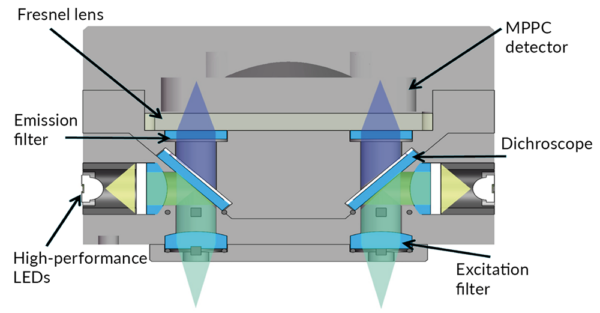
Image Credit: NIPPON Genetics EUROPE
Superior thermal cycler performance
The FastGene® qFYR provides accurate temperature control (± 0.2 °C) and uniformity across the 96-well plate. The innovative hollowed-out thermal block design minimizes overall weight while providing quick heating and cooling rates (up to 6 °C per second) for fast qPCR methods. The system also employs cutting-edge Peltier components for optimal reaction quality and performance stability, resulting in reliable and consistent qPCR results.
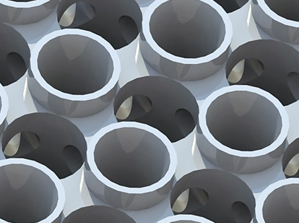
Image Credit: NIPPON Genetics EUROPE
Fast measurement with high-performance LED channels
The small distance between the scanning head and the plate provides a high level of sensitivity and prevents cross-talk between the individual wells.
FastGene® qFYR has the ability for four or six different color channels to be installed on the scanning head, which allows for excitation of all commonly used qPCR dyes in a single plate scan (8 sec).
The FastGene® qFYR is available in two versions:
- 4+1 channels (FastGene® qFYR: FG-QPTC01)
- 6 channels (FastGene® qFYR Plus: FG-QPTC02)
I) FastGene® qFYR (FG-QPTC01)
The FastGene® qFYR (FG-QPTC01) has 4+1 channels: four different color channels and 1 second FAM channel.
The dual FAM/SYBR channel enables melt curve and high‑resolution melt experiments to be conducted in fast dual mode, effectively cutting measurement time in this channel by half.
- Channel 1: FAM/SYBR Green etc.
- Channel 2: VIC/JOE/HEX/TET etc.
- Channel 3: ROX/Texas Red etc.
- Channel 4: Cy5 etc.
- Channel 5: FAM/SYBR Green etc.
II) FastGene® qFYR Plus (FG-QPTC02)
The FastGene® qFYR Plus (FG-QPTC02) has six different color channels.
- Channel 1: FAM/SYBR Green etc.
- Channel 2: VIC/JOE/HEX/TET etc.
- Channel 3: ROX/Texas Red etc.
- Channel 4: Cy5 etc.
- Channel 5: Cy5.5/Quasar 705/Alexa Fluor 680
- Channel 6: ATTO 42
Download the Brochure for More Information
Software | Video tutorials
The powerful user software has it all
The analysis software (FastGene® qFYR Analysis Studio) is particularly simple and easy to use. The menu is well-organized and easy to navigate. It adapts to the user's demands for various experimental setups, and individual settings are easily adjustable. Many processes, including baseline subtraction and Cq value threshold computation, can be carried out automatically thanks to integrated analysis algorithms.
Nucleic acid quantification, both absolute and relative, can be automated. Predefined analysis settings can be saved in the software so that run data can be automatically exported into the preferred format, such as Excel, PDF, or txt.
- Clearly structured and user-friendly
- Customizable settings
- Intuitive navigation
- Modules for multiple applications
- Automatic analysis with integrated algorithms
- Modern UI design
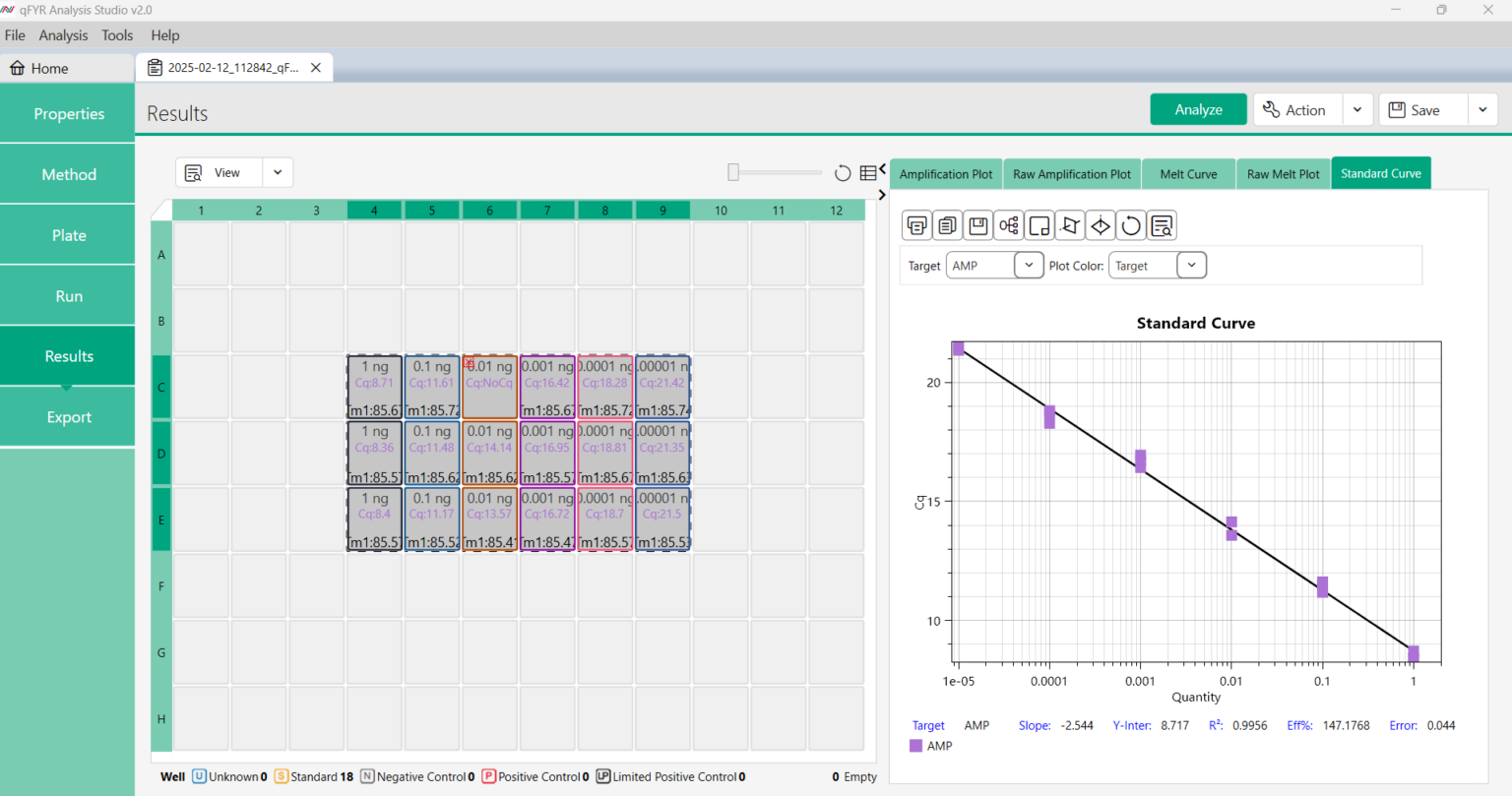
Image Credit: NIPPON Genetics EUROPE
FastGene qFYR - Software installation, Experiment setup and Data analysis - Complete Webinar
Video Credit: NIPPON Genetics EUROPE
FastGene qFYR - How to set up your Real-Time PCR experiment in under 3 minutes
Video Credit: NIPPON Genetics EUROPE
FastGene qFYR - How to analyse and export your real-time data in under 2 minutes
Video Credit: NIPPON Genetics EUROPE
Application data
Generate high-quality data
Ideal amplification conditions are guaranteed by the combination of cutting-edge optics and a high-precision thermal block. As a result, the FastGene® qFYR is ideal for a variety of quantitative real-time PCR applications.
Outstanding homogeneity
FastGene® qFYR shows high homogeneity across all wells of a 96-well plate.
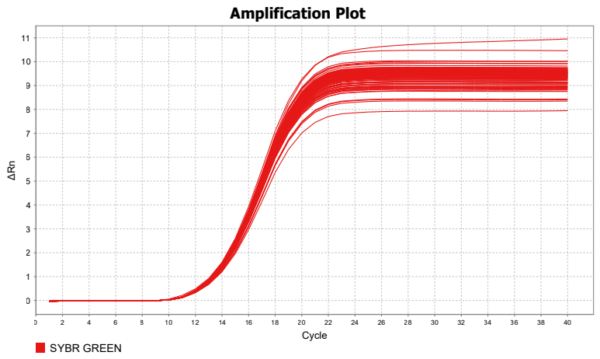
Figure 1. Amplification of 1 ng plasmid DNA in all 96 wells of a PCR plate. The mean Cq value at a cycle number of 13.89 +/- 0.055 was determined automatically, illustrating highly homogenous amplification results obtained by the FastGene® qFYR. Image Credit: NIPPON Genetics EUROPE
Powerful multiplexing
The FastGene® qFYR Plus can distinguish up to six different targets within a single reaction well, allowing faster workflows, minimizing sample use, and conserving reagents - all without compromising precision.
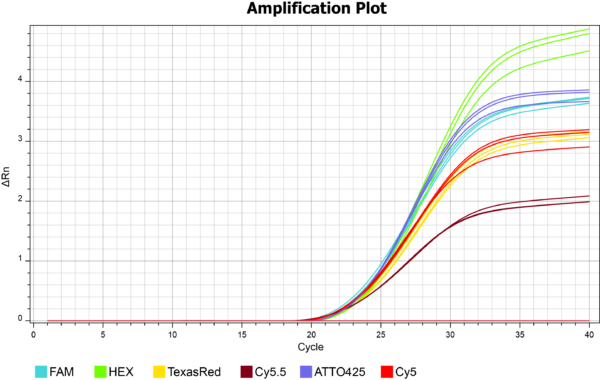
Figure 2. Multiplex amplification of six mammalian housekeeping genes (GAPDH, B2M, ACTG1, PGK1, HPRT1, and ACTB ). Each gene was detected using a different fluorescent probe: FAM – GAPDH, HEX – B2M, TexasRed – ACTG1, Cy5.5 – PGK1, ATTO425 – HPRT1, Cy5 – ACTB. Image Credit: NIPPON Genetics EUROPE
Accurate quantification
The FastGene® qFYR offers a broad dynamic range, ensuring accurate and dependable quantification.
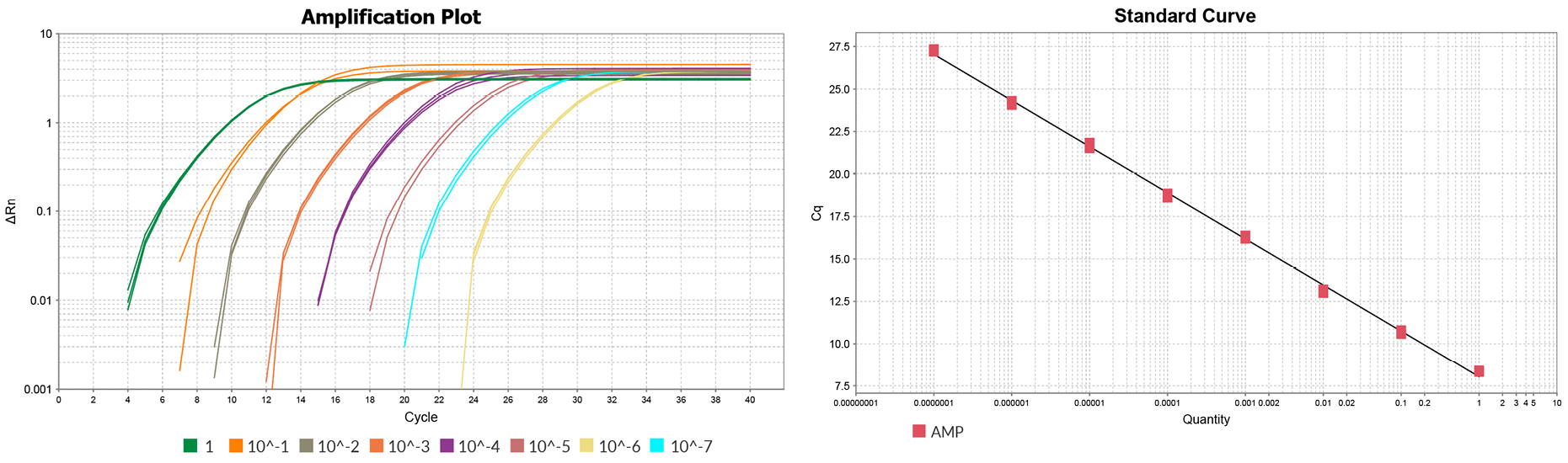
Figure 3. The amplification plot shows the log of change in normalized reporter fluorescence against the cycle number. The amplification took place from plasmid DNA with AMP-specific primers in a 10-fold dilution series ranging from 1 ng to 1×10⁻⁶ ng plasmid DNA. The generated standard curve shows 100% efficiency. Image Credit: NIPPON Genetics EUROPE
1.3-fold target discrimination
With high sensitivity, FastGene® qFYR can help to differentiate smaller concentration differences with improved accuracy.
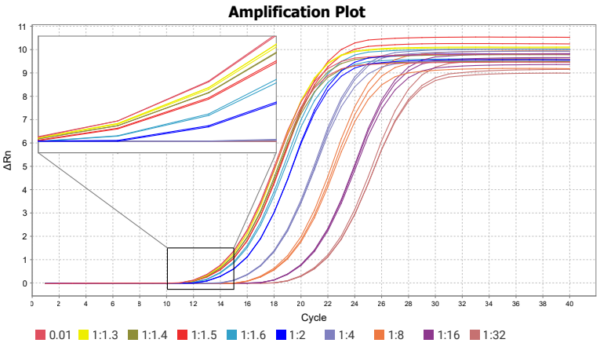
Figure 4. The amplification of plasmid DNA was carried out using AMP-specific primers with a 2-fold dilution series starting at 0.1 ng with additional dilutions of 1:1.3, 1:1.4, 1:1.5 and 1:1.6. Concentration differences can be detected up to 1:1.3-fold dilution. Image Credit: NIPPON Genetics EUROPE
Melt curve analysis
The FastGene® qFYR analysis software has an integrated Precision Melt Analysis Tool for probe-based allelic discrimination, eliminating the need for users to purchase the function additionally.
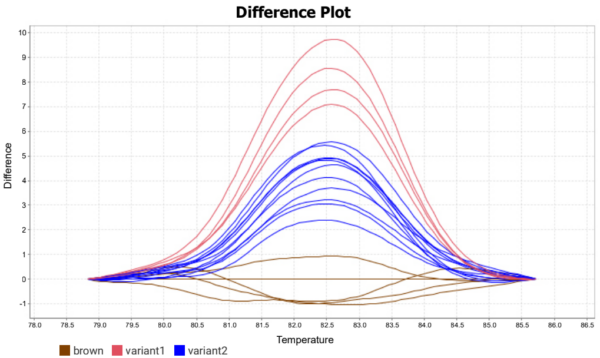
Figure 5. The difference plot of the high-resolution melting curve allows the discrimination between SNPs extracted from blood samples for brown eyes and two variants of blue eyes. Image Credit: NIPPON Genetics EUROPE
Gradient qPCR for optimal annealing
The FastGene® qFYR’s thermal gradient function can be used to measure the optimal annealing temperature of a specific target.
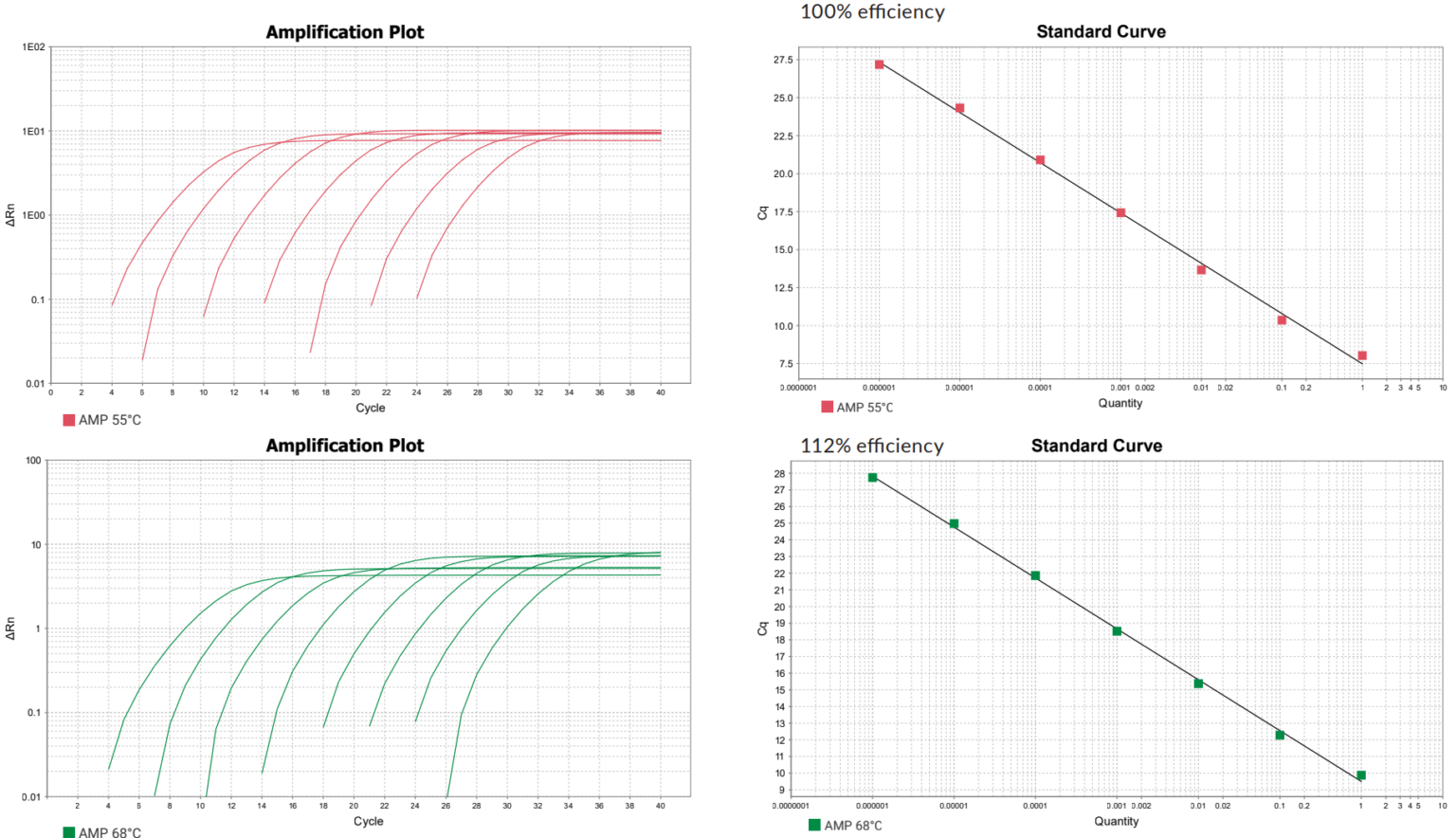
Figure 6. Plasmid amplification with IC green dye was carried out in a 10-fold dilution series from 1 ng to 1×10⁻⁶ ng. This example of a thermal gradient experiment with 55 °C and 68 °C shows 55 °C as the optimal annealing temperature with 100% efficiency. Image Credit: NIPPON Genetics EUROPE
Download the Brochure for More Information
Specifications
Thermal cycler
Source: NIPPON Genetics EUROPE
|
FastGene® qFYR (FG-QPTC01)
4+1 channel system |
FastGene® qFYR Plus (FG-QPTC02)
6-channel system |
|
 |
 |
| Block capacity |
96 |
96 |
| Sample volume |
5–100 µL |
5–100 µL |
| Heating and cooling method |
Peltier (6 temperature control modules) |
Peltier (6 temperature control modules) |
| Temperature control technology |
Hollow-out module combined with edge temperature compensation technology |
Hollow-out module combined with edge temperature compensation technology |
| The maximum heating and cooling rate of the block |
6.0 °C/s |
6.0 °C/s |
| The average heating and cooling rate of the sample |
4.0 °C/s |
4.0 °C/s |
| Temperature range |
4–100 °C |
4–100 °C |
| Temperature accuracy |
± 0.2 °C |
± 0.2 °C |
| Temperature uniformity |
± 0.2 °C |
± 0.2 °C |
| Temperature setting range |
4–100 °C |
4–100 °C |
| Heated lid |
Electronic automatic lid |
Electronic automatic lid |
| Gradient zones |
12 columns |
12 columns |
| Temperature gradient temperature range |
1–36 °C |
1–40 °C |
| Linear dynamic range |
10 orders of magnitude: 1-1010 copies |
10 orders of magnitude: 1-1010 copies |
| Software name |
FastGene®qFYR Analysis Studio |
FastGene®qFYR Analysis Studio |
Optical detection
Source: NIPPON Genetics EUROPE
|
FastGene® qFYR (FG-QPTC01)
4+1 channel system |
FastGene® qFYR Plus (FG-QPTC02)
6-channel system |
| Excitation light source |
4 single-color high-efficiency LEDs
(maintenance-free, working life
>100,000 hours) |
6 single-color high-efficiency LEDs
(maintenance-free, working life >100,000 hours) |
| Detector device |
Highly sensitive MPPC (SiPM –
solid-state photomultiplier) |
Highly sensitive MPPC (SiPM – solid-state photomultiplier) |
| Scanning principle |
Time-resolved real-time scan |
Time-resolved real-time scan |
| Fluorescent channel number |
4 channels (2x FAM) |
6 channels |
| Application to fluorescent |
- Channel 1: FAM/SYBR Green etc.
- Channel 2: VIC/JOE/HEX/TET etc.
- Channel 3: ROX/Texas Red etc.
- Channel 4: Cy5 etc.
- Channel 5: FAM/SYBR Green etc.
|
- Channel 1: FAM/SYBR Green etc.
- Channel 2: VIC/JOE/HEX/TET etc.
- Channel 3: ROX/Texas Red etc.
- Channel 4: Cy5 etc.
- Channel 5: Cy5.5/Quasar 705/Alexa Fluor 680
- Channel 6: ATTO 425
|
| Dye compatibility |
- FAM/SYBR Green
- VIC/HEX/TET/JOE
- ROX/Texas Red, Mustang Purple
- Cy5/LIZ
|
- FAM/SYBR Green
- VIC/HEX/TET/JOE
- ROX/Texas Red, Mustang Purple
- Cy5/LIZ
- Cy5.5/Quasar 705/Alexa Fluor 680
- ATTO 425
|
| Detector position |
Top of the blockTop of the block |
Top of the block |
| Detection sensitivity |
1 copy of the target sequence |
1 copy of the target sequence |
| System sensitivity |
Distinguishable 1.33-fold copy number difference in singleplex reactions |
Distinguishable 1.33-fold copy number difference in singleplex reactions |
| Detection time |
- Standard mode (full channel): 8.5 seconds/96-well plate
- Fast mode (dual FAM): 4 seconds/96-well plate
|
- Standard mode (full channel): 8.5 seconds/96-well plate
|
| Exitation/detection range |
- Excitation range: 455–650 nm;
- Scope of test: 510–715 nm
|
- Excitation range: 415–685 nm;
- Scope of test: 455–745 nm
|
Physical specifications
Source: NIPPON Genetics EUROPE
|
FastGene® qFYR (FG-QPTC01)
4+1 channel system |
FastGene® qFYR Plus (FG-QPTC02)
6-channel system |
| Instrument specifications |
- Dimensions: 35 cm x 52 cm x 37 cm (length x wide x height)
- Weight: 25 kg
|
- Dimensions: 35 cm x 52 cm x 37 cm (length x wide x height)
- Weight: 25 kg
|
| Environmental conditions |
- Temperature: 10–30 °C
- Humidity: ≤ 85% RH, no condensation
- Atmospheric pressure: 85.0 kPa ~ 106.0 kPa
- Altitude: < 2000 m
|
- Temperature: 10–30 °C
- Humidity: ≤ 85% RH, no condensation
- Atmospheric pressure: 85.0 kPa ~ 106.0 kPa
- Altitude: < 2000 m
|
| Power supply specification |
- Power supply voltage: AC 100–240 V
- Frequency: 50 Hz
- Power: 750 W
|
- Power supply voltage: AC 100–240 V
- Frequency: 50 Hz
- Power: 750 W
|
Data
communication interface |
USB ports |
USB ports |
Download the Brochure for More Information
Compatibility and consumables
Get the right consumables for FastGene® qFYR
The FastGene® qFYR is compatible with low‑profile (0.1 mL) PCR tubes, 8‑well PCR tube strips with transparent flat tops, as well as half‑skirted and non‑skirted low‑profile 96‑well PCR plates.
- 8-well strips: Low-profile (0.1 mL) clear and white PCR thin-walled 8-tube, flat-top transparent optical tube cover, e.g.:
- 8-well PCR Tube Strips 0.1 mL with flat cap strips (FG-017FC)
- 8-well White PCR Tube Strips 0.1 mL + optical Flat Cap Strips (FG-019FC)
- 8-well PCR Tube Strips 0.1 mL with flat caps (FG-018WF)
- Single tubes: Low-profile (0.1 mL) clear/white PCR thin-walled single tube, flat-topped transparent optical tube cover, e.g.:
- PCR Tubes 0.1 mL with flat caps (FG-011F)
- 96-well plates: Low-profile (0.1 mL) clear/white PCR thin-walled 96- well plate with no hemline or hemline, e.g.:
- FastGene® 96-well PCR Plate 0.1 mL, non-skirted (FG-170350)
- FastGene® White 96-well PCR Plate 0.1 mL, semi-skirted (FG-2102)
- FastGene® 96-well Fast PCR Plate 0.1 mL (FG-03890-50)
The system is not compatible with high-profile (0.2 mL) PCR reaction tubes and convex tube covers.
Info: If there are a few sample tubes, use 8-well tubes for support on both sides, or use empty single tubes in the four corners to prevent uneven force on the plate slot.
Dye compatibility
NIPPON Genetics’ FastGene® IC Green and Probe Mixes are suitable reagents for the FastGene® qFYR.
Users should find the right dye for their application.
- F1: FAM/SYBR Green
- F2: VIC/HEX/TET/JOE, JUN
- F3: ROX/Texas Red, Mustang Purple
- F4: Cy5/LIZ
- F5: Cy5.5/Quasar 705/Alexa Fluor 680 (FastGene® qFYR Plus only)
- F6: ATTO 425 (FastGene® qFYR Plus only)
Computer configuration requirements
The computer connected with the FastGene® qFYR Analysis Studio must have the following configuration:
- Memory: 4 GB
- Processor: Intel or AMD dual-core CPU, 2.8 GHz
- Hard disk: 500 GB
- Display resolution: 1440×900 or higher
- Network card: 10 M/100M adaptive network card (optional)
- Operating system: Windows 10 or above and Office Word/Excel 2007 or above
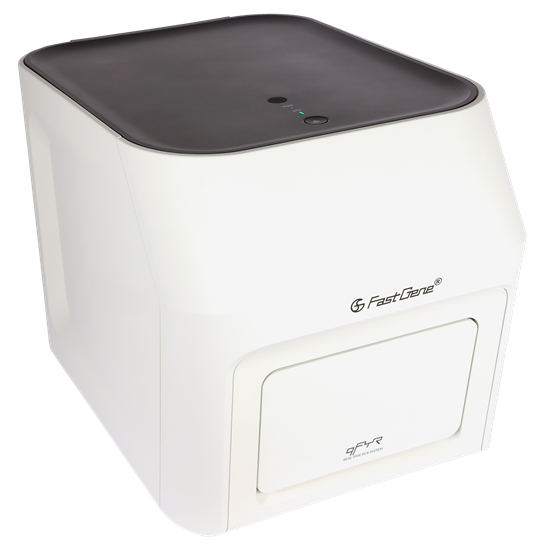
Image Credit: NIPPON Genetics EUROPE
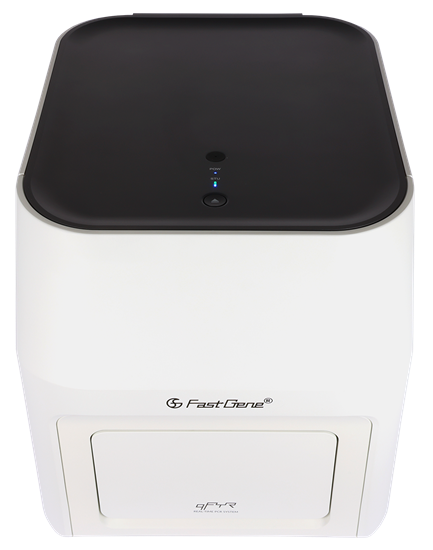
Image Credit: NIPPON Genetics EUROPE
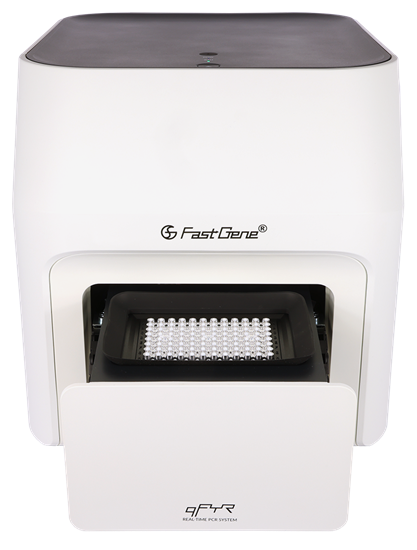
Image Credit: NIPPON Genetics EUROPE