PFAS (per- and polyfluoroalkyl substances) are synthetic chemicals used in many everyday consumer products. What makes them particularly concerning is their persistence; they do not easily break down in the environment and can build up in the human body over time.
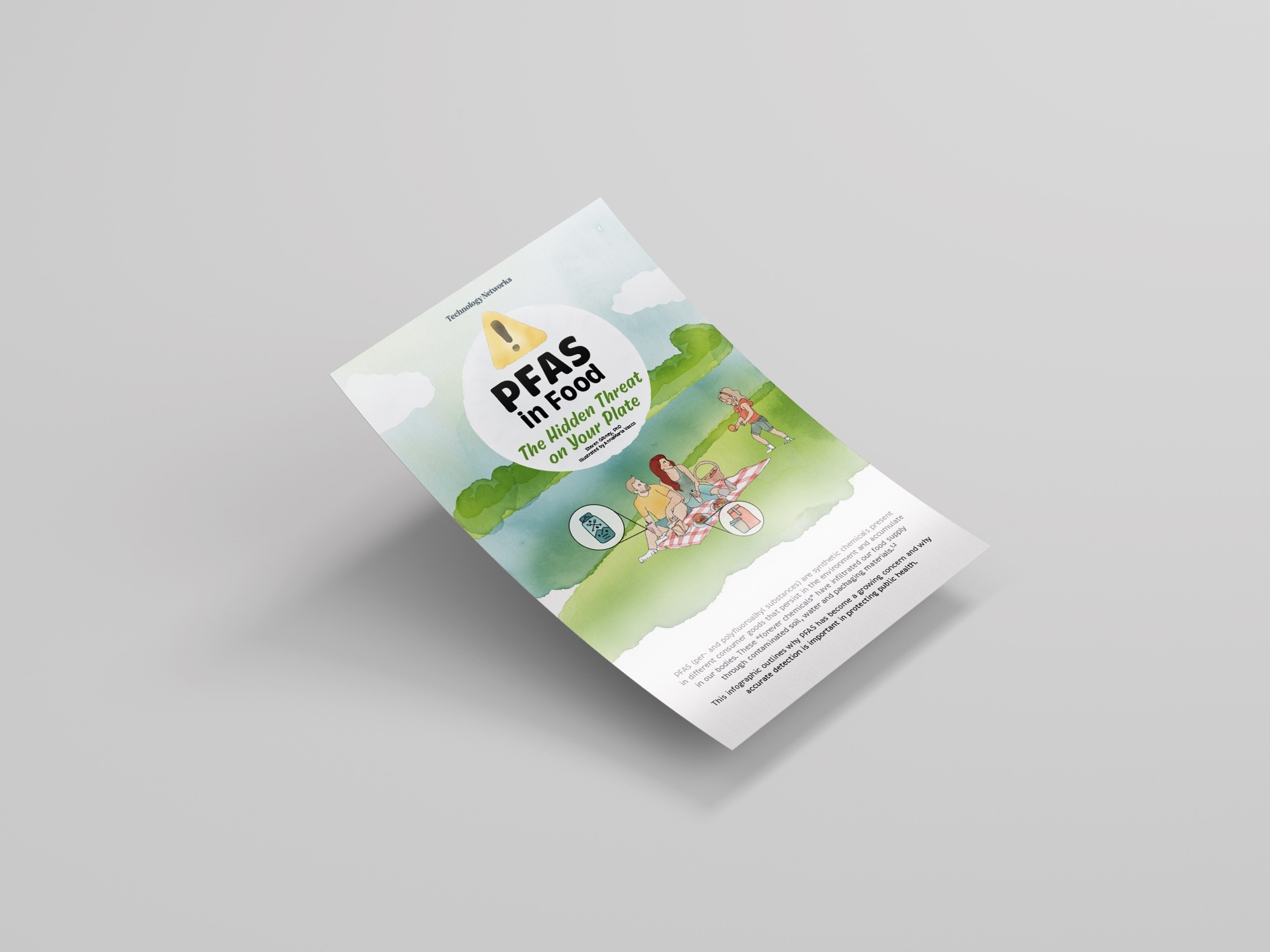
Because of this, they are often called “forever chemicals.” PFAS can enter the food supply through contaminated soil and water, as well as through certain food packaging materials.1,2
This eBook outlines how PFAS has become a growing concern and why accurate detection is important in protecting public health.
The forever chemical problem
PFAS are synthetic chemicals designed to last a very long time. They are widely used in products such as non-stick cookware, waterproof clothing, stain-resistant fabrics, food packaging, and firefighting foams. Their strong carbon–fluorine bonds make them highly resistant to degradation, but this persistence also creates concerns:3
- Persistence: Because they resist natural breakdown, PFAS can remain in the environment for hundreds of years.
- Health impact: Long-term exposure to PFAS has been associated with serious health effects, including links to cancer, liver damage, and suppression of the immune system.4
- Bioaccumulation: Their resistance to breakdown means PFAS can also permeate and build up in the human body over time.
As these “forever chemicals” continue to contaminate the food supply and accumulate in the environment, they are considered an urgent global health issue. The development of innovative detection tools is crucial for mitigating the release of PFAS into the natural world and protecting public health.
References
- Bonato, T., et al. (2025). Contamination of the terrestrial food chain by per- and polyfluoroalkyl substances (PFAS) and related human health risks: A systematic review. Science of The Total Environment, (online) 961, p.178337. DOI: 10.1016/j.scitotenv.2024.178337. https://www.sciencedirect.com/science/article/pii/S004896972408495X.
- Ohoro, C.R. and Ngole-Jeme, V.M. (2025). PFAS Contamination and Its Rising Toll on Food Security: A Hidden Global Threat. Food Control, (online) p.111611. DOI: 10.1016/j.foodcont.2025.111611. https://www.sciencedirect.com/science/article/pii/S0956713525004803?via%3Dihub.
- Hela Rekik, et al. (2024). Per-and polyfluoroalkyl (PFAS) Eternal pollutants: sources, environmental impacts and treatment processes. Chemosphere, pp.142044–142044. DOI: 10.1016/j.chemosphere.2024.142044. https://www.sciencedirect.com/science/article/abs/pii/S0045653524009378.
- eBioMedicine (2023). Forever chemicals: the persistent effects of perfluoroalkyl and polyfluoroalkyl substances on human health. eBioMedicine, (online) 95, p.104806. DOI: 10.1016/j.ebiom.2023.104806. https://www.thelancet.com/journals/ebiom/article/PIIS2352-3964(23)00372-9/fulltext.
About Sartorius Lab Instruments GmbH & Co. KG
The Sartorius Group is a leading international partner of life science research and the biopharmaceutical industry.
With innovative laboratory instruments and consumables, the Group’s Lab Products & Services Division concentrates on serving the needs of laboratories performing research and quality control at pharma and biopharma companies and those of academic research institutes.
The Bioprocess Solutions Division with its broad product portfolio focusing on single-use solutions helps customers to manufacture biotech medications and vaccines safely and efficiently. The Group has been annually growing by double digits on average and has been regularly expanding its portfolio by acquisitions of complementary technologies.
In fiscal 2021, the company earned sales revenue of some 3.45 billion euros. At the end of 2021, nearly 14,000 people were employed at the Group’s approximately 60 manufacturing and sales sites, serving customers around the globe.
Sponsored Content Policy: News-Medical.net publishes articles and related content that may be derived from sources where we have existing commercial relationships, provided such content adds value to the core editorial ethos of News-Medical.net, which is to educate and inform site visitors interested in medical research, science, medical devices and treatments.