This interview with Vicky Marsh Durban, PhD, Director, Human Relevant Models at Molecular Devices, explores how automation, artificial intelligence, and advanced organoid technologies are changing early drug discovery. As 3D cell models become increasingly important for improving translational relevance, researchers face growing challenges around scalability, reproducibility, and quality control. The discussion explores how automated workflows, AI-driven analysis, and assay-ready organoids are helping scientists generate more reliable data, make earlier decisions, and accelerate the development of new therapeutics. The interview is based exclusively on the supplied transcript.
Can you please introduce yourself and your role?
My work is primarily focused on developing new products for advanced cell culture and organoid technologies, helping researchers to achieve scalable, reproducible workflows for complex 3D cell models. I also focus on understanding how incorporating automation, quality control systems, and emerging AI tools into workflows can improve the generation and application of organoids in drug discovery and translational research.
Why are 3D models important in early drug discovery?
3D models such as organoids are increasingly important because they offer greater human relevance than traditional 2D cell culture systems. This improved biological relevance enables better translatability of findings into clinical settings and ultimately into patients.
Unlike 2D models, organoids can replicate complex biological processes occurring in human tissues. They capture heterotypic cell-cell interactions and other multicellular behaviors that are difficult or impossible to reproduce in conventional monolayer cultures. As a result, researchers gain insights that are more representative of human biology earlier in the discovery process.
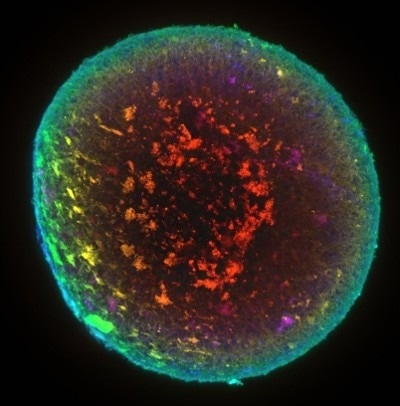
Midbrain organoids cultured on the CellXpress.ai® Automated Cell Culture System and imaged using the ImageXpress® HCS.ai High-Content Screening System reveal hallmark structural features, including a radially organized neuroepithelium surrounding a central lumen, with distinct cell types visualized through fluorescent antibody labeling. Image courtesy of Molecular Devices.
What makes organoid workflows difficult to scale?
Organoids are typically derived from either induced pluripotent stem cells (iPSCs) or patient-derived tissues. What's important to remember is that each source presents unique scaling challenges.
For iPSC-derived organoids, differentiation can take many weeks or even several months. During this period, cells require multiple media changes, tightly controlled culture conditions, and careful handling because they are highly sensitive to environmental variation. Scaling these workflows without altering the underlying biology is particularly challenging.
Patient-derived organoids introduce a different set of difficulties. These models are often cultured within hydrogel matrices, which can be highly viscous and more difficult to handle than standard liquid cultures. As processes scale up, the physical properties of these matrices create additional challenges for consistency and automation.
How does automation improve cell culture reproducibility?
Automation helps standardize the many manual steps involved in cell culture. Traditional workflows rely heavily on operator intervention for media changes, cell handling, and other routine manipulations, creating opportunities for variability.
Most laboratories have experienced situations where a particular scientist develops exceptional expertise with a specific model system. Automation coupled with AI-driven software - such as the CellXpress.ai Automated Cell Culture System - enables organizations to capture that expertise and apply it consistently across every culture. By ensuring that cells are handled in exactly the same way each time, automated systems significantly improve reproducibility and reduce operator-dependent variability.
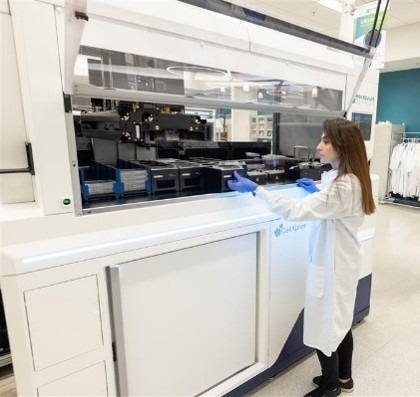
The CellXpress.ai Automated Cell Culture System supports scientists by automating demanding cell culture workflows, enabling more consistent results and less hands-on time in the lab. Image courtesy of Molecular Devices.
How can AI improve 3D culture quality control?
AI can play a major role in improving culture quality when integrated with automated imaging systems. By continuously capturing images throughout the culture process, researchers can train machine learning models to identify abnormalities and inconsistencies that may indicate emerging problems.
These systems use large historical datasets to recognize patterns that might otherwise go unnoticed. In some cases, AI may detect subtle changes that are difficult to identify visually. This allows potential issues to be flagged much earlier, improving quality control and reducing the risk of failed experiments later in the workflow.
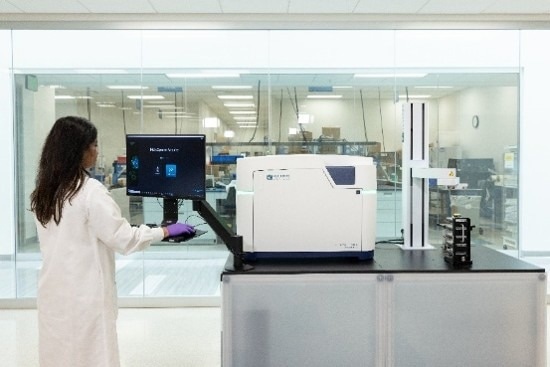
The ImageXpress® HCS.ai High-Content Screening System is distinguished by its ability to quickly capture crystal-clear images of complex cell models, acquire detailed data with intuitive software, and offer deep insights leveraging AI-driven analysis. Image courtesy of Molecular Devices.
Why are monitoring, imaging, and event logs important in automated workflows?
Routine monitoring and comprehensive data capture are essential components of any automated culture platform. Every image, event, and process step contributes to a historical record that can be used to investigate unexpected outcomes.
If a culture fails or produces results that differ from expectations, researchers can trace the entire process back to the beginning and identify what changed. Without detailed records, it becomes extremely difficult to determine the root cause of variability. Monitoring and event logging, therefore, support continuous improvement by enabling teams to identify problems, understand why they occurred, and prevent them from happening again.
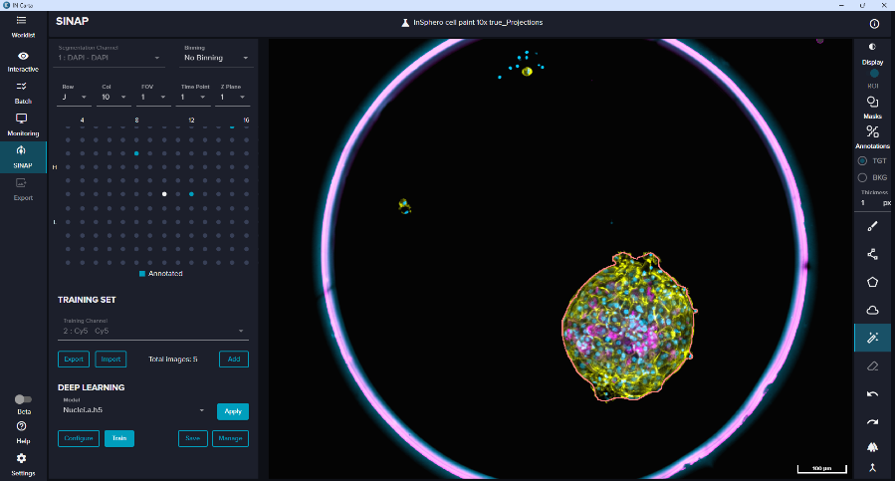
IN Carta® Image Analysis Software links images, analysis results, and workflow data, making it easier to trace experimental outcomes and investigate variability. Image courtesy of Molecular Devices.
How does higher throughput support earlier decision-making in drug discovery?
The ability to generate complex 3D models at scale enables high-throughput screening using biologically relevant systems much earlier in the drug discovery process.
This allows researchers to evaluate efficacy and toxicity using more predictive models before significant resources have been invested. If a candidate demonstrates poor efficacy or unexpected toxicity, those issues can be identified sooner, allowing teams to discontinue unsuitable programs earlier. This "fail fast" approach improves efficiency, reduces costs, and helps organizations focus resources on the most promising therapeutic opportunities.
How do assay-ready organoids improve consistency across laboratories?
Assay-ready organoids provide researchers with standardized batches of organoids that can be used directly from frozen storage. Because an entire batch is generated simultaneously using the same operators, protocols, and reagents, variability is minimized from the outset.
All organoids within a batch are at the same passage number and have been cultured under identical conditions. These batches can either support large-scale screening campaigns or be distributed across multiple laboratories. Because every researcher is working with the same starting material, downstream variability is significantly reduced.
In addition, assay-ready formats require very little operator intervention before use. Researchers simply plate the organoids into assays, reducing the opportunity for user-induced variability and improving reproducibility across sites and studies.
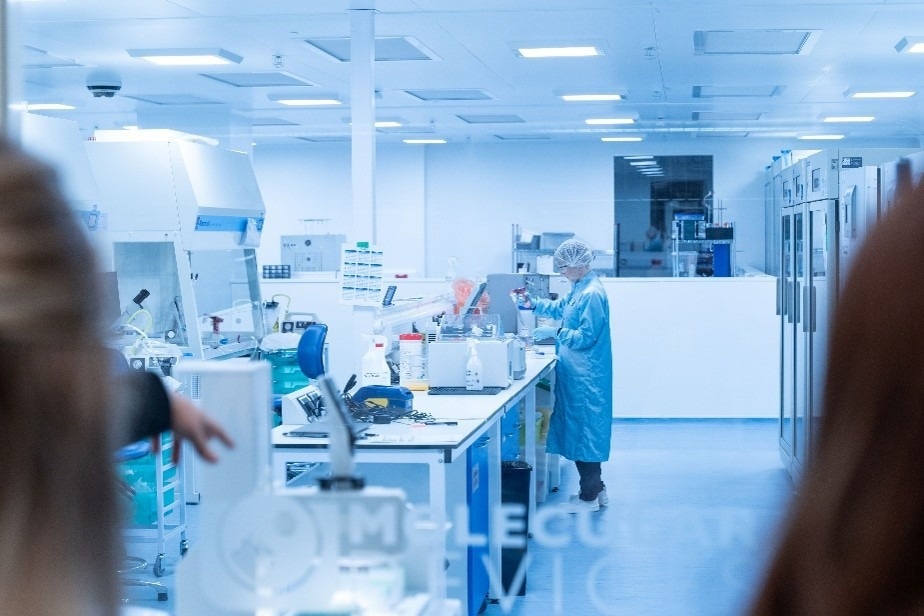
Molecular Devices bioprocessing lab, where controlled culture conditions enable the scalable production of consistent, assay-ready organoids. Image courtesy of Molecular Devices.
How will automation and AI shape the future of drug screening?
AI has the potential to unlock value from the vast amount of historical biological data that already exists. By analyzing these datasets collectively, researchers can uncover new patterns and generate insights without necessarily performing additional laboratory experiments.
This ability to extract knowledge from existing data could reduce the amount of wet-lab work required and accelerate decision-making. At the same time, automation will continue to improve the consistency and reproducibility of experimental workflows, creating higher-quality datasets for future analysis.
Together, automation and AI form a complementary cycle. Automation generates reliable, standardized data, while AI extracts deeper insights from those datasets. As both technologies mature, they are likely to play a central role in improving the efficiency, scalability, and predictive power of future drug discovery programs.
About Vicky Marsh Durban, PhD 
Vicky is director of human relevant models at Molecular Devices, a Danaher company, overseeing a product portfolio encompassing biological models, consumables, and hardware that enable production of complex in vitro models at the scale and quality needed for industrial research and drug development. She joined following the acquisition of Cellesce Limited, a UK biotech specializing in scalable organoid production technologies, and has expertise in translating and developing biological models for industrial deployment.
About Molecular Devices UK Ltd
Molecular Devices is one of the world’s leading providers of high-performance bioanalytical measurement systems, software and consumables for life science research, pharmaceutical and biotherapeutic development. Included within a broad product portfolio are platforms for high-throughput screening, genomic and cellular analysis, colony selection and microplate detection. These leading-edge products enable scientists to improve productivity and effectiveness, ultimately accelerating research and the discovery of new therapeutics. Molecular Devices is committed to the continual development of innovative solutions for life science applications. The company is headquartered in Silicon Valley, California, with offices around the globe. For more information, please visit www.moleculardevices.com.
 Molecular Devices launches automated QPix FLEX Microbial Colony Picking System