In this interview, Industry expert Brian Keith disucsses the impact of vibration on microscopy, from the common sources of interference with microscope performance in laboratories to how he expects vibration control requirements to evolve in the future.
To begin, could you introduce yourself and share your educational background, your experience with microscopy, and how your career has led you to focus on vibration and environmental stability in imaging?
My name is Brian Keith, and I am a Senior Applications Engineer at TMC. My educational background is in physics, and as part of this, I worked with highly sensitive scientific instruments, including advanced microscopy systems and other experimental equipment requiring ultra-low vibration and cryogenic environments to study matter at the atomic and molecular scale.
I spent the first 10 years of my career in cryogenics, supporting technologies and research applications that depend on extremely low temperatures to achieve their performance objectives. For the past five years, I have focused on vibration isolation and environmental control for precision scientific and industrial instrumentation.
Throughout my career, a common theme has been the challenge of reducing environmental noise, whether thermal, mechanical, or acoustic, to enable researchers and engineers to observe, measure, and understand phenomena at the nanoscale. That experience has given me a deep appreciation for the critical role that environmental control plays in unlocking the full capabilities of today's most advanced scientific instruments.
Why is vibration such an important consideration in microscopy, particularly as researchers work at increasingly high magnifications and resolutions?
Advances in optical design, materials, and manufacturing have enabled modern optical microscopes to routinely deliver magnifications of 500× to 1000×. Furthermore, advanced imaging techniques such as confocal microscopy now achieve resolutions that extend well beyond the classical diffraction limit.
At these magnification levels, mechanical vibrations become a significant imaging challenge. In most buildings, floor vibrations can begin to degrade image quality at magnifications as low as 200×, and in vibration-prone environments, problems may arise at even lower magnifications.
Modern buildings are continuously exposed to mechanical energy from a wide variety of sources, including HVAC systems, vehicle traffic, machinery, and human activity. This activity creates a complex spectrum of vibration that is present virtually everywhere. Building floors act as a source of broadband mechanical excitation, effectively providing a background of "white" vibration noise capable of stimulating resonances in any equipment mechanically coupled to the floor. Notably, relatively little of this vibration energy exists below approximately 5–10 Hz.
TMC's GimbalPiston® isolators begin providing effective isolation at frequencies as low as 3 Hz, significantly reducing the transmission of floor-borne vibration. In addition, the exceptional stiffness of TMC optical tabletops causes much of the remaining vibration energy below approximately 50–80 Hz to be transferred as rigid-body motion of the entire payload rather than as differential motion within the structure.
In practical terms, while the system may still exhibit some movement, the critical components move together as a single unit, minimizing relative displacement and preserving imaging performance.
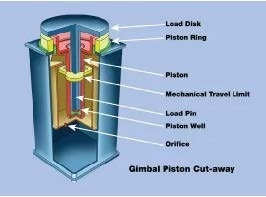
Image Credit: TMC Vibration Control
What are the most common sources of vibration that can interfere with microscope performance, and are there any less obvious sources that researchers or laboratory managers frequently overlook?
Even when specific sources of vibration can be identified, mitigating them is often difficult, costly, or impractical. Moreover, predicting which vibration source will ultimately impact a particular instrument can be challenging due to the complex ways that mechanical energy propagates through a building structure.
Fortunately, spaces suitable for human occupancy are generally well-suited to a wide range of scientific and research applications. High-amplitude, low-frequency vibrations can cause discomfort or motion sensitivity, while high-amplitude, high-frequency vibrations are often perceived as stressful or irritating. As a result, modern architectural design and construction practices have evolved to limit occupants' exposure to the most objectionable forms of vibration.
However, the extraordinary resolution and sensitivity of today's microscopy systems place demands on vibration control that far exceed human perception. The mechanical energy generated by countless sources throughout a building, including HVAC systems, equipment, transportation, and occupant activity, can affect imaging performance even when those vibrations are imperceptible to people.
Consequently, it is uncommon to find a location that requires no vibration mitigation at all. Fortunately, in most cases the vibration environment remains well within the range that TMC isolation and vibration-control solutions are designed to address effectively.
How does vibration manifest itself in microscopy results? What effects can it have on image quality, resolution, measurements, or data accuracy?
Image degradation caused by vibration can manifest in several ways, including visual blur, banding artifacts in digital images, and increased noise in electrical signals. The significance of each effect depends on the specific application, measurement technique, and the experiment's performance requirements.
Are some microscopy techniques inherently more sensitive to vibration than others? How do the requirements differ between techniques such as confocal microscopy, electron microscopy, super-resolution imaging, and atomic force microscopy?
Ultimately, whether vibration poses a significant challenge depends less on magnification alone and more on the instrument's resolution and the sensitivity of the application or imaging technique employed.
Even in relatively simple, low-magnification optical microscopy applications, vibrations can be problematic when images are being evaluated directly by a human observer. In some cases, replacing visual observation with camera-based image acquisition can mitigate the immediate effects of image motion. However, any visible vibration remains a source of distraction and can contribute to operator frustration, fatigue, and reduced productivity.
As imaging resolution increases, the impact of mechanical disturbances becomes progressively more significant. Higher-resolution microscopy techniques, particularly those relying on digital image acquisition and analysis, are inherently more sensitive to vibration-induced artifacts. The challenge becomes even greater in applications that require extended acquisition times, where small disturbances can accumulate and degrade data quality over the course of an experiment.
Confocal microscopy further increases resolution and measurement sensitivity, placing more stringent demands on the stability of both the instrument and its environment.
Super-resolution imaging systems push these requirements even further because they incorporate numerous highly sensitive optical, mechanical, and electronic subsystems, thereby increasing the number of vibration-sensitive frequencies dramatically. As a result, not only mechanical vibration but also acoustically induced excitation of system components can become a significant concern.
Atomic force microscopes (AFMs), with their ability to achieve atomic-scale resolution, naturally require exceptional mechanical stability. However, modern commercial AFMs benefit from highly optimized, compact, and rigid designs that considerably reduce their susceptibility to environmental vibration.
Conventional vibration isolation solutions are therefore highly effective. In many installations, acoustic noise and acoustically induced structural excitation become the dominant environmental concerns once adequate vibration isolation has been implemented.
 Image Credit: Shutterstock.com/ultramansk
When researchers are working at extremely high magnifications or imaging dynamic samples such as live cells, what additional challenges can vibration introduce?
When researchers push the limits of optical microscopy by achieving extremely high magnifications or investigating dynamic biological phenomena such as live-cell behavior, the effects of environmental vibration become increasingly significant. In such environments, the microscope not only resolves extremely small structures but also measures subtle changes, movements, and interactions over time.
Consequently, even minor mechanical disturbances can compromise data quality, reduce measurement accuracy, and impact experimental repeatability.
Live-cell imaging presents a particularly demanding environment because the sample itself is inherently dynamic. Researchers may be monitoring cell migration, intracellular transport, cellular signaling, or other biological processes over periods ranging from minutes to days. In these applications, vibration can introduce motion artifacts that obscure the distinction between genuine biological activity and environmentally induced movement.
Such artifacts can adversely affect cell tracking, image registration, and quantitative analysis, potentially leading to erroneous conclusions.
Long-term imaging experiments are especially susceptible to vibration-related effects. Even low-amplitude disturbances can accumulate over time, resulting in image drift, frame-to-frame misalignment, and reduced accuracy in time-lapse studies. Automated imaging systems and high-content screening platforms may also experience degraded performance, as vibration can negatively influence stage positioning accuracy and measurement repeatability across large datasets.
Advanced imaging and measurement techniques, including super-resolution microscopy, electron microscopy, and atomic force microscopy (AFM), place even greater demands on environmental stability. These technologies rely on precise positional control and localization at nanometer or even sub-nanometer scales.
Therefore, even if a disturbance has little effect on conventional microscopy, it can significantly degrade image quality, compromise measurement accuracy, and reduce experimental reproducibility in these high-performance systems.
What approaches are available for controlling vibration in microscopy environments, and how do solutions such as passive isolation tables, active vibration cancellation, and changes to laboratory or facility design differ in terms of when and where they are most effective?
Effective vibration control in microscopy is typically achieved through a layered approach that addresses vibration at multiple points along its transmission path. The first step is to minimize vibration at the source by identifying and mitigating contributors such as mechanical equipment, foot traffic, building services, and other environmental disturbances.
Passive isolation systems, including pneumatic vibration isolation tables, are the most widely used solution and provide excellent performance in many laboratory environments by attenuating floor-transmitted vibration. However, passive systems become progressively less effective at very low frequencies, such as those associated with building sway, structural motion, or nearby transportation activity.
In applications where low-frequency vibration is a concern, active vibration cancellation systems may offer a superior solution. By continuously monitoring motion with sensors and generating corrective forces through actuators, these systems can effectively suppress vibration in real time. As a result, active isolation is often preferred for particularly demanding applications, including electron microscopy, super-resolution microscopy, and other techniques that require exceptional stability.
Facility and laboratory design also play a critical role in overall vibration performance. Careful site selection, structural floor design, equipment placement, and laboratory layout can significantly reduce the transmission of vibration before it reaches sensitive instruments.
The most effective vibration-control strategies combine sound facility design with appropriately selected passive and/or active isolation technologies. By addressing vibration at its source, along its transmission path, and at the instrument itself, laboratories can achieve the level of stability required for today's most demanding imaging and measurement applications.
Can you share an example in which identifying and reducing vibration led to a noticeable improvement in microscope performance, image quality, or experimental results? What did that experience demonstrate about the importance of understanding the surrounding laboratory environment?
One example involved a research laboratory conducting long-duration live-cell imaging at magnifications ranging from 400× to 600×. Although the microscope itself was operating correctly, researchers reported intermittent image blur, difficulties with automated cell tracking, and inconsistent quantitative measurements from otherwise identical experiments.
A vibration assessment revealed that the primary source of disturbance was not the microscope, but the laboratory environment. The microscope was located near a main corridor with frequent foot traffic, and an air-handling unit mounted elsewhere in the building was generating low-frequency vibrations that were being transmitted through the floor structure. These disturbances were largely imperceptible to laboratory occupants but were significant enough to affect image stability during extended imaging sessions.
After relocating the instrument to a quieter location within the facility and installing an appropriate vibration isolation platform, image stability improved dramatically. Motion artifacts were reduced, automated image registration became more reliable, and repeatability between experiments increased significantly. Researchers were able to collect longer time-lapse sequences with greater confidence that observed cellular motion reflected actual biological activity rather than environmental influences.
What made this case particularly instructive was that the initial assumption was that the microscope required service or recalibration. Instead, the root cause was the interaction between a highly sensitive instrument and its surrounding environment.
The experience demonstrated that microscope performance is often limited not by the instrument itself, but by the quality of its installation environment. It reinforced the importance of evaluating the entire laboratory ecosystem, including building infrastructure, nearby equipment, HVAC systems, and occupant activity, when troubleshooting imaging problems or designing a new microscopy facility.
Ultimately, the project highlighted a key principle of vibration control: understanding and managing the surrounding environment can be just as important as selecting the microscope itself when the goal is to achieve consistent, high-resolution imaging performance.
Looking to the future, as microscopy pushes toward higher resolutions, greater automation, and increasingly sensitive imaging techniques, how do you expect vibration-control requirements to evolve, and what should laboratories be considering now to prepare for the next generation of microscopy?
As microscopy continues to advance, vibration control will become an even more critical component of instrument performance. The trend across the industry is clear: researchers are pursuing higher resolutions, longer acquisition times, greater automation, and more precise quantitative measurements. While these advances open new possibilities for scientific discovery, they also make instruments increasingly sensitive to environmental disturbances that were once tolerable.
One of the biggest changes we'll see is that vibration control will shift from being a corrective measure to a design requirement. Historically, many laboratories addressed vibration only after performance issues emerged. Going forward, environmental stability will need to be considered during the earliest stages of facility planning, instrument selection, and laboratory design.
The success of a next-generation imaging platform will depend not only on the microscope itself, but also on the quality of the environment supporting it.
Automation is also driving new requirements. Modern microscopy systems are increasingly designed to run unattended for extended periods, collecting large volumes of data through automated workflows and AI-assisted analysis. These systems depend on highly repeatable imaging conditions. Even small vibrations can introduce inconsistencies over hours or days of automated acquisition. As a result, stability requirements will become increasingly tied to data quality, reproducibility, and workflow efficiency.
The growth of super-resolution imaging, cryo-electron microscopy, nanoscale metrology, and advanced live-cell imaging will further increase sensitivity to vibration. Researchers are now studying structures and processes at scales where motion measured in nanometers can be significant. Future generations of instruments will likely push these limits even further, requiring tighter environmental specifications and more sophisticated isolation technologies.
We can also expect vibration-control solutions themselves to become more intelligent. Active isolation systems are already capable of continuously monitoring and compensating for environmental disturbances, and future systems will likely incorporate advanced sensing, real-time diagnostics, and predictive monitoring. Rather than simply isolating vibration, laboratories may increasingly manage environmental performance as an integrated part of the imaging workflow.
For laboratories planning future investments, the most important consideration is to think beyond current requirements. A room that is adequate for today's instrument may not support the next generation of microscopy systems. Conducting vibration site surveys, evaluating building infrastructure, considering equipment placement, and planning for future upgrades can help avoid costly limitations later.
Ultimately, the laboratories that will be most successful are those that view environmental stability as a strategic asset rather than a facility concern. As microscopes become more powerful and capable of revealing previously inaccessible details, ensuring a stable environment will be essential for unlocking their full potential. In many ways, the future of high-performance microscopy will depend as much on controlling the environment around the instrument as on advancing the technology within it.
About Brian Keith 
Brian Keith is a Senior Applications Engineer with TMC. He has a Ph.D. in Physics from Clark University. There, he worked with the novel magnetic materials group. After graduate school, he worked in Cryogenics for ten years and has been with TMC for the past two years.
About TMC Vibration Control
TMC is a global leader in precision floor vibration isolation systems with over 50 years of experience.
Major research centers, OEM and end-user semiconductor manufacturers, drug discovery companies, and nanotechnology labs across all seven continents rely on TMC solutions to support ultra-precision measurements, instruments, and manufacturing.
TMC’s precision floor vibration isolation product line ranges from isolated microscope bases and damped optical tables, to sophisticated active vibration cancellation systems featuring piezoelectric actuators and digital controllers.
In addition, TMC offers active magnetic field cancellation systems and acoustic noise isolation enclosures that, together with vibration isolation, provide complete environmental noise control. Environmental surveys performed on-site by experienced TMC service engineers and state-of-the art measurement equipment are also available.
TMC systems are designed and manufactured at the company’s vertically integrated factory and headquarters in Peabody, Massachusetts. The facility is ISO 9001:2015 certified.
TMC is a unit of AMETEK Ultra Precision Technologies, a pioneer in the development of ultraprecision measurement instruments and a global leader in ultraprecise machine tools and manufacturing systems for the semiconductor, photovoltaic, nanotechnology, military, defense, and ophthalmic lens markets.
AMETEK Ultra Precision Technologies is a division of AMETEK, Inc., a leading global manufacturer of electronic instruments and electromechanical devices with annualized sales of approximately $5 billion.