This webinar explores how integrating human cell biology and AI is unlocking new therapeutic pathways - faster, smarter, and without the need for animal models.
As the FDA and NIH advocate a transition away from animal testing, there is growing support for New Approach Methodologies (NAMs), which range from advanced in vitro models to computational platforms. Concept Life Sciences and Delta4.ai provide a compelling example of how this future might appear in practice during this webinar.
The webinar will look at how iPSC-derived models of neurotoxic reactive astrocytes (NRA) were paired with a mechanistically informed in-silico model of neuroinflammation to enable fast target identification and virtual compound screening in neurodegeneration.
You will discover how Concept Life Sciences and Delta4.ai:
- Performed functional and transcriptome profiling on human NRA models.
- Developed an adaptable and dynamic model of reactive astrocytes using omics-informed pathways and real human data.
- Utilized this model to simulate illness situations, screen thousands of chemicals in silico, and forecast their impact on astrocyte reactivity.
- Selected top performers for in vitro validation.
Speakers
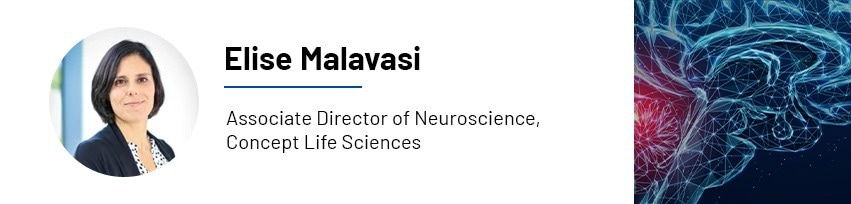
Elise earned a PhD in Cellular and Molecular Basis of Disease from the University of Edinburgh and has over 15 years of expertise in neuroscience research.
Her academic career was dedicated to identifying the molecular mechanisms underlying psychiatric disease and peripheral myelination, using advanced cellular models, electrophysiology, and high-resolution microscopy to gain new insights into complicated neurological processes.
Building on her strong academic foundation, Elise moved into industry, where she utilized her knowledge of translational neuroscience and drug discovery.
Since joining Concept Life Sciences in 2022, she has led the neuroscience team, defining strategic direction, establishing external partnerships, and driving scientific innovation across the service line.
Elise is passionate about combining cutting-edge cellular models and technologies to accelerate the development of innovative treatments for central nervous system illnesses.
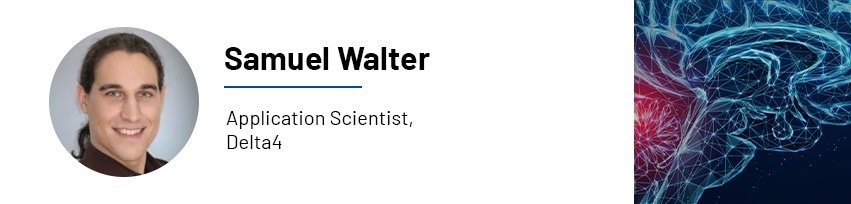
Samuel Walter is a bioinformatician with an extensive biological background. He earned a BSc in Molecular Biotechnology (2014) and an MSc in Bioinformatics (2016) from the University of Applied Sciences FH Campus Wien.
Throughout his studies, he worked as a bioinformatician on a variety of projects, including variation analysis for strain engineering in biotechnology and miRNA prediction.
Following his studies, he began his PhD at the University of Vienna in 2016, focusing on urban metagenomics in conjunction with the FH Campus Wien, as well as host-pathogen interactions of Neisseria meningitidis using transcriptome and proteomic data.
Aside from his research, Samuel has worked as a lecturer at the University of Applied Sciences Wiener Neustadt, teaching "Comparative Genomics" and "Transcriptomics" in the Master of Science program Bio Data Science.