FBS-based homebrew cryomedium is widely used in cell culture laboratories because it is familiar, adaptable, and often considered an economical choice.
A typical home-prepared freezing medium might consist of fetal bovine serum, DMSO, and basal culture medium. For many standard workflows, this method can be effective and may already be integrated into existing laboratory protocols.
However, the actual cost of cryopreservation is not solely determined by the prices of the constituent elements. It also encompasses preparation duration, handling procedures, serum lot qualification, workflow consistency, post-thaw recovery, and the worth of the cells undergoing preservation.
For laboratories working with delicate cells, limited specimens, or assays dependent on dependable post-thaw performance, the least expensive medium on paper might not consistently prove to be the most financially advantageous option in practice.

Image Credit: GN.Studio/Shutterstock.com
What is FBS-based homebrew cryomedium?
FBS-based homebrew cryomedium is a freezing medium prepared internally using components such as fetal bovine serum, DMSO, and culture medium.
The precise composition can differ among laboratories, protocols, and cell types. This adaptability is one reason for the continued use of homebrew cryomedium. Laboratories can adjust the formulation to their own cell models and long-standing internal procedures.
The medium is prepared manually and often contains serum, meaning its consistency relies on more than the written instructions. Component quality, FBS lot, preparation technique, storage conditions, and operator practice can all impact the final workflow.
Direct cost is only part of the equation
When comparing cryopreservation media, laboratories frequently start with direct material expense. This typically includes FBS, DMSO, basal medium, sterile filters, cryovials, and other supplies. This computation is helpful, but it does not fully encompass the overall workflow expenditure
An FBS-based homebrew cryomedium workflow might also necessitate mixing, filtration, aliquoting, labeling, documentation of component lots, freezer storage, and periodic preparation of new batches. If FBS lots are altered, additional testing or qualification might be required to ascertain that the new lot performs as anticipated.
One of the most significant hidden expenses is variation. Variation can originate from the FBS lot, the preparation procedure, the operator, the age of prepared aliquots, storage conditions, or minor discrepancies in freezing and thawing practices. Some laboratories can effectively manage these variables. For resilient cell lines and routine banking, this may suffice.
Nevertheless, in workflows involving sensitive, slow-growing, scarce, or functionally critical cells, even minor sources of variation can become more significant. This is why the true cost of cryomedia selection is not solely about the cost of the components. It is also about the extent of effort required to maintain workflow consistency.
FBS is not inherently the problem – variability is
FBS-containing cryomedia can support successful cryopreservation in numerous cell culture workflows.
The concern is not simply whether FBS is present. A more beneficial inquiry is: How much variability can the workflow endure?
FBS is a biological material with inherently variable and undefined composition. Its influence might depend on the supplier, lot, cell type, assay, and internal qualification procedure.
For certain applications, this variation might have minimal practical consequences. For others, particularly workflows involving primary cells, immune cells, stem-cell-derived models, organoids, patient-derived specimens, or functional assays, additional variation might compromise confidence in downstream outcomes.
This renders cryomedium selection highly context-dependent. A homebrew FBS-based cryomedium might be appropriate for one workflow and less suitable for another.
Why viability alone does not capture the full cost
Post-thaw viability is one of the most prevalent metrics of cryopreservation efficacy. It is important, but it does not always reveal the complete picture.
Cells might survive thawing but still need extended recovery. They might attach slowly, proliferate inconsistently, or behave differently in downstream assays. In these scenarios, the cost of cryopreservation emerges later in the workflow.
A more comprehensive assessment might include:
- Recovery following thawing
- Attachment and proliferation
- Time elapsed before cells are assay-ready
- Phenotype or marker stability
- Functional response
- Consistency between freezing batches
- Necessity for repeat thawing or repeated experiments
This is particularly crucial when cells are anticipated to perform reliably post-thaw, not merely survive storage.
For instance, in immune-cell assays, the key consideration might be whether thawed cells react appropriately. In organoid, spheroid, or stem-cell-derived models, the relevant outcome might encompass structure, differentiation status, or functional behavior. In single-cell analysis, post-thaw specimen quality might affect the reliability of downstream data.
When hidden cryopreservation costs matter most
Hidden costs become most pertinent when cells are difficult to replace, slow to recover, or essential for time-sensitive experiments.
This might encompass workflows involving primary cells, patient-derived specimens, rare cell populations, iPSC-derived cells, organoids, spheroids, functional immune assays, or high-value screening models.
For these applications, the cost of a failed or inconsistent thaw can substantially exceed the cost of the cryomedium itself.
A lost vial of a common immortalized cell line may be merely an inconvenience. However, a lost patient-derived specimen, rare primary cell preparation, or long-term differentiated culture might be irreplaceable.
As the specimen value escalates, the economics of cryopreservation transform. Workflow dependability becomes as vital as reagent cost.
When to consider a serum-free, ready-to-use cryomedium
A ready-to-use and serum-free cryopreservation medium might warrant evaluation when the objective is to reduce preparation burden, serum-related variability, or operator-dependent handling steps. This does not imply that every laboratory must substitute its current freezing medium; many established protocols function effectively.
However, when cryopreservation emerges as a recurring source of variation, delay, or troubleshooting, it could be beneficial to compare the current workflow with a more standardized alternative.
A comparison might be particularly relevant when FBS lot changes necessitate repeated qualification, post-thaw recovery varies between batches, cells require prolonged recovery periods prior to use, specimen material is limited, or reproducibility is prioritized over minimizing direct material expense.
The aim is not simply to alter the medium but rather to ascertain whether different cryopreservation workflows can mitigate avoidable variation.
A ready-to-use, serum-free cryopreservation workflow
One way to reduce preparation-dependent variability is to simplify the cryopreservation workflow itself.
With FBS-based homebrew cryomedium, laboratories may need to prepare, mix, filter, aliquot, label, store, and track batches of freezing medium before cells are frozen. Each additional handling step can be controlled, but each also introduces another opportunity for variation between users, batches, or freezing sessions.
Ready-to-use cryopreservation media offer a different workflow model. By removing the need for in-house medium preparation, they can help reduce handling steps and support a more standardized freezing process.
Bambanker™ is one example of a ready-to-use, serum-free cryopreservation medium. According to the product protocol, cells are suspended directly in Bambanker™ and transferred to cryovials before freezing. The vials can then be placed directly at -80 °C without a stepwise freezing procedure.
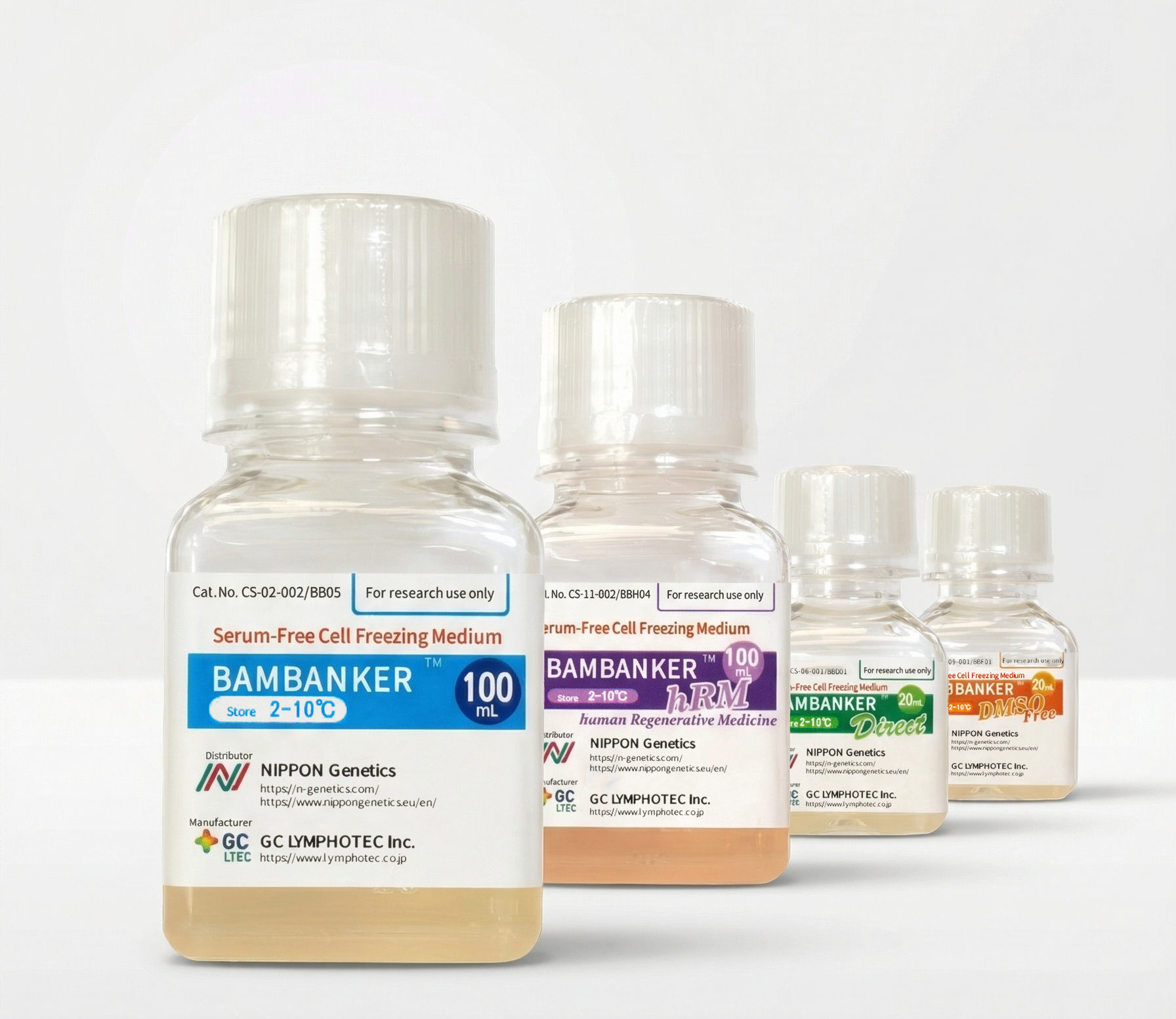
Image Credit: NIPPON Genetics EUROPE GmbH
This simplified protocol may reduce handling complexity compared with workflows that require in-house preparation of FBS-containing freezing medium, controlled cooling steps, or additional freezing devices before storage.
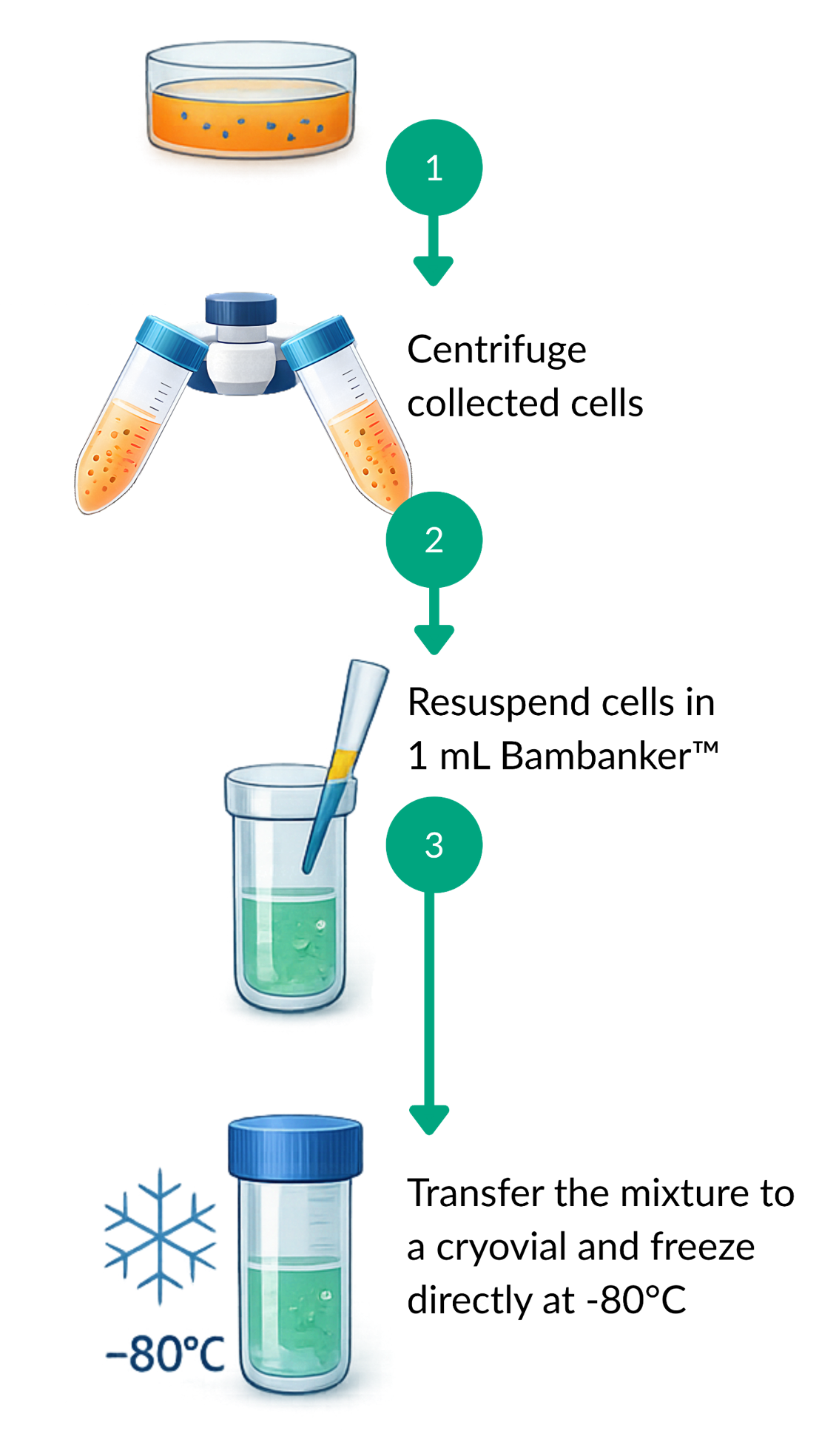
Image Credit: NIPPON Genetics EUROPE GmbH
As with any cryopreservation medium, suitability should be confirmed under the laboratory’s own conditions. Cell type, freezing protocol, storage duration, thawing method, and downstream endpoint should all be considered before changing an established workflow.
About NIPPON Genetics EUROPE GmbH
Our contribution to your success – we are committed to ensuring that you can achieve your goals!
NIPPON Genetics EUROPE is a global biotech company founded in 2005 with its own research, development, and production based in Germany. By providing an extensive range of selected and groundbreaking products for the life science sector, we would like to be a reliable partner and contribute to achieving our customers' individual goals. The majority of our employees have a scientific background because we want to understand which problem solutions our customers care about.
Sponsored Content Policy: News-Medical.net publishes articles and related content that may be derived from sources where we have existing commercial relationships, provided such content adds value to the core editorial ethos of News-Medical.net, which is to educate and inform site visitors interested in medical research, science, medical devices, and treatments.