Sponsored Content by Illumina, Inc.Reviewed by Olivia FrostSep 10 2026
Reveal long-distance genomic information and unique insights with on-flow cell library prep and cluster proximity information.
Sequencing prep with unmatched ease
DNA templates are collected from samples using conventional or high-molecular-weight methods and can be directly introduced onto the flow cell surface. Here, they are captured, tagmented into clusters, and sequenced.
Minimal preparation for sequencing

Image Credit: Illumina, Inc.
1. Load diluted DNA and two reagents into the system’s sequencing cartridge.
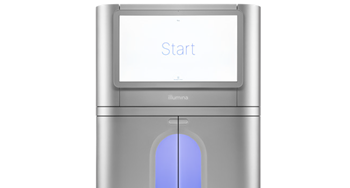
Image Credit: Illumina, Inc.
2. Prepare the library on the flow cell and run sequencing.

Image Credit: Illumina, Inc.
3. Novel DRAGEN™ algorithms are used to analyze data.
- The majority of traditional library preparation steps can be eliminated.
- Difficult-to-map regions and large structural variations can be easily resolved.
- Phased sequencing data can be easily generated for comprehensive genomic insights.
The power of proximity
The extremely simple workflow, which culminates in neighboring clusters, demonstrates a high probability of mapping with the same DNA template strand. This allows for the use of proximity information to establish precise genomic locations with exceptional accuracy.
DNA attaches to the flow cell in a constellation pattern
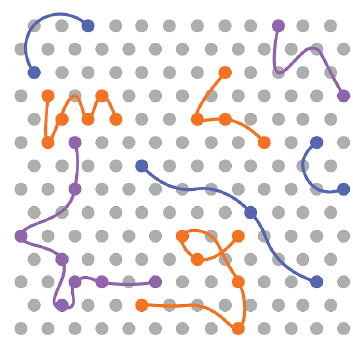
Top view of DNA strands across the flow cell surface. Image represents a small percentage of the tile. Image Credit: Illumina, Inc.
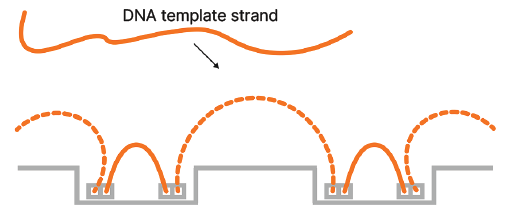
Side view of the template DNA undergoing tagmentation on the flow cell. Image Credit: Illumina, Inc.
Resolve difficult-to-map regions
The PMS2 gene has an exceptionally homologous pseudogene, MPS2CL, with 99% similarity. This makes it difficult to place and phase variants correctly in the appropriate gene or pseudogene using conventional sequencing techniques. Proximity information enables precision read mapping and phasing in these regions of ambiguity with remarkable degrees of confidence.
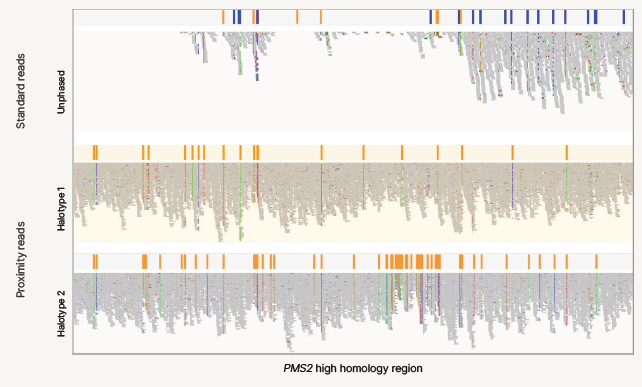
Image Credit: Illumina, Inc.
Highly homologous regions can be difficult to map, leading to gaps in coverage. Adding proximity information allows reads to be assigned the correct genomic location and phased to the appropriate haplotype.
Generate megabase-length phase blocks
Proximity-mapped reads technology is determined by the length of the native DNA template, which typically spans hundreds of kilobases up to several megabases. This can produce extended phase blocks for deeper insights into haplotypes and compound heterozygotes.
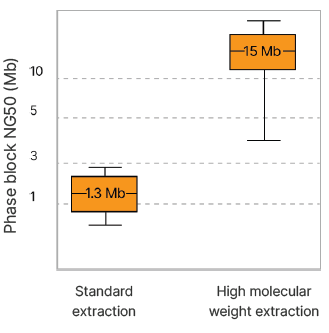
Image Credit: Illumina, Inc.
Novel visualization of structural variation
By extracting read information from proximal clusters, proximity technology can generate high-resolution “colocation plots” that exhibit substantial structural variation. Colocation plots map the genome’s reference compared to its sample position. Samples with large structural variation create a novel visual pattern, and no samples generate a straight diagonal line.
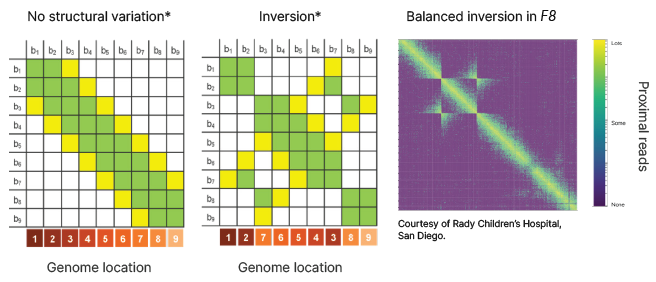
Image Credit: Illumina, Inc.
* These example plots do not represent real data.
A new basis for genomic sequencing
Simplify existing NGS workflows and generate novel genomic insights, even in traditionally challenging regions, using proximity-mapped read technology and the new Illumina TruPath™ Genome.
References
- Illumina Data on File, 2026
For Research Use Only.
Not for use in diagnostic procedures (except as specifically noted).
About Illumina, Inc
At Illumina, our goal is to apply innovative technologies to the analysis of genetic variation and function, making studies possible that were not even imaginable just a few years ago. It is mission critical for us to deliver innovative, flexible, and scalable solutions to meet the needs of our customers. As a global company that places high value on collaborative interactions, rapid delivery of solutions, and providing the highest level of quality, we strive to meet this challenge. Illumina's innovative sequencing and array technologies are fueling groundbreaking advancements in life science research, translational and consumer genomics, and molecular diagnostics.
Sponsored Content Policy: News-Medical.net publishes articles and related content that may be derived from sources where we have existing commercial relationships, provided such content adds value to the core editorial ethos of News-Medical.net, which is to educate and inform site visitors interested in medical research, science, medical devices and treatments.