Enhance discovery and development with this pioneering system that integrates DLS, SLS, and DSF into a unified microwell plate workflow.
By merging colloidal stability, aggregation profiling, and structural integrity into a single standardized microplate workflow, Zetasizer Core provides the essential insights required to mitigate risks in development with complete assurance.
Replace uncertainty with reproducible insight
The Zetasizer Core is the first high-throughput microwell plate reader that incorporates dynamic light scattering (DLS), static light scattering (SLS), and intrinsic differential scanning fluorimetry (DSF). When the selection of candidates relies on precision, clarity, and throughput, the Zetasizer Core excels. Each run produces a substantial volume of structurally accurate data, enabling assured and confident pipeline progression.
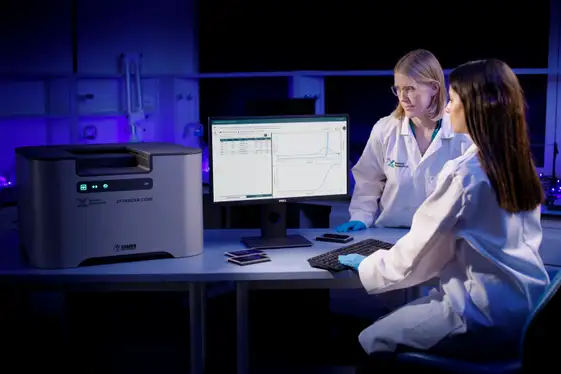
Image Credit: Malvern Panalytical
- No proprietary consumables required: Only standard microwell plates are needed.
- A minimum sample volume of 4 μL (1536-well)
- Achieve results in just five clicks from setup
- Process up to 192 samples per minute
- Over 35 years of reliable expertise in Zetasizer DLS
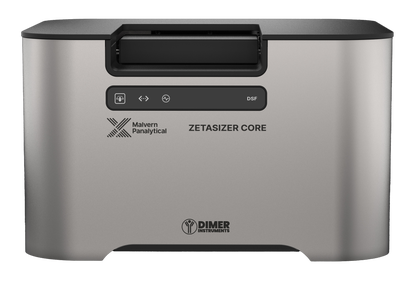
Image Credit: Malvern Panalytical
Features that deliver results
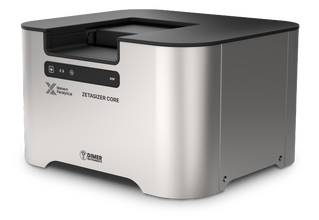
Image Credit: Malvern Panalytical
- Exceptional data quality at scale: Industry-leading accuracy for assured, high-throughput decision-making
- Multi-parameter stability insights: Concurrent measurement of size, colloidal stability, and structural stability
- Advanced thermal control: Accurate understanding of the plate’s thermal profile ensures complete reproducibility of data.
- Standard plate compatibility: Smooth integration with 96-, 384-, and 1536-microwell plates
- Dedicated SLS Detector: Converts B22/second virial coefficient analysis from a specialized measurement into a routine screening tool
- Impeccable heritage: High-throughput DLS driven by the same reliable algorithms and adaptive correlation technology as the leading Zetasizer Advance in the market
- Automation-ready: Created for seamless incorporation into automated robotic workflows
- ZS Discover software: A user-friendly interface enables individuals of all skill levels to transition from sample setup to results in just five clicks.
Meet Zetasizer Core
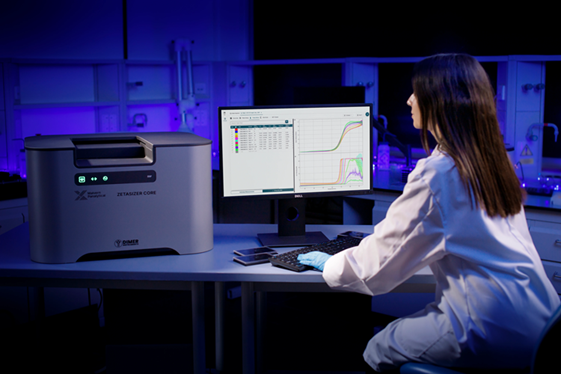
Image Credit: Malvern Panalytical
- Complete stability in one platform: Integrates DLS, SLS, and DSF into a unified workflow, featuring a specialized SLS optical path for accurate measurement of protein self-association and repulsion (A2/B22)
- Exceptional data quality one can rely on
- Rapid, high-throughput stability data at scale
- Standardized design, consumable freedom
Key applications
- Lipid nanoparticles
- Proteins
- Antibodies
Industry applications
- Academia
- Pharmaceutical
- CRO/CDMO
Software
Smart software for simplicity
The Zetasizer Core's ZS Discover software is specifically designed for high-throughput biologics stability screening. It is robust enough for experienced users while remaining user-friendly for novices.
With this software, any user can transition from sample setup to results in just five clicks. This is facilitated by guided workflows, automatic multi-transition fitting, and integrated analysis tools that eliminate subjectivity in data interpretation.
Compliance made easy with OmniTrust
OmniTrust is launching in the first quarter of 2027. Guarantee that system access and records are secure, consistent, and easily reviewable in accordance with 21 CFR Part 11 with OmniTrust, the compliance solution tailored for regulated environments.
From sample to insight, faster
Five steps to high-resolution, reproducible data across key stability parameters
The Zetasizer Core facilitates an efficient workflow from the initial plate setup to the final data output.
By minimizing manual handling, enabling standardized plate formats, and integrating multiple measurements into a single system, this equipment enables scientists to spend less time transitioning between instruments and more time on decision-making.
Which Zetasizer Core is right for you?
Zetasizer Core models provide efficient high-throughput analysis of size and colloidal stability. The Zetasizer Core, utilizing SLS and DLS technologies, serves as a robust, high-throughput tool for monitoring particle size, aggregation, and physical shelf life. For comprehensive stability analysis, the premier Zetasizer Core DSF integrates DLS, SLS, and DSF technologies.
Zetasizer Core DSF
Integrates the colloidal insights from dynamic light scattering (DLS) and static light scattering (SLS) with the robust structural data obtained from differential scanning fluorimetry (DSF).
Conducts sizing and aggregate assessments throughout automated thermal ramps, correlating physical particle transformations directly with structural unfolding occurrences.
Ideal for: Protein pre-formulation screening, early-stage candidate selection, structural biology research and development, and high-throughput profiling where monitoring thermal denaturation (Tm) is essential for long-term product stability.
Zetasizer Core
For labs concentrating exclusively on physical stability, colloidal stability assessments, and standard quality evaluations, this model provides high-throughput performance in DLS and SLS.
Ideal for: Regular formulation testing, quality assurance, scale-up observation, and reliable colloidal screening processes where thermal unfolding data is unnecessary.
How the products compare
Source: Malvern Panalytical
| Zetasizer Core DSF |
Zetasizer Core |
| High-throughput structural and colloidal stability screening is essential to ensure overall pipeline security when handling proteins, antibodies, or other sensitive biomolecules. |
High-throughput analysis for size and colloidal characterization to monitor particle size, aggregation, and physical shelf-life. |
|
Measurement type
- Sizing and aggregation (dH, PI)
- Colloidal stability (kD, B22)
- Thermal unfolding (Tm, Tonset)
- Aggregation mapped to structural unfolding (Tagg)
- Ligand binding (EC50)
- Chemical denaturation (Cm)
|
Measurement type
- Sizing and aggregation (dH, PI)
- Colloidal stability (kD, B22)
|
|
Technology
|
Technology
|
|
Sample throughput
Measure up to 192 samples per minute
|
Sample throughput
Helps measure up to 192 samples per minute
|
Built on Zetasizer expertise
The Zetasizer Core is founded on decades of expertise in light scattering and protein characterization. It enhances the reliable Zetasizer technology by introducing a high-throughput, plate-based workflow tailored for biologics discovery, formulation, and development.
Why Malvern Panalytical?
- Backed by over 35 years of Zetasizer DLS expertise
- Trusted algorithms for precise light-scattering analysis
- Uninterrupted continuity for existing Zetasizer users
- Built to simplify standardization across laboratories
- Engineered for high-quality data at scale
- Upcoming 21 CFR Part 11 functionality
Specifications
Source: Malvern Panalytical
| Section |
Specification |
Comment |
| Dynamic light scattering (DLS) |
Min volume |
4 uL (1536-well plate) |
| Min conc, 14 kDa |
0.125 mg/mL |
| Range, average dH |
0.6–2000 nm |
| Min acquisition time |
One second |
| Fitting method |
Malvern Panalytical Zetasizer cumulants and multimodal regularization |
| Advanced acquisition method |
Malvern Panalytical Zetasizer Adaptive Correlation |
| Static light scattering (SLS) |
Molar mass range |
<1000 Da to 1 MDa |
| SLS resolution |
5% or 5 kDa, whichever is larger |
| Sample concentration |
0.05–200 mg/mL (protein dependent) |
| Fluorescence |
Excitation |
280 nm |
| Detection |
330 and 350 nm |
| Sample concentration |
0.005–200 mg/mL (protein dependent) |
| Minimum sample volumes |
Sample format |
96, 384, 1536 plates |
| Ultra-low volume (1536) |
4 uL sample |
| Low volume (384 round) |
10 uL sample |
| High-quality (384 square) |
40 uL sample |
| High-volume (96) |
100 uL sample |
| Instrument parameters |
Light scattering wavelength |
830 nm |
| Attenuation range |
1 to 106 |
| Temperature range |
4 to 95 °C |
| Max temp ramp |
3 °C/minute |
| Power |
100–240 V AC, 50–60 Hz, maximum power 600 W |
| Laser Classification |
Class 1 |
| Condensation Control |
Purge facility using dry air |
| Measurement throughput |
Max samples per minute DSF/SLS |
192 samples per minute |
| Data |
Thermal stability outputs |
Tm, Tonset, Tagg-SLS, Tagg-DLS |
| Fitting method |
Auto-fit with multi-transition support |
| Applications |
Thermal stability (Tm, Tagg-SLS, Tagg-DLS)
Long-term stability
Chemical stability (C50)
Thermal shift assay (EC50)
Colloidal stability (kD, A2/B22)
Aggregation state/sizing (diam, PI): Plus full distribution analysis |
| Software and data management |
Software |
Multi-run workbooks
Sample and dispersent databases
Acquisition-level data review
Five-click software workflow |
| Hardware |
Barcode reader integration
Plate presence sensor |
| Options and integration |
Robotic handling API*
OmniTrust (21CFR part 11) compliance package* |
| Serviceability |
Modular field replaceable units for minimized downtime
System self-diagnostic
HW & SW error and use logging
Smart Manager (Malvern Panalytical remote support) |
| Instrument dimensions |
Width |
620 mm |
| Depth |
542 mm |
| Height |
375 mm |
| Weight |
29 kg |