This article is based on a poster originally authored by Courtney Noah, Renee Gruber, and Cathie Miller.
This study examines the variability of biomarkers associated with Alzheimer's and Parkinson's diseases, with a focus on demographic characteristics such as age, gender, and race. Data on Alzheimer's patients was classified according to age, gender, and race.
The researchers examined Total Tau levels in clinically obtained cerebrospinal fluid (CSF) and Mini-Mental State Examination (MMSE) scores. Similarly, Parkinson's patient data was stratified based on the same demographic characteristics, with Park7 and a-synuclein levels from CSF serving as the principal comparative outputs.
Overall, the findings showed little variation in biomarker levels or cognitive scores across age, gender, and race groups within these patient populations. Notably, among Alzheimer's patients, Black/African American individuals had considerably lower total tau levels than Caucasian patients.
When age was taken into account, the difference was not significant, as the White/Caucasian group included a higher number of patients over 70 years old. This study is an initial step in understanding how demographic factors influence biomarkers of disease progression in Alzheimer's and Parkinson's patients.
Methods
Alzheimer’s disease cohort
Sample size: CSF samples were taken from 242 patients with Alzheimer's disease.
Consent and protocols: Patients agreed to one of two Institutional Review Board (IRB)-approved protocols that allowed CSF and blood biofluids to be collected from people with severe, moderate, and mild Alzheimer's disease.
Assessment: Donors received a battery of cognitive tests, including the Mini-Mental State Examination (MMSE), and their demographic and clinical histories were documented.
Parkinson’s disease cohort
Sample size: CSF samples were taken from 56 patients with Parkinson's disease.
Consent and protocols: Patients, like the AD cohort, consented to an IRB-approved protocol.
Inclusion criteria: Donors had to have been diagnosed with Parkinson's disease for at least a year, be on a stable dose of dopamine medication for at least six months, and have developed the condition at age 60 or older.
Biomarker analysis
The study aims to determine the impact of demographic parameters on biomarker measures in human CSF samples.
The following biomarkers were examined from samples collected during the original donation time point (which may not correlate with the initial diagnosis time point):
- Alzheimer’s Disease - MMSE scores and total tau levels.
- Parkinson’s Disease - Park7 and a-synuclein levels.
The MesoScale Discovery QuickPlex SQ 120MM platform was used to assess total tau, Park7, and a-synuclein levels.

Image Credit: BioIVT
Data
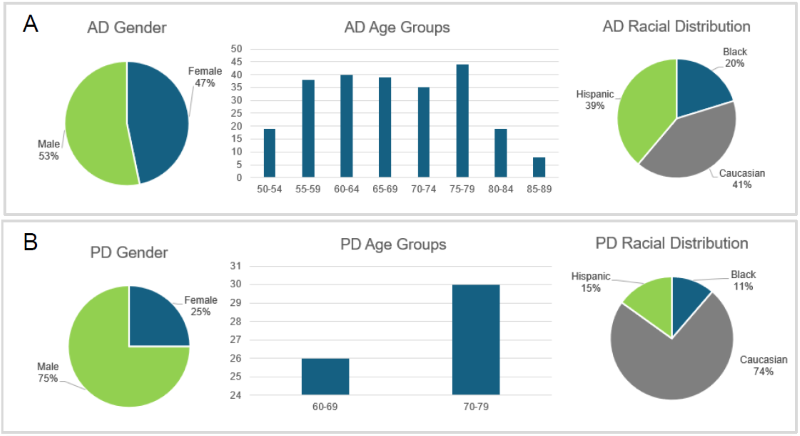
Figure 1. Demographic Distribution of Alzheimer's and Parkinson's Disease Patient Cohorts. Image Credit: BioIVT
The Alzheimer's (A) and Parkinson's (B) patient cohorts were distributed according to gender, age range, and race. Because there were few Asian patients in the cohort, racial comparison studies were limited to the three races (Black/African American, White/Caucasian, and Hispanic).
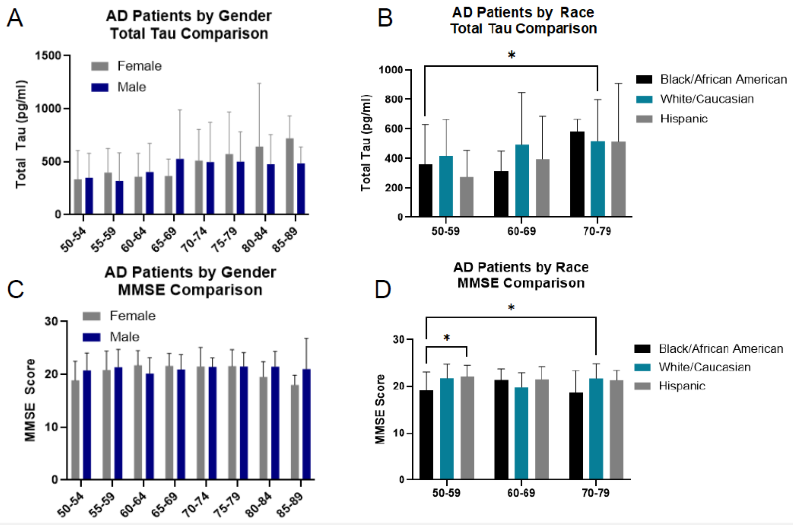
Figure 2. Comparison of Total Tau Levels and MMSE Scores by Gender and Race in Alzheimer's Patients. Image Credit: BioIVT
The data on the graph represents the mean total tau (pg/mL) (A-B) and MMSE scores (C-D) acquired during the investigation. Unless otherwise specified, all comparisons were not significant (p > 0.05), except for B (50-59 versus 70-79, p=0.017) and D (50-59 Black vs Hispanic, p=0.045 & 50-59 Black vs 70-79 White, p = 0.019).
Except for the MMSE 50-59 group, race and gender appear to have no effect on biomarker or MMSE scores when age is controlled for. Error bars indicate one standard deviation from the mean. Statistical differences were determined using two-way ANOVA with post-hoc Tukey's multiple comparisons test.
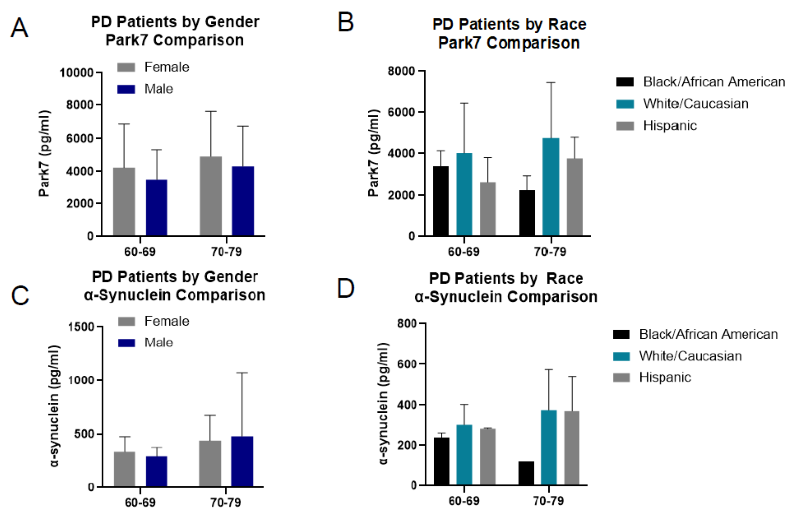
Figure 3. Comparison of Park7 and a-Synuclein Levels by Gender and Race in Parkinson's Patients. Image Credit: BioIVT
The data on the graph shows the mean Park7 (pg/mL) (A-B) and a-synuclein (C-D) levels measured during the investigation. All comparisons were non-significant (p > 0.05).
Note that Black/African American 70-79 only had one data point and hence was not compared to other groups. Error bars indicate one standard deviation from the mean. Two-way ANOVA was used to analyze statistical differences, with Tukey's multiple comparisons test applied post hoc.
Conclusion
This study emphasizes the necessity of studying the demographic differences between Alzheimer's disease (AD) and Parkinson's disease (PD). According to research, women and minority groups, notably the African American and Hispanic communities, are more susceptible to Alzheimer's disease.1 Similarly, the experience and pathophysiology of Parkinson's disease differ by gender.2
Despite these well-documented discrepancies, the underlying mechanisms remain unknown, and underprivileged populations are underrepresented in biomarker research. This study of cerebrospinal fluid (CSF) samples from AD and PD patients sought to investigate biomarker differences across demographic groups.
The data showed that, except for MMSE scores in the 50-59 age range, race and gender had no significant effect on cognitive performance or biomarker levels when age was controlled for.
Notably, black individuals had lower CSF total tau levels, which were consistent with earlier findings.4
Despite the small sample size, there were no significant variations in Park7 and α-synuclein levels across groups in Parkinson's disease. Future studies should include bigger, more diverse cohorts to better understand how gender and ethnic variations affect disease development.
Expanding research to encompass other diseases and other social determinants of health may provide more insight into the intricate interaction of demographic factors in AD and PD.
References
- Daniel, E.V., Kleiman, M.J. and Galvin, J.E. (2022). Exploring Reasons for Differential Vulnerability and Alzheimer’s Disease Risk in Racial and Ethnic Minorities. Journal of Alzheimer’s Disease, pp.1–12. DOI: 10.3233/jad-220959. https://journals.sagepub.com/doi/abs/10.3233/JAD-220959.
- Cerri, S., Mus, L. and Blandini, F. (2019). Parkinson’s disease in women and men: What’s the difference? Journal of Parkinson’s Disease, (online) 9(3), pp.501–515. DOI: 10.3233/jpd-191683. https://journals.sagepub.com/doi/10.3233/JPD-191683.
- Dahodwala, N., et al. (2009). Racial differences in the diagnosis of Parkinson’s disease. Movement Disorders, 24(8), pp.1200–1205. DOI: 10.1002/mds.22557. https://movementdisorders.onlinelibrary.wiley.com/doi/10.1002/mds.22557.
- Gleason, C.E., et al. (2021). Alzheimer’s disease biomarkers in Black and non‐Hispanic White cohorts: A contextualized review of the evidence. Alzheimer’s & Dementia. DOI: 10.1002/alz.12511. https://alz-journals.onlinelibrary.wiley.com/doi/10.1002/alz.12511.
About BioIVT
BioIVT, formerly BioreclamationIVT, is a leading global provider of high-quality biological specimens and value-added services. We specialize in control and disease state samples including human and animal tissues, cell products, blood and other biofluids. Our unmatched portfolio of clinical specimens directly supports precision medicine research and the effort to improve patient outcomes by coupling comprehensive clinical data with donor samples.
Our Research Services team works collaboratively with clients to provide in vitro hepatic modeling solutions. And as the world’s premier supplier of ADME-Tox model systems, including hepatocytes and subcellular fractions, BioIVT enables scientists to better understand the pharmacokinetics and drug metabolism of newly discovered compounds and the effects on disease processes. By combining our technical expertise, exceptional customer service, and unparalleled access to biological specimens, BioIVT serves the research community as a trusted partner in ELEVATING SCIENCE®.
Sponsored Content Policy: News-Medical.net publishes articles and related content that may be derived from sources where we have existing commercial relationships, provided such content adds value to the core editorial ethos of News-Medical.Net which is to educate and inform site visitors interested in medical research, science, medical devices and treatments.
Last Updated: Apr 17, 2026