This article and associated images are based on a poster originally authored by Crystal Tsui, Sophia Hirsch, Darby Kreienberg, Andrew Larocque, Xi Ai, James Vasta, Matthew Robers, Milad Rouhimoghadam, Scott Loughead, Alec Barclay and Armon Sharei and presented at ELRIG Drug Discovery 2026 in affiliation with Portal Biotechnologies, Merck Research Laboratories, Promega Corporation, and AbbVie Inc.
This poster is being hosted on this website in its raw form, without modifications. It has not undergone peer review but has been reviewed to meet AZoNetwork's editorial quality standards. The information contained is for informational purposes only and should not be considered validated by independent peer assessment.

Introduction to portal's approach: Intracellular drug discovery solution
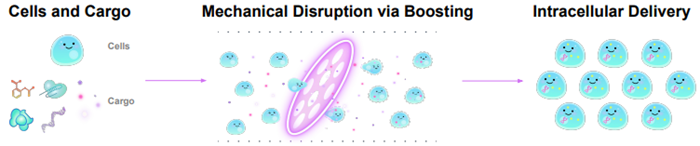
Image Credit: Crystal Tsui et al., in partnership with ELRIG (UK) Ltd.
- Portal is creating a transformative technology for delivery of any cargo into any cell line
- Small molecules, oligos, peptides, antibodies, DELs, mRNA, siRNA, DNA, RNPs, proteins, and other cargos
- Primary and patient-derived cell lines, including immune and stem cells
- Cells are boosted through a membrane at low operating pressure (3-15 PSI)
- Membrane format enables in-line integration for high-throughput cellular engineering
Enabling assays and screens without genotypic and phenotypic disruptions
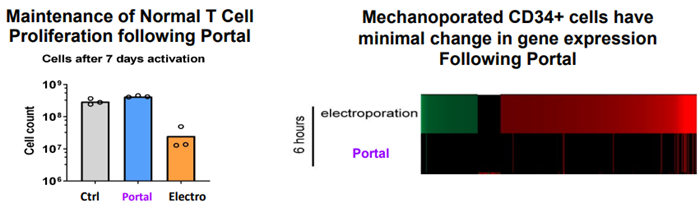
Image Credit: Crystal Tsui et al., in partnership with ELRIG (UK) Ltd.
- Cells experience minimal disruptions following Portal delivery, allowing the generation of clean readouts and non-confounded data
Story 1: Disentangling activity from permeability for early degrader candidates for cellular data-driven ranking and prioritization
(A) Small molecule inhibitor candidates
Source: Portal Biotechnologies
| Compound# |
POI_SPR
Binding (Kd, uM) |
Cell Viability Calu-6
(5d, 10% FBS, nM) |
Comment |
| Cmp1 |
0.37 |
0.2 |
Permeable control 1 |
| Cmp2 |
0.66 |
0.2 |
Permeable control 2 |
| Cmp3 |
0.7 |
57.6 |
Lowered permeability |
| Cmp4 |
0.32 |
80.4 |
Lowered permeability |
| Cmp5 |
0.28 |
10.8 |
Lowered permeability |
| Cmp6 |
TBD |
2.3 |
Lowered permeability |
(B) Viability assay with boost
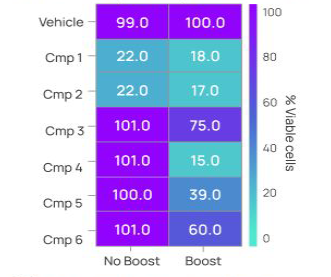
Image Credit: Crystal Tsui et al., in partnership with ELRIG (UK) Ltd.
Without Portal:
- Cmp 5 and Cmp 6 appears to be most promising candidates in inducing cell death
- Cmp 4 will be deprioritized
Without Portal:
- True cellular activity obtained for each candidate
- Cmp 4 emerges as a lead candidate unexpectedly
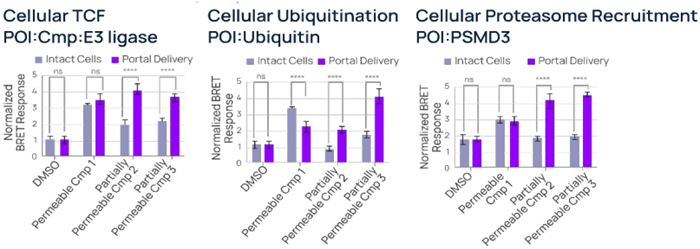
Image Credit: Crystal Tsui et al., in partnership with ELRIG (UK) Ltd.
- A semi-permeable or permeable compound was delivered to Calu-6 cells by mechanoporation or incubation, rather than digitonin treatment. BRET was detected on a plate reader for cellular TCF, ubiquitination, and proteasome recruitment. An increased BRET ratio is detected with Portal for the partially permeable compounds compared to intact cells
Story 2: Guaranteeing cellular access during peptide screening and validation
Early assessment of peptide intracellular function
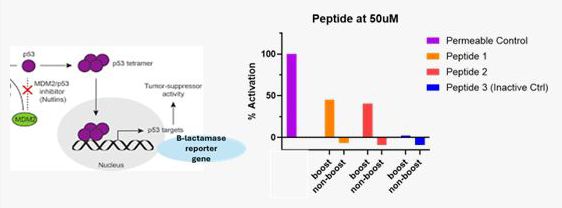
Image Credit: Crystal Tsui et al., in partnership with ELRIG (UK) Ltd.
- p53 peptides delivered to HCT116 cells for functional assessment in FRET reporter assay (Kaspar et al., Bioeng Transl Med. 2023;8:e10542).
- Galaxy PDIIi delivery yielded high cell viability (93%) & reasonable delivery efficiency (72.4%).
- Boosted non-permeable peptides exhibited increased activity.
Target protein degradation
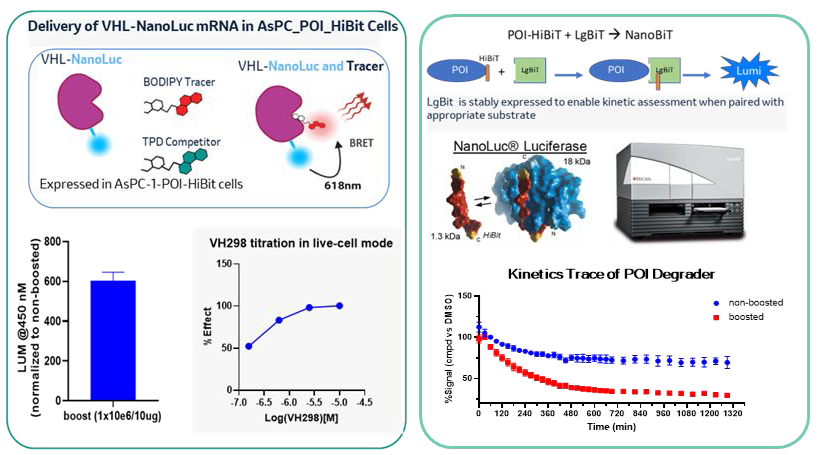
Portal delivery into cells simplified degrader permeability and protein degradation kinetics assays. Image Credit: Crystal Tsui et al., in partnership with ELRIG (UK) Ltd.
Reproducible
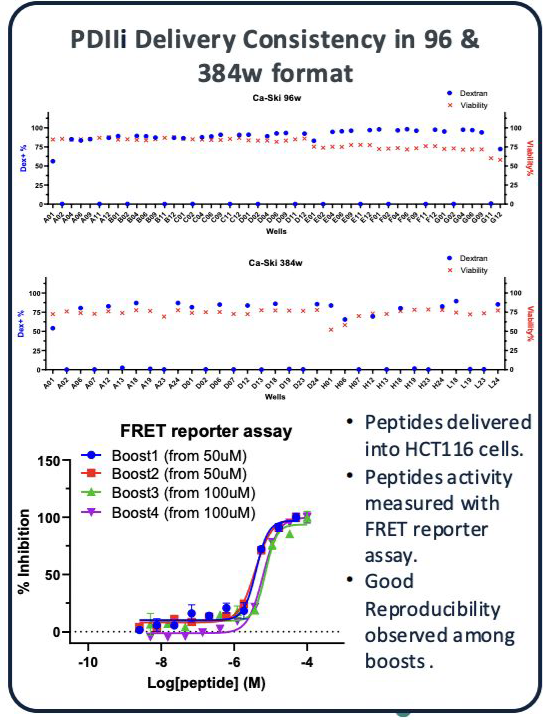
Image Credit: Crystal Tsui et al., in partnership with ELRIG (UK) Ltd.
Data from Merck*
Story 3: Unique ability to unbiasedly deliver candidates unlike other approaches
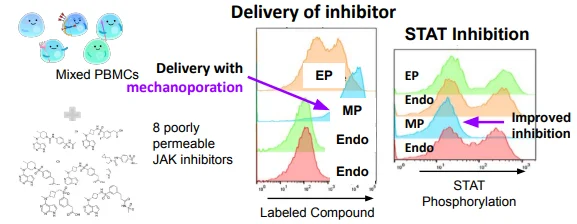
Image Credit: Crystal Tsui et al., in partnership with ELRIG (UK) Ltd.
- 8 cell-impermeable JAK inhibitors were identified in a cell-free screen and delivered to mixed PBMCs using electroporation (EP) or mechanoporation (MP). Viability and delivery of the JAK compounds (left) were assessed by flow cytometry. Inhibitor activity was confirmed by assessing STAT phosphorylation (right).
Li J, et al. 2017. ACS Chemical Biology
Direct-to-assay: An alternative to cell lines
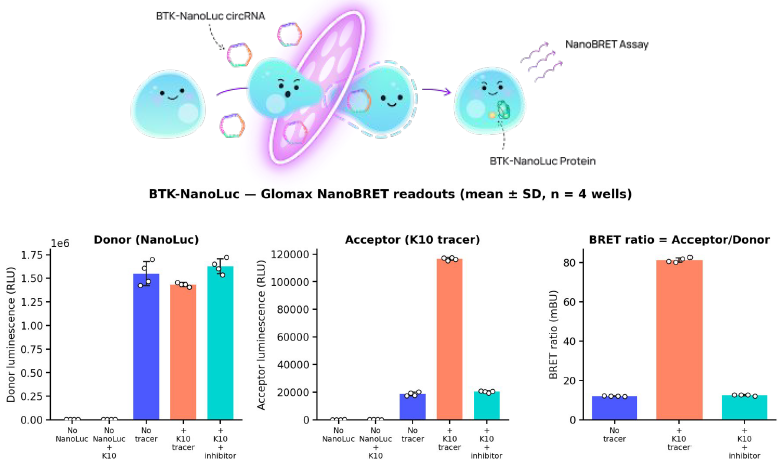
Image Credit: Crystal Tsui et al., in partnership with ELRIG (UK) Ltd.
- No NanoLuc knock-in cell line required
- Potential to do NanoBRET assays in difficult-to-engineer cells
Delivering Promega LgBiT reagents
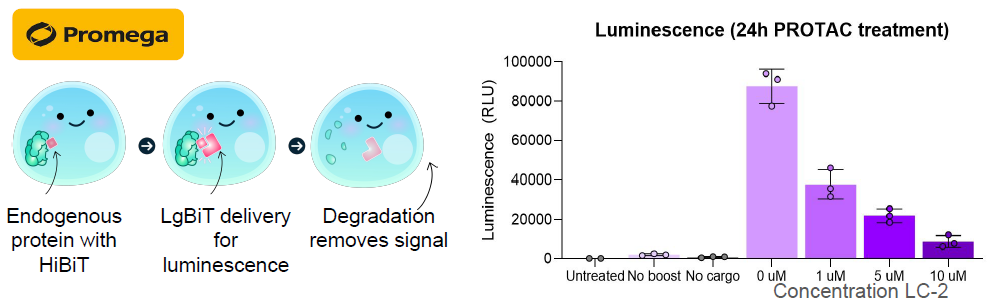
Image Credit: Crystal Tsui et al., in partnership with ELRIG (UK) Ltd.
- MiaPaCa-2 cells endogenously tagged with HiBiT at the KRAS(G12C) locus were treated with the PROTAC LC-2 for 24 hours (0-10 μM) and mechanoporated with LgBiT protein
- Nano-Glo® Endurazine™ was added and luminescence was detected on a GloMAX plate reader to detect degradation of KRAS(G12C)
Macrocycle delivery to HeLa cells shows robust dose response
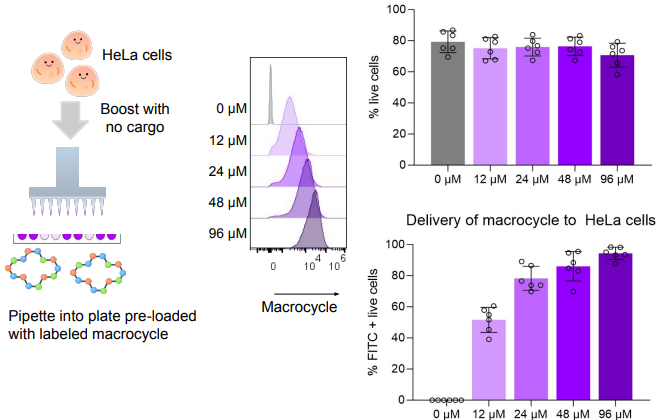
Image Credit: Crystal Tsui et al., in partnership with ELRIG (UK) Ltd.
- HeLa cells were boosted, then manually added into wells of a 96-well plate pre-loaded with FITC-labeled macrocycle at 0-0.2 mg/ml. Flow cytometry was conducted post-boost to assess viability and efficiency of macrocycle delivery into boosted cells
Intracellular target engagement assays with impermeable tracer
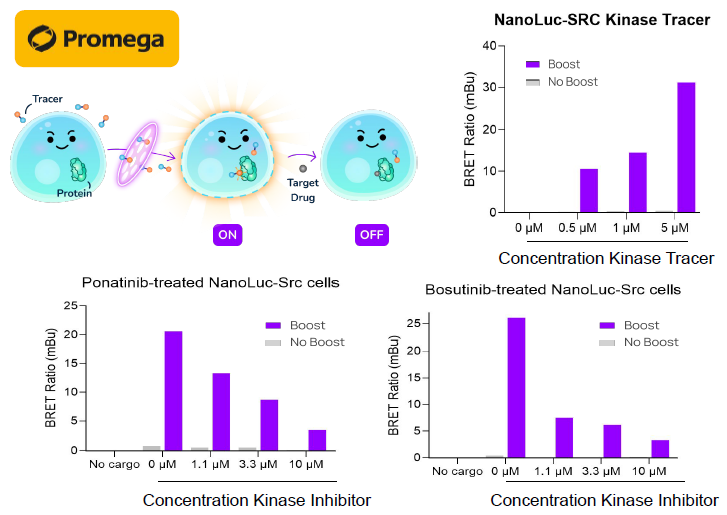
(Top) HeLa cells were transfected with SRC-NanoLuc Fusion vector, then mechanoporated with impermeable kinase tracer. NanoGlo substrate was added, and BRET was detected on a plate reader. (Bottom) HeLa cells transfected with SRC-NanoLuc Fusion vector were incubated for 2 hours with Src kinase inhibitors (Ponatinib or Bosutinib) then mechanoporated with an impermeable kinase tracer. NanoGlo substrate was added, and BRET was detected on a plate reader. Image Credit: Image courtesy of Crystal Tsui et al., in partnership with ELRIG (UK) Ltd.
Intracellular protein detection in live cells by delivering antibodies
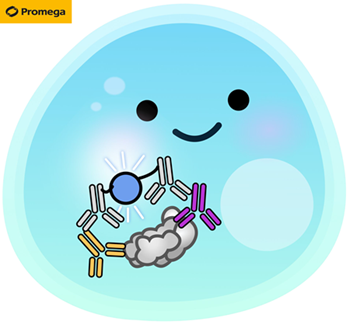
Image Credit: Crystal Tsui et al., in partnership with ELRIG (UK) Ltd.
Simultaneous intracellular delivery of four antibodies:
- Primary antibodies targeting 1) BTK and 2) p-BTK
- Lumit Secondary antibodies containing 3) LgBiT and 4) SmBiT
- LgBiT and SmBiT antibodies bind in proximity = luminescence
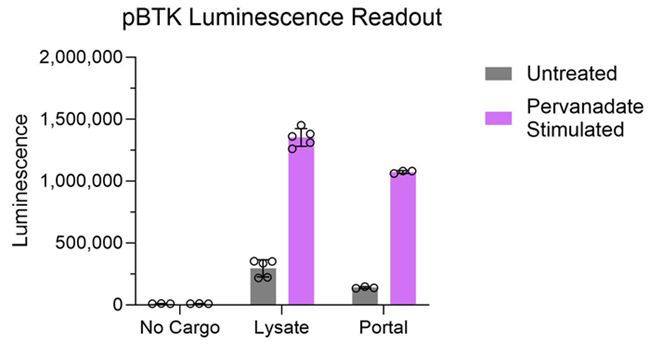
Image Credit: Crystal Tsui et al., in partnership with ELRIG (UK) Ltd.
- Ramos cells were treated with Pervanadate to induce BTK phosphorylation
- Four antibodies (two primary and two secondary) were either boosted into cells using Portal technology or added to cell lysate
- Luminescence was detected on a GloMAX plate reader to monitor changes in p-BTK
- Change in p-BTK level is comparable between the lysate and intracellular assay
Research-scale system
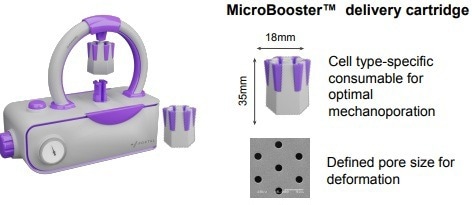
Image Credit: Crystal Tsui et al., in partnership with ELRIG (UK) Ltd.
High-throughput compatibility
Peristaltic dispenser integration
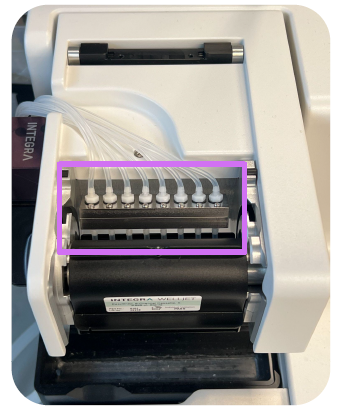
Image Credit: Crystal Tsui et al., in partnership with ELRIG (UK) Ltd.
Constant pressure dispenser integrations
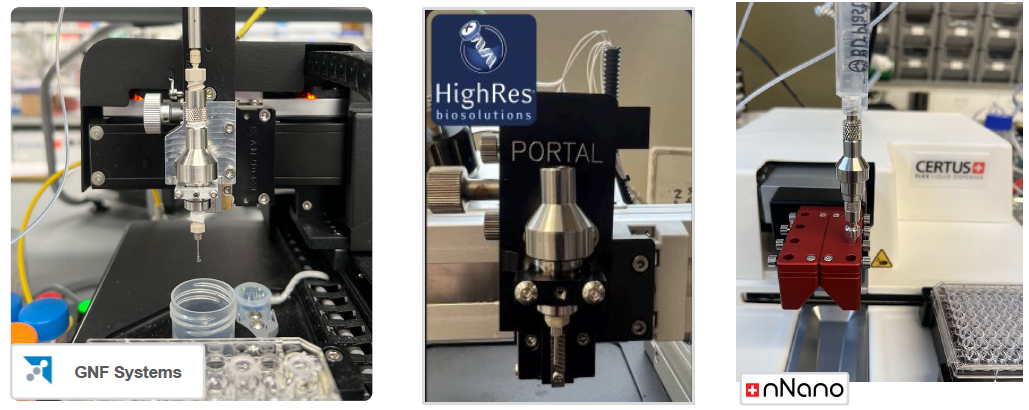
Image Credit: Crystal Tsui et al., in partnership with ELRIG (UK) Ltd.
About Portal Biotechnologies
 Portal is building the universal infrastructure for cell engineering across drug discovery and cell therapy. Our proprietary mechanical system enables efficient, scalable delivery of RNA, gene editors, probes, and other molecules into hard-to-transfect cells across many cell types and workflows. With more than 100 customer sites including the top 10 pharma, researchers use Portal to run high-throughput, physiologically relevant screens and de-risk targets earlier, while cell therapy developers leverage the platform to multi-engineer cells beyond the limits of viral or electroporation methods. Integrated with leading high-throughput robotics and with GMP manufacturing systems, Portal is powering both next-generation discovery and laying the groundwork for future point-of-care cell therapy manufacturing.
About ELRIG (UK) Ltd.
The European Laboratory Research & Innovation Group (ELRIG) is a leading European not-for-profit organization that exists to provide outstanding scientific content to the life science community. The foundation of the organization is based on the use and application of automation, robotics, and instrumentation in life science laboratories, but over time, we have evolved to respond to the needs of biopharma by developing scientific programs that focus on cutting-edge research areas that have the potential to revolutionize drug discovery.
Comprised of a global community of over 12,000 life science professionals, participating in our events, whether it be at one of our scientific conferences or one of our networking meetings, will enable any of our community to exchange information, within disciplines and across academic and biopharmaceutical organizations, on an open access basis, as all our events are free of charge to attend!
Our values
Our values are to always ensure the highest quality of content, that content will be made readily accessible to all, and that we will always be an inclusive organization, serving a diverse scientific network. In addition, ELRIG will always be a volunteer-led organization, run by and for the life sciences community, on a not-for-profit basis.
Our purpose
ELRIG is a company whose purpose is to bring the life science and drug discovery communities together to learn, share, connect, innovate, and collaborate on an open-access basis. We achieve this through the provision of world-class conferences, networking events, webinars, and digital content.
Sponsored Content Policy: News-Medical.net publishes articles and related content that may be derived from sources where we have existing commercial relationships, provided such content adds value to the core editorial ethos of News-Medical.net, which is to educate and inform site visitors interested in medical research, science, medical devices, and treatments.
Last Updated: Oct 29, 2026