This article and associated images are based on a poster originally authored by Hassan Kotey, Gideon Helegbe, Humphrey Bonney and Samuel Kwofie and presented at ELRIG Drug Discovery 2025 in affiliation with University for Development Studies, Noguchi Memorial Institute for Medical Research and University of Ghana.
This poster is being hosted on this website in its raw form, without modifications. It has not undergone peer review but has been reviewed to meet AZoNetwork's editorial quality standards. The information contained is for informational purposes only and should not be considered validated by independent peer assessment.

Abstract
The Ns2b-Ns3 protease plays a crucial role in replicating the dengue virus, yet no effective treatment has been found to completely block its activity and prevent viral replication.
To address this, we employed a multidisciplinary approach, combining pharmacophore modeling, molecular docking, molecular dynamics simulation, and in vitro studies to identify potential antiviral compounds. Our research revealed three promising compounds that successfully bound to key sites on the protease, offering new avenues for inhibiting dengue virus infection.
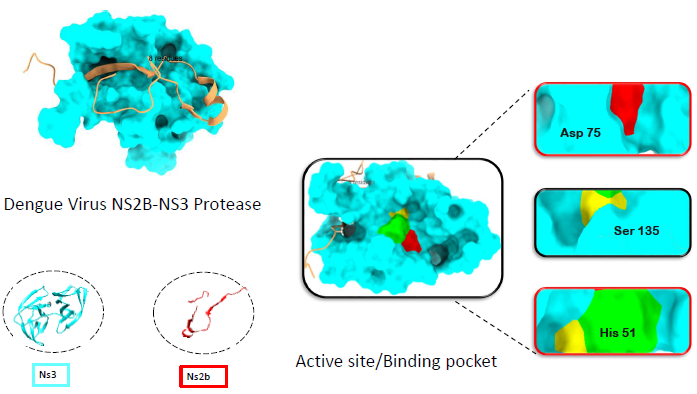
Image Credit: Image courtesy of Hassan Kotey et al., in partnership with ELRIG (UK) Ltd.
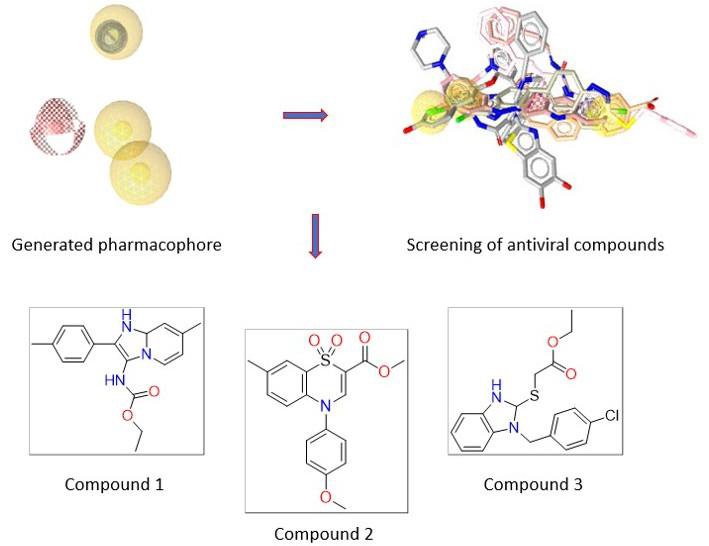
Image Credit: Image courtesy of Hassan Kotey et al., in partnership with ELRIG (UK) Ltd.
A pharmacophore model was employed to guide the screening process, and a threshold of 55 was set for the pharmacophore fit.
Following this criterion, three compounds emerged as top candidates, having successfully met the specified threshold and demonstrating a strong alignment with the pharmacophore model.
Results
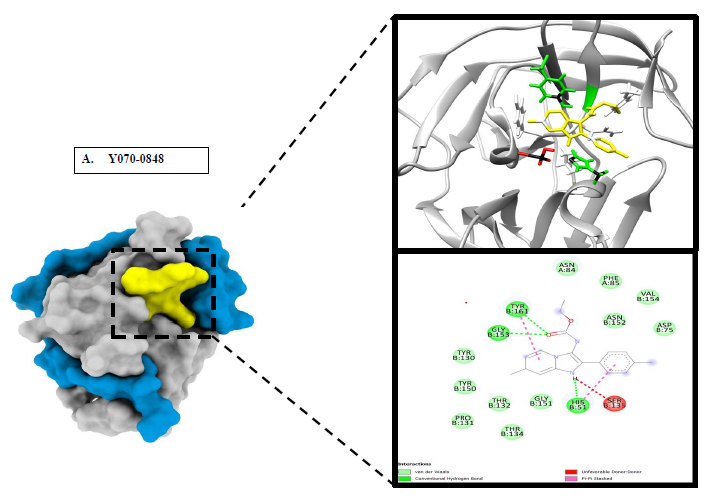
Compound 1_Ns2b-Ns3 protease interactions. Image Credit: Image courtesy of Hassan Kotey et al., in partnership with ELRIG (UK) Ltd.
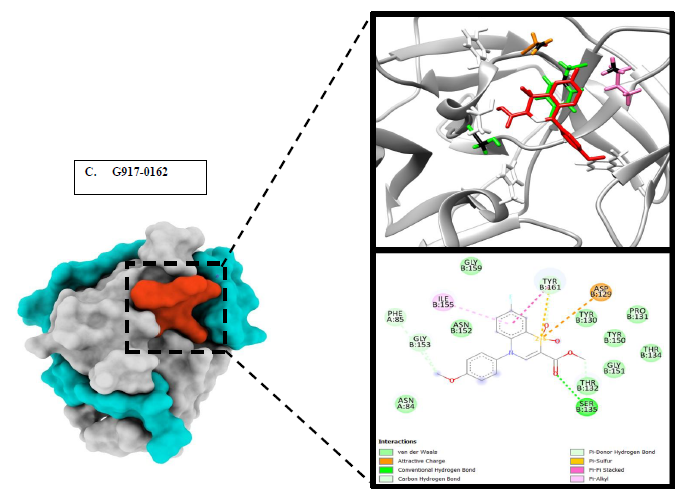
Compound 3_Ns2b-Ns3 protease interactions. Image Credit: Image courtesy of Hassan Kotey et al., in partnership with ELRIG (UK) Ltd.
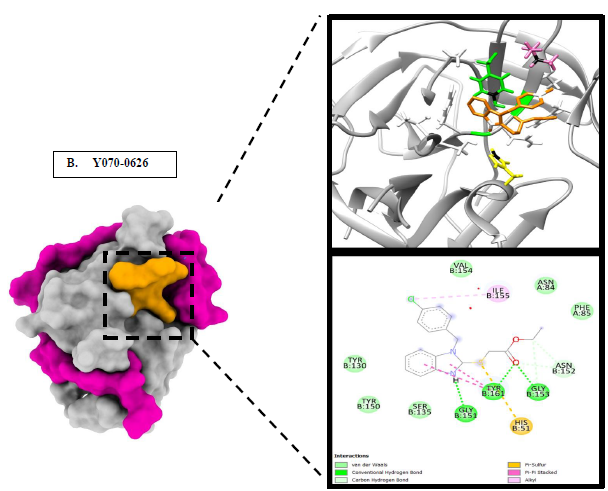
Compound 2_Ns2b-Ns3 protease interactions. Image Credit: Image courtesy of Hassan Kotey et al., in partnership with ELRIG (UK) Ltd.
Molecular dynamics simulations

Image Credit: Image courtesy of Hassan Kotey et al., in partnership with ELRIG (UK) Ltd.
MTT assay
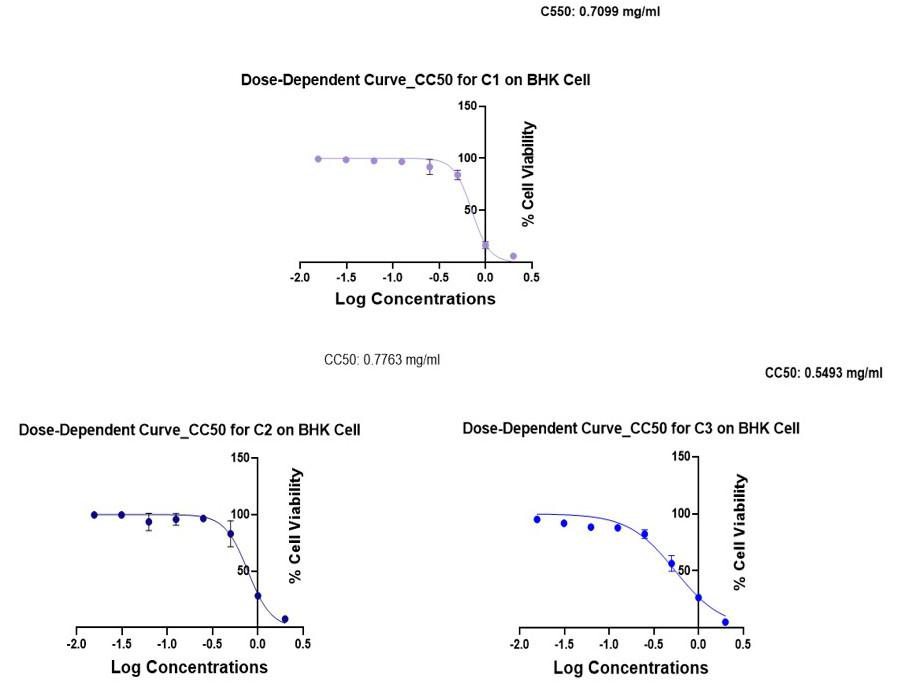
Image Credit: Image courtesy of Hassan Kotey et al., in partnership with ELRIG (UK) Ltd.
Polymerase chain reaction analysis
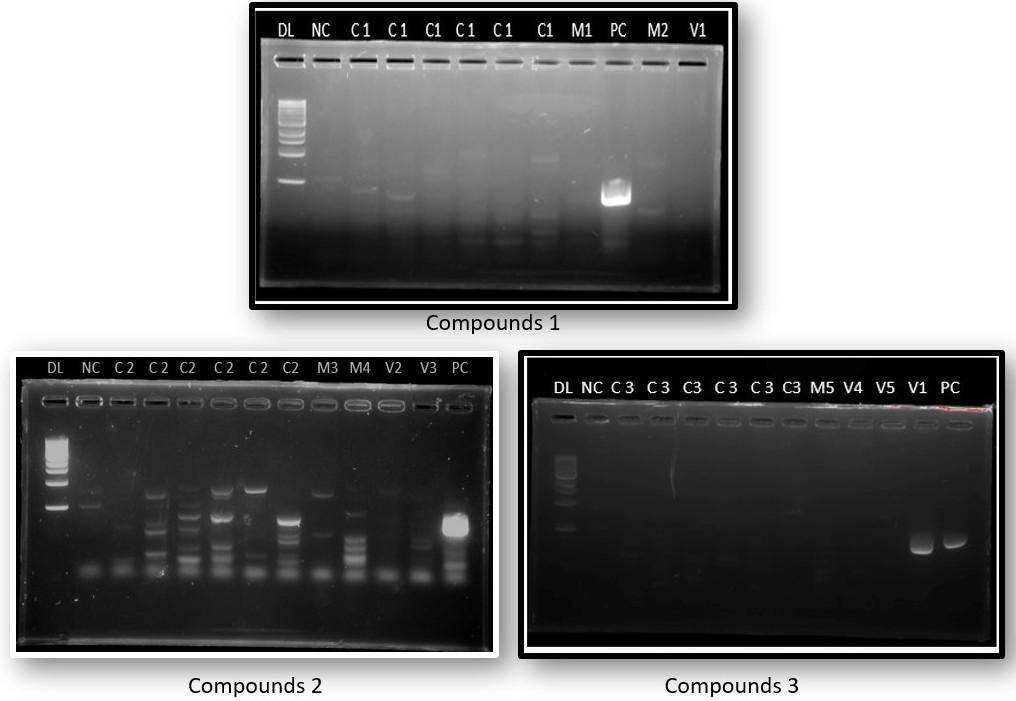
Compound 3 exhibited a complete absence of bands. Image Credit: Image courtesy of Hassan Kotey et al., in partnership with ELRIG (UK) Ltd.
Conclusion
- A comprehensive, rigorous, systematic, and exhaustive high-throughput screening of 65,345 diverse and structurally unique antiviral compounds against the dengue virus.
- The effort yielded highly promising, encouraging, and significant results. Notably, it identified three exceptionally potent, efficacious, and selective compounds.
- These compounds have the potential to effectively inhibit the dengue protease. This enzyme is crucial, essential, and vital for the virus's replication, survival, and transmission.
- Consequently, this discovery offers new avenues for the development of innovative and effective therapeutic interventions.
About University for Development Studies 
The University for Development Studies (UDS) is Ghana’s first public University in the North. It was established by the Government of Ghana by PNDC Law 279 and gazette on 15th May, 1992.
The pedagogical philosophy of UDS is said to have been borne out of a new thinking in higher education emphasizing the need for universities as teaching and research institutions to play more active role in addressing societal problems (especially rural areas) for speedy development.
The University by its mandate and constituency has a pro-poor focus and this is reflected in its methodology of teaching, research and outreach services. The specific emphasis on practically-oriented, research and field-based training is aimed at contributing towards poverty reduction in order to accelerate national development.
About ELRIG (UK) Ltd.
The European Laboratory Research & Innovation Group (ELRIG) is a leading European not-for-profit organization that exists to provide outstanding scientific content to the life science community. The foundation of the organization is based on the use and application of automation, robotics, and instrumentation in life science laboratories, but over time, we have evolved to respond to the needs of biopharma by developing scientific programs that focus on cutting-edge research areas that have the potential to revolutionize drug discovery.
Comprised of a global community of over 12,000 life science professionals, participating in our events, whether it be at one of our scientific conferences or one of our networking meetings, will enable any of our community to exchange information, within disciplines and across academic and biopharmaceutical organizations, on an open access basis, as all our events are free of charge to attend!
Our values
Our values are to ensure the highest quality of content, make it readily accessible to all, and maintain an inclusive organization that serves a diverse scientific network. In addition, ELRIG will always be a volunteer-led organization, run by and for the life sciences community, on a not-for-profit basis.
Our purpose
ELRIG is a company whose purpose is to bring the life science and drug discovery communities together to learn, share, connect, innovate, and collaborate on an open-access basis. We achieve this through the provision of world-class conferences, networking events, webinars, and digital content.
Sponsored Content Policy: News-Medical.net publishes articles and related content that may be derived from sources where we have existing commercial relationships, provided such content adds value to the core editorial ethos of News-Medical.net, which is to educate and inform site visitors interested in medical research, science, medical devices, and treatments.
Last Updated: Dec 19, 2025