This article and associated images are based on a poster originally authored by Rania Hamdy, Ahmed M. Almehdi, Samar Damiati, Ihsan A. Shehadi, Sameh S. M. Soliman and Andrew D. Westwell and presented at ELRIG Drug Discovery 2026 in affiliation with University of Sharjah.
This poster is being hosted on this website in its raw form, without modifications. It has not undergone peer review but has been reviewed to meet AZoNetwork's editorial quality standards. The information contained is for informational purposes only and should not be considered validated by independent peer assessment.

Abstract
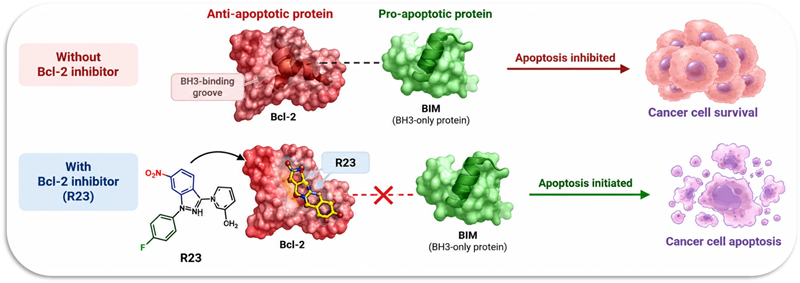
Image Credit: Rania Hamdy et al., in partnership with ELRIG (UK) Ltd.
Bcl-2 is a key anti-apoptotic protein that promotes cancer cell survival, making it an attractive therapeutic target. This study developed novel Bcl-2 inhibitors, identifying R4, R14, R17, and R23 as promising anticancer compounds (IC50 = 1.46– 7.67 μM). ELISA binding assays confirmed potent Bcl-2 inhibition by R4, R14, and R23 (IC50 = 0.25–0.63 μM). Notably, R23 induced apoptosis and G1-phase cell cycle arrest, while computational analyses supported its stable binding to Bcl-2, highlighting its therapeutic potential.
Rational design
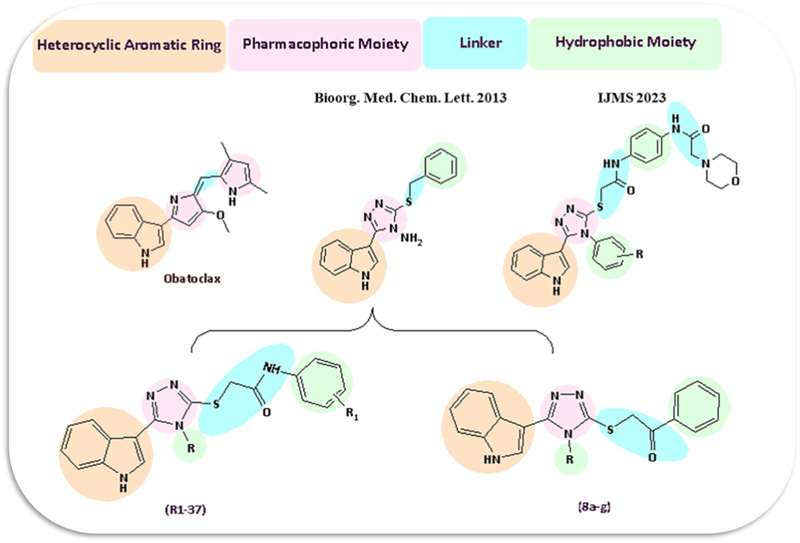
Image Credit: Rania Hamdy et al., in partnership with ELRIG (UK) Ltd.
Methods
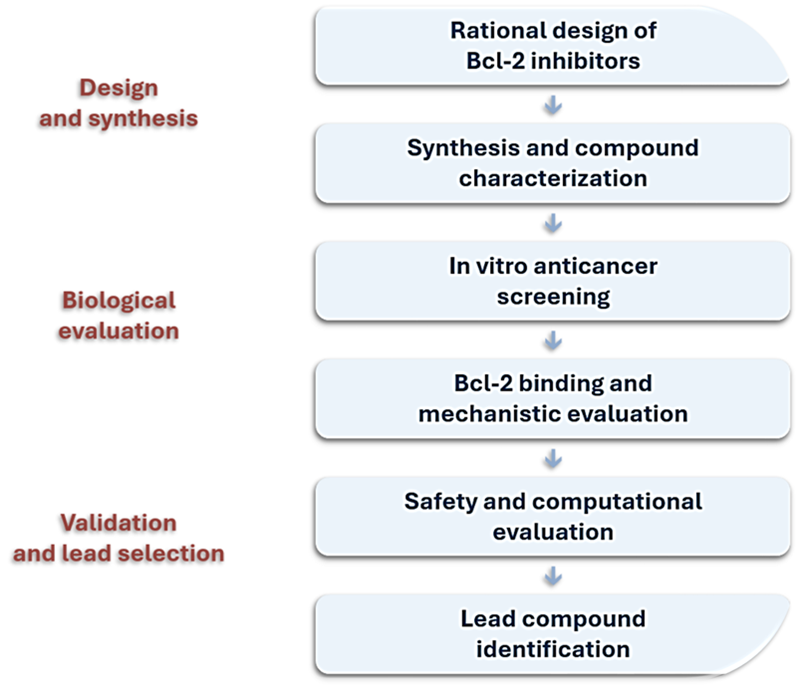
Image Credit: Rania Hamdy et al., in partnership with ELRIG (UK) Ltd.
Safety against HDF
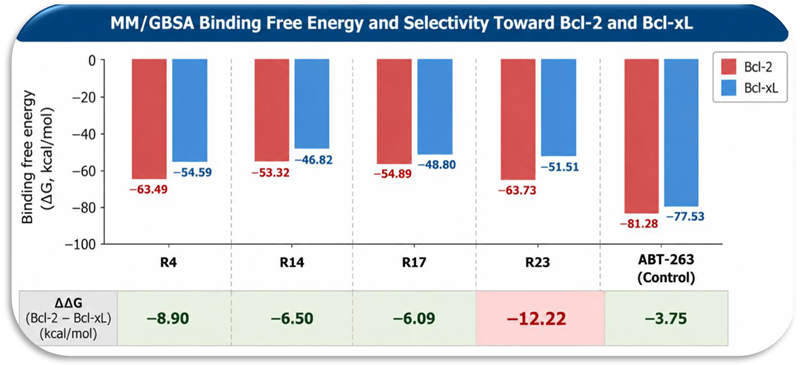
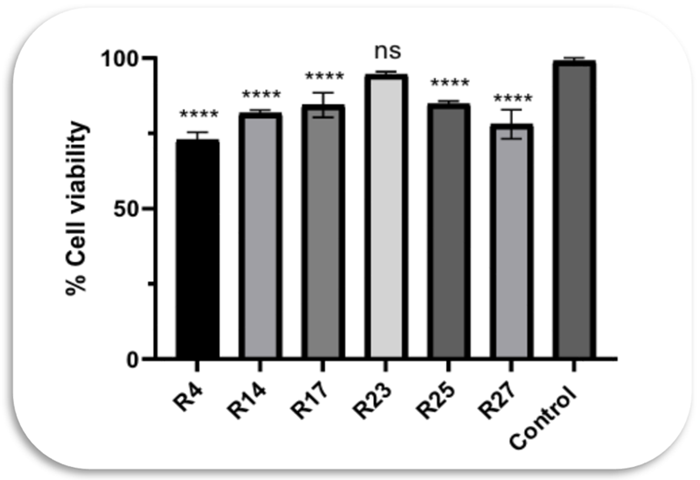
Image Credit: Rania Hamdy et al., in partnership with ELRIG (UK) Ltd.
Compound R23 exhibited the highest predicted selectivity for Bcl-2 over Bcl-xL (ΔG = −12.2 kcal/mol) and favorable safety in human dermal fibroblast (HDF) cells, highlighting its promising selectivity and low cytotoxicity toward normal cells.
Results
Selective anticancer activity
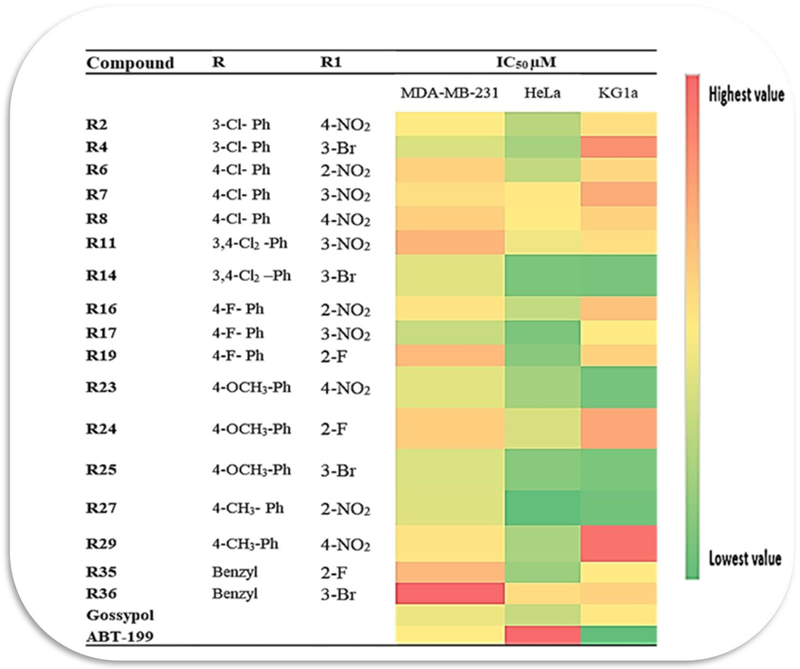
Image Credit: Rania Hamdy et al., in partnership with ELRIG (UK) Ltd.
Heatmap showing preferential cytotoxicity toward Bcl-2-expressing cells, with green indicating high potency (IC50 < 5 μM), yellow moderate potency (5–20 μM), and red low potency (≥ 20 μM).
Bcl-2 binding assay
Table 3. IC50 of the short-listed compounds as Bcl-2 inhibitor. Source: University of Sharjah
| Compound |
IC50 μM |
| R4 |
0.45 ± 0.025 |
| R14 |
0.25 ± 0.04 |
| R17 |
0.63 ± 0.09 |
| R23 |
0.54 ± 0.06 |
| R25 |
12.34 ± 0.57 |
| R27 |
1.81 ± 0.19 |
| Gossypol |
0.6 ± 0.09 |
| Venetoclax (ABT-199) |
0.038 ± 0.002 |
Compounds R4, R14, and R23 exhibited more potent Bcl-2 inhibition than gossypol, with lower IC50 values (0.25–0.54 μM vs. 0.60 μM).
Apoptosis assay
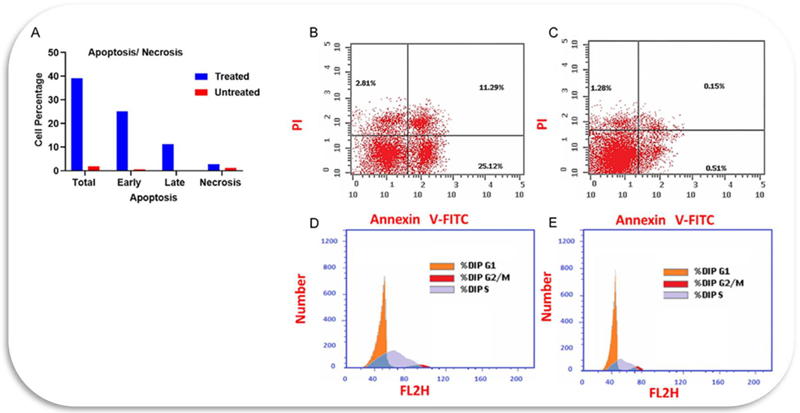
Image Credit: Rania Hamdy et al., in partnership with ELRIG (UK) Ltd.
R23 Induced Apoptosis and Cell Cycle Arrest at G1 Phase
ADMET prediction
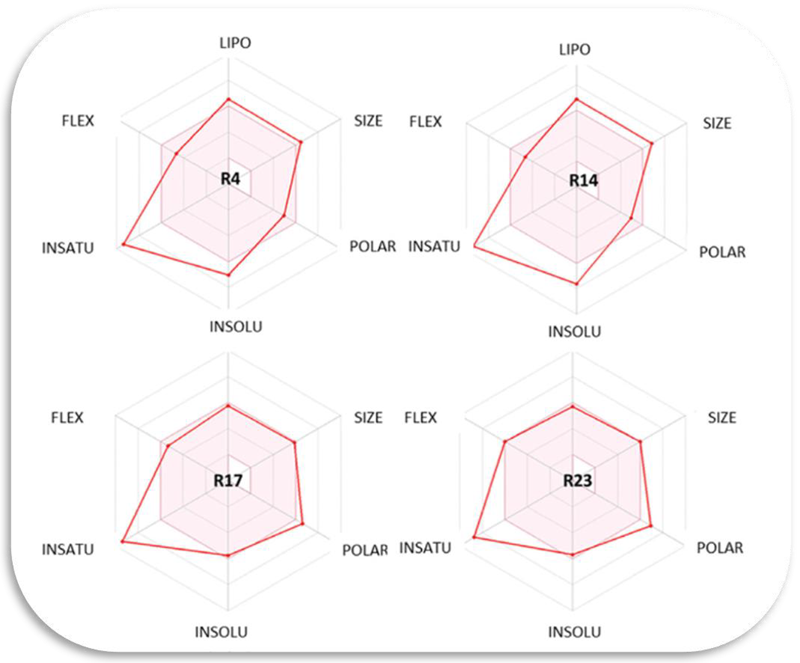
Image Credit: Rania Hamdy et al., in partnership with ELRIG (UK) Ltd.
Bioavailability radar of ADME properties. The pink area indicates the preferred property range for compounds R4, R14, R17, and R23.
Computational modelling
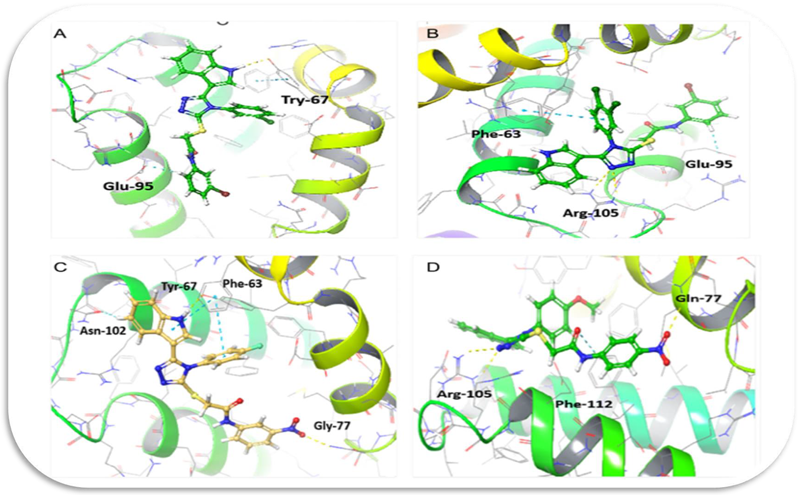
Image Credit: Rania Hamdy et al., in partnership with ELRIG (UK) Ltd.
R4, R14, and R17, R23 exhibited favorable interactions within the Bcl-2 binding site, supporting its potential as a Bcl-2 inhibitor.
Molecular dynamic simulation
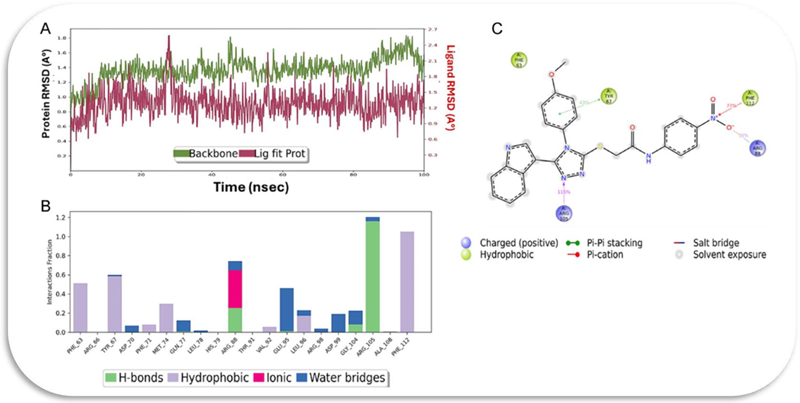
Image Credit: Rania Hamdy et al., in partnership with ELRIG (UK) Ltd.
MDs confirmed stability of R23 complex with the target protein with low RMSD fluctuation ranges
WaterMap analysis
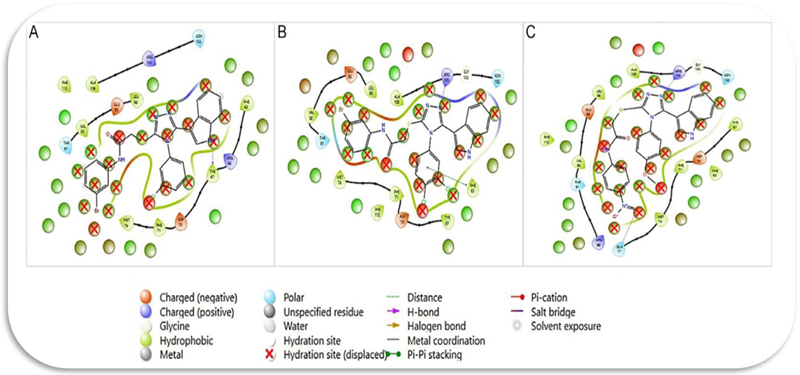
Image Credit: Rania Hamdy et al., in partnership with ELRIG (UK) Ltd.
WaterMap analysis: (A) R4, (B) R14, and (C) R23. R23 exhibited most displaceable hydration sites and highest total ΔG, suggesting favorable interactions with Bcl-2 and potential as a Bcl-2 inhibitor.
R-Group analysis
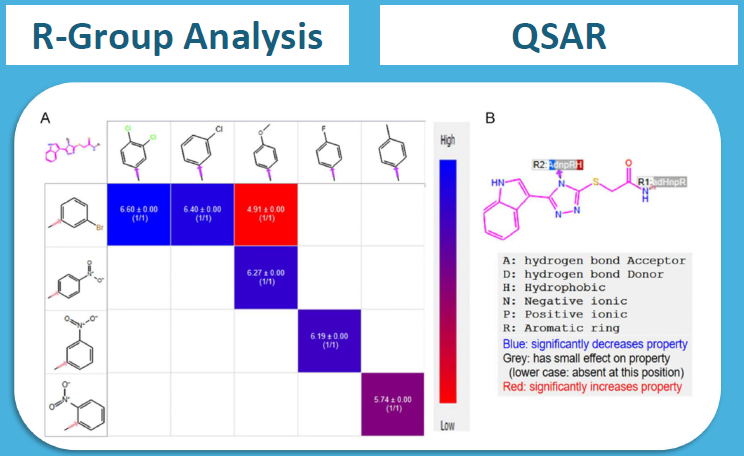
Image Credit: Rania Hamdy et al., in partnership with ELRIG (UK) Ltd.
Heatmap analysis showed the variance activity with different R-groups. QSAR analysis highlighted that hydrophobicity significantly increased the activity.
Conclusion
- Potent Bcl-2 inhibition: Novel indole–triazole derivatives demonstrated selective anticancer activity against Bcl-2-expressing cancer cells.
- Superior binding affinity: R4, R14, and R23 exhibited stronger Bcl-2 inhibition than gossypol in ELISA assays.
- Apoptosis induction: R23 induced G1-phase cell cycle arrest and enhanced early and late apoptosis.
- Computational validation: R23 showed favorable Bcl-2 selectivity, hydration-site displacement, and stable binding during MD simulations.
- Favorable safety profile: R23 and R14 exhibited low cytotoxicity toward normal HDF cells, supported by favorable ADMET predictions.
- Promising lead candidate: R23 emerged as the most promising Bcl-2 inhibitor, warranting further preclinical evaluation.
References
Almehdi, A.M., et al. (2025). Next-generation Bcl-2 inhibitors: Design and evaluation of indolyl-triazole derivatives with anticancer potential. ChemMedChem, 20(21), p.e202500265. DOI:10.1002/cmdc.202500265. https://chemistry-europe.onlinelibrary.wiley.com/doi/10.1002/cmdc.202500265.
About University of Sharjah
The University of Sharjah is licensed and our degree programs are accredited by the Commission for Academic Accreditation under the Ministry of Education's Higher Education Affairs division in the United Arab Emirates. Most of our programs have attained international accreditation.
The 14 colleges at UoS offer over 146 diverse academic programs at both the undergraduate and graduate levels. Our curriculum is designed to meet global standards, attracting talented students from a wide range of backgrounds and challenging them to excel both inside and outside the classroom.
About ELRIG (UK) Ltd.
The European Laboratory Research & Innovation Group (ELRIG) is a leading European not-for-profit organization that exists to provide outstanding scientific content to the life science community. The foundation of the organization is based on the use and application of automation, robotics and instrumentation in life science laboratories, but over time, we have evolved to respond to the needs of biopharma by developing scientific programs that focus on cutting-edge research areas that have the potential to revolutionize drug discovery.
Comprised of a global community of over 12,000 life science professionals, participating in our events, whether it be at one of our scientific conferences or one of our networking meetings, will enable any of our community to exchange information, within disciplines and across academic and biopharmaceutical organizations, on an open access basis, as all our events are free-of-charge to attend!
Our values
Our values are to always ensure the highest quality of content and that content will be made readily accessible to all, and that we will always be an inclusive organization, serving a diverse scientific network. In addition, ELRIG will always be a volunteer led organization, run by and for the life sciences community, on a not-for-profit basis.
Our purpose
ELRIG is a company whose purpose is to bring the life science and drug discovery communities together to learn, share, connect, innovate and collaborate, on an open access basis. We achieve this through the provision of world class conferences, networking events, webinars and digital content.
Sponsored Content Policy: News-Medical.net publishes articles and related content that may be derived from sources where we have existing commercial relationships, provided such content adds value to the core editorial ethos of News-Medical.net, which is to educate and inform site visitors interested in medical research, science, medical devices and treatments.
Last Updated: Oct 29, 2026