To begin, could you introduce yourself and tell us a little about your educational background, your experience in IVF and assisted reproductive technologies, and how your work has led you to focus on laboratory environmental conditions?
My name is David Kachala, and I am the Technical Service Manager here at TMC. I began my professional career at CooperSurgical while completing my business degree at night through UConn School of Business. Over time, I progressed through six positions, ranging from cleanroom quality auditing and Class III medical device support to the IVF field when the opportunity arose.
I later moved to another IVF-focused company, where I also led the technical services team for several years. With my background in cleanroom environments and technical support, progressing into a career supporting IVF laboratories felt like a natural fit.
IVF laboratories depend on extremely controlled environments. Why is environmental stability so important during fertility treatment, and how does vibration compare with factors such as temperature, air quality, and humidity?
The IVF laboratory is an extremely controlled environment, not only for regulatory purposes but also to support strong outcomes. Process, product, and environmental factors all play significant roles in achieving the ultimate goals of helping create happy, healthy families and supporting species conservation.
Vibration isolation is critical, as are maintaining precise temperature and humidity, ensuring the correct gas mixture for optimal pH and cell growth, and providing clean air to prevent contamination.
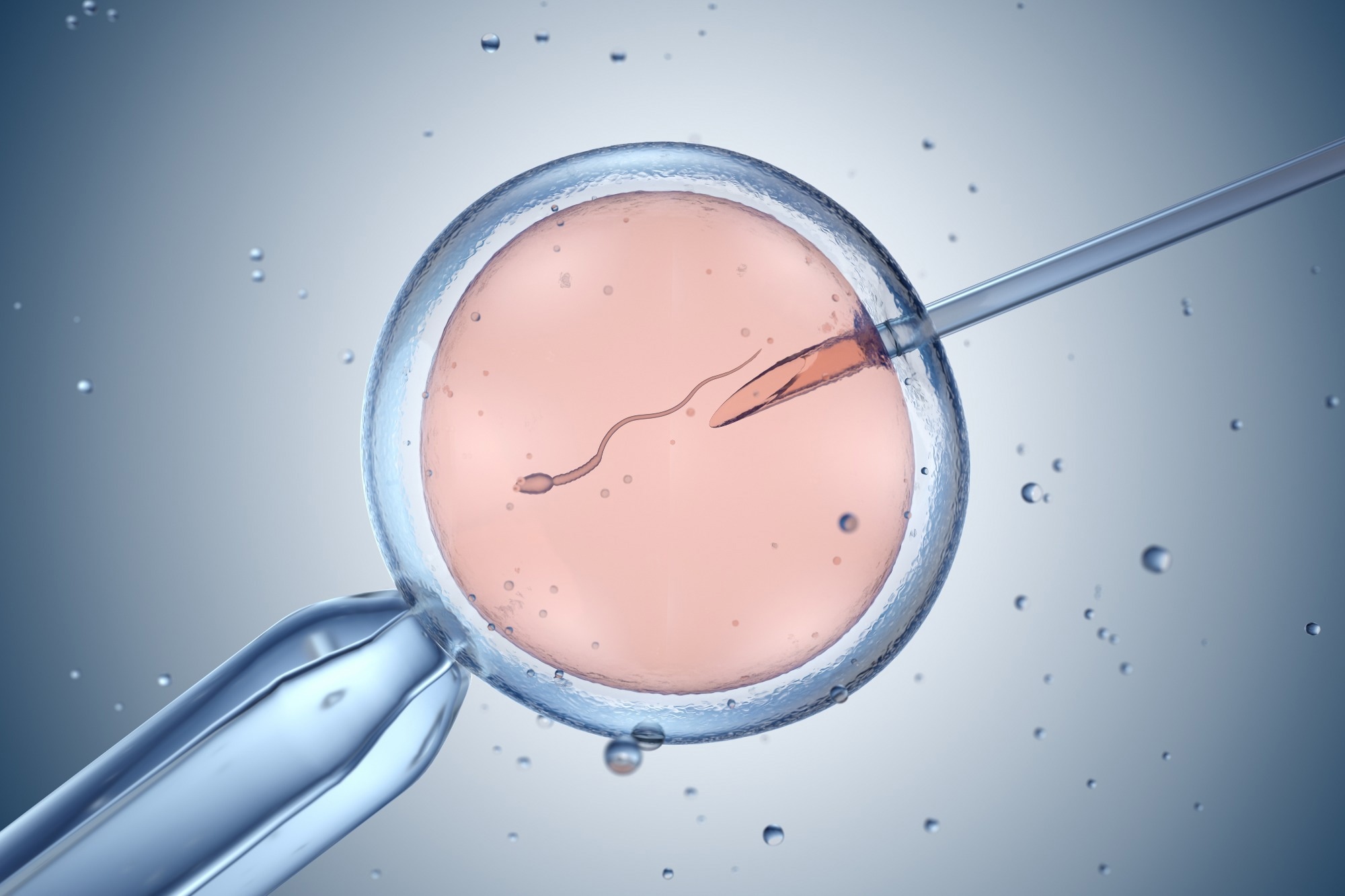 Image Credit:Shutterstock.com /Tatiana Shepeleva
What are some of the most common sources of vibration within an IVF laboratory or its surrounding building, and are there any sources that clinics tend to underestimate or overlook?
Vibrations can come from virtually anywhere, and not just the good vibes from the lab staff! The building itself can hum, while less obvious sources may include slamming doors, elevators, a subway running beneath the building, or even a dance studio upstairs.
When we talk about vibration affecting IVF procedures, what is actually happening at the microscopic level? How can vibration interfere with sensitive processes such as oocyte handling, ICSI, fertilization, embryo assessment, or embryo culture?
The width of a human sperm cell is about 3 microns wide, or 0.003 millimeters: tiny!
During ICSI, micropipettes are used to hold the sperm and inject it directly into the oocyte to achieve fertilization. Procedures like this are performed using micromanipulators that translate the operator’s movements into precise motion, all under magnification of 400× or more.
Even a small vibration can cause pipettes to jump within the field of view or the samples to move within the Petri dish. In most buildings, precision IVF procedures would be extremely difficult, if not impossible, to perform reliably without some form of vibration isolation.
Which instruments and workstations within an IVF laboratory are most sensitive to vibration, and what makes these equipment systems particularly vulnerable?
Without a doubt, the microscope and micromanipulation setups are the most sensitive. Working with a vibrating setup makes precise procedural movements difficult. Even locating the sample or confirming that the pipette is in the correct focal plane can become challenging. High magnification amplifies the visible effects of vibration, which can even make the user feel dizzy!
 Image Credit:Shutterstock.com/Microgen
What does the current scientific evidence tell us about the relationship between laboratory vibration and outcomes such as embryo development, embryo quality, fertilization rates, and overall IVF success? Are there still important gaps in our understanding?
There are still important gaps in our understanding. Advanced research in IVF has faced challenges over the years, and the industry itself is still relatively young. When precise motion is required to fertilize or biopsy without damaging cells, capture high-resolution images, or perform higher-risk cultures, vibration mitigation plays a critical role.
How can a clinic determine whether vibration is a problem in its laboratory? What measurements, environmental surveys, or monitoring approaches can be used to identify problematic vibration frequencies and trace them back to their source?
It can be difficult to judge the severity of vibration until its effects are observed under high magnification. We may occasionally feel vibration beneath our feet, but that alone does not indicate how significantly it will affect in vitro procedures. A vibration site survey provides quantifiable data about the vibration levels present in the laboratory and helps identify potential concerns. This becomes increasingly important as end users work at ultra-high magnification.
Once a vibration problem has been identified, what options are available to mitigate it? How do measures such as building design, equipment placement, isolation tables, passive isolation, and active vibration cancellation differ in the protection they can provide?
Once a vibration problem is identified, it is often too late to make meaningful building design changes unless the issue is addressed before construction is completed.
The appropriate solution depends on the severity and characteristics of the vibration, as methods that work well at one site may not be sufficient at another. Placing equipment near a corner may provide a modest improvement by moving it away from the more flexible central area of the floor.
Beyond that, the level of mitigation required increases with the need for vibration reduction. Some sites can rely on passive isolation, while IVF research laboratories may prefer full active cancellation to remove vibration as a variable.
Can you share an example of a laboratory in which vibration affected a sensitive IVF process or piece of equipment? What ultimately caused the problem, how was it addressed, and what can other IVF laboratories learn from that experience?
Vibration can appear in IVF laboratories where it is least expected. Whether a laboratory is located in a major city or a rural area, potential sources are everywhere: a truck driving over a crack in a nearby road, subway cars traveling underground a block away, a door slamming across the hallway, or even an embryologist walking through the laboratory can create an impact. I’ve seen it all.
In some cases, passive isolation has worked perfectly well. In others, end users expected passive isolation to be sufficient, but we ultimately had to remove the setup and replace it with an active cancellation system. The lesson is to ask the right questions and be realistic about the answers. A modest cost saving today can create persistent challenges and greater expense down the road.
If the surrounding area is likely to be developed in the coming years, consider the future effects of cranes, construction vehicles, and increased traffic, and choose an active system from the outset.
Looking to the future, as IVF techniques, imaging systems, automation, and micromanipulation technologies become increasingly sophisticated, how do you expect the requirements for vibration control to evolve, and what should clinics be doing today to prepare for the IVF laboratory of tomorrow?
The question nearly speaks for itself. Technology continues to evolve, and the industry is placing greater emphasis on automation. Advanced precision instruments will require increasingly sophisticated vibration cancellation, and keeping that solution separate from the automated equipment provides greater flexibility than building it directly into each system. To prepare for tomorrow, I recommend planning for greater needs today rather than investing in solutions twice.
About David Kachala
David Kachala is the Technical Service Manager at TMC, bringing nearly 15 years of experience supporting IVF laboratories and technical service teams. He began his career at CooperSurgical while completing his business degree at night through the UConn School of Business, building a strong foundation in both technical operations and business management.
Throughout his career, David has progressed through a variety of roles, from clean-room quality auditing and Class III medical device support to specialized technical service within the IVF field. He later joined another IVF-focused company, where he led the technical services team for several years.
With extensive experience in clean-room environments, medical device support, and laboratory-focused technical service, David’s transition into IVF laboratory support was a natural fit. Today, he combines deep technical knowledge with practical leadership experience to help ensure reliable, high-quality support for IVF laboratories and the professionals who depend on them.
About TMC Vibration Control
TMC is a global leader in precision floor vibration isolation systems with over 50 years of experience.
Major research centers, OEM and end-user semiconductor manufacturers, drug discovery companies, and nanotechnology labs across all seven continents rely on TMC solutions to support ultra-precision measurements, instruments, and manufacturing.
TMC’s precision floor vibration isolation product line ranges from isolated microscope bases and damped optical tables to sophisticated active vibration cancellation systems featuring piezoelectric actuators and digital controllers.
In addition, TMC offers active magnetic field cancellation systems and acoustic noise isolation enclosures that, together with vibration isolation, provide complete environmental noise control. Environmental surveys performed on-site by experienced TMC service engineers and state-of-the-art measurement equipment are also available.
TMC systems are designed and manufactured at the company’s vertically integrated factory and headquarters in Peabody, Massachusetts. The facility is ISO 9001:2015 certified.
TMC is a unit of AMETEK Ultra Precision Technologies, a pioneer in the development of ultraprecision measurement instruments and a global leader in ultraprecise machine tools and manufacturing systems for the semiconductor, photovoltaic, nanotechnology, military, defense, and ophthalmic lens markets.
AMETEK Ultra Precision Technologies is a division of AMETEK, Inc., a leading global manufacturer of electronic instruments and electromechanical devices with annualized sales of approximately $5 billion.
Sponsored Content Policy: News-Medical.net publishes articles and related content that may be derived from sources where we have existing commercial relationships, provided such content adds value to the core editorial ethos of News-Medical.Net which is to educate and inform site visitors interested in medical research, science, medical devices and treatments.