Sponsored Content by AmplivoxReviewed by Maria OsipovaFeb 5 2026
The ability to run medical services from a PC is essential in today’s digital landscape. The need to ensure efficiency, accuracy, and ease of use is also more prevalent than ever, though this is not a new requirement in the medical sector.
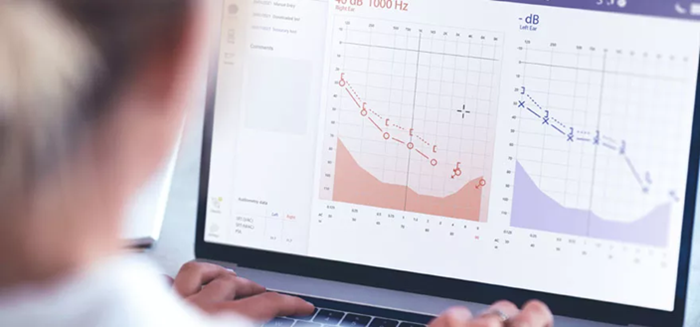
Image Credit: Amplivox
PC-based audiometry has seen significant advancements in recent years. It offers improved features, increased user support, and an increasing capacity to integrate seamlessly into clinical practice. PC-based audiometry also stores data rapidly and easily, helping to prepare for further stages of a subject’s rehabilitation.
Despite these many benefits, many operators still rely on hardware-based audiometers to perform audiometry. Non-PC-based audiometers are familiar to many professionals and offer a rapid testing solution; however, these instruments do not integrate into current EMR systems, slowing down the process by adding further steps to the workflow.
Using software and hardware allows hearing health experts and clinicians to access better, more flexible, and more cost-effective solutions. This results in a more connected, efficient, and streamlined clinical workflow.
The transition to PC-based audiometry is straightforward, offering a number of key advantages.
Efficiency and convenience
Conventional audiometry leverages manually controlled devices and often requires significant time-consuming paperwork. PC-based audiometers streamline these tasks via the upfront preparation and automation of a range of behaviors before prompting the next steps.
Hearing health professionals can focus less of their attention on the technology and more on the subject. PC-based software can also automatically change test frequencies and intensities, saving setup time and maintaining consistent test conditions.
Cost-effectiveness
Traditional audiometers typically have high upfront costs, particularly in the case of models designed for bone conduction testing or speech audiometry that boast many features or special abilities.
Users can update PC-based systems more easily and with reduced financial outlay versus hardware-based systems. It is often possible to perform software updates, troubleshooting, and repairs rapidly and remotely, including the addition of new features.
User-friendly interface
PC-based audiometers generally feature user-friendly interfaces, including simple menus, touch screens, and clear instructions. This user-friendliness allows occupational health professionals and audiologists to learn how to operate the system with minimal training, as well as allowing them to explain test results to the patient in an easy-to-understand manner.
Streamlined data management
The introduction of GDPR (General Data Protection Regulation) guidelines has seen increased regulations in the areas of data collection and storage, along with an increased emphasis on digitizing this data.
While a historic focus has been on physical reports and record files, these hardcopy data formats were not easy to access across larger systems. The advent of cloud storage and remote data locations for servers now offers a range of advantages:
- Speed, eliminating the requirement to physically print, write, or copy information to store this. Time saved can be spent on the subject, affording them a higher level of care.
- Security, with data now stored in a single central location to allow efficient retrieval and sharing. This data can be more easily encrypted and backed up.
- Reduced risk of human error, because the automated storage of data removes the need for human involvement, in turn lowering the chances of human error. This automated approach also saves time and resources due to the lack of manual data input.
- Eco-friendliness, removing the need for paper printouts and records by storing and accessing information digitally.
Flexible and customizable
Each patient has individual needs, and PC-based systems can better accommodate personal preferences by making the overall workflow more tailored to specific patient requirements. For instance, an audiologist working with a child may alter a tests’ loudness, pitch, duration or use more detailed tests when working with older patients.
It is also possible to apply test protocols and parameters across wide computer system installations, ensuring that all users in an organization perform tests in the same way.
Analysis and reporting
Conventional audiometric testing typically requires that the operator interpret results during the testing process, potentially introducing inconsistency or bias. Many PC-based audiometric systems have built-in tools, however, allowing hearing data to be analyzed and presented in various formats.
PC-based audiometers enable rapid visualization of relevant audiometry and tympanometry data in graphical form, minimizing human bias in interpreting thresholds and allowing more objective findings.
PC-based audiometers also enable simpler communication of the results to subjects and healthcare providers, and the digital storage of test data allows audiologists to more easily track changes in a patient’s hearing over time.
Long-term data is highly beneficial when looking to track hearing loss, as well evaluating the success of treatments like surgeries or hearing aids.
PC-based systems also tend to facilitate the generation of customized reports, reducing administrative workload by allowing the easy printing, emailing, or uploading of these reports to the subject’s digital health record.
Third-party integration
The integration of PC-based audiometers with office management systems and EMR (Electronic Medical Records) helps to streamline data management by reducing the manual entry requirements and the risk of potential errors.
Seamless connectivity via PC-based systems allows instant access to patient data, allowing timely and informed decision-making. Ultimately, this integration is key to facilitating a bespoke, task-focused end-to-end workflow.
PC-based audiometers
The benefits of PC-based audiometers reflect a more general trend toward the integration of advanced technology into audiometric practices, with the goal of enhancing accuracy, efficiency, and patient care.
At Amplivox, we offer a suite of PC-based audiometers directly operated by the company’s state-of-the-art audiometry and data management software.
The modelONE is ideal for rapid, accurate, and repeatable hearing tests. This screening audiometer has been designed to provide unrivaled performance, workflow efficiency, and guided testing for non-audiologists and occupational health professionals.
The Anova™ has been developed for screening and diagnostic audiometry. It offers a fully customizable testing experience, incorporating all in-clinic and mobile testing requirements. Due to its powerful combination of innovation, accuracy, and ease of use, it represents the perfect tool for audiologists, ENT, hearing, and occupational health professionals.
Acknowledgments
Produced from materials originally authored by Amplivox.
About Amplivox
Amplivox creates a healthier future by providing accessible and accurate medical solutions for everyone.
As a manufacturer with more than 90 years of experience, we are proud to be a trusted partner to hearing and occupational health professionals all over the world by delivering a high level of knowledge-led solutions, service and support. We are here to be your preferred audiological and occupational health equipment provider.
Sponsored Content Policy: News-Medical.net publishes articles and related content that may be derived from sources where we have existing commercial relationships, provided such content adds value to the core editorial ethos of News-Medical.Net which is to educate and inform site visitors interested in medical research, science, medical devices and treatments.