Sponsored Content by LuxorReviewed by Ify IsiborJun 24 2026
Collagen is a protein found in the body's various connective tissues. It is mainly found in cartilage, bones, tendons, ligaments, and skin.
Collagen tissues may be rigid (bone), compliant (tendon), or somewhere between rigid and compliant (cartilage).
It is also abundant in corneas, blood vessels, the gut, intervertebral discs, tooth dentin, and muscle tissue. It is a long, fibrous structural protein with exceptional tensile strength. Tough bundles of collagen form a key component of the matrix that supports most tissues and provides cells with structure from the outside.
Collagen also has many medical applications in cosmetic surgery, tissue regeneration, burn surgery, and wound healing, making it a relevant topic for pharmaceutical and cosmetics R&D laboratories across the world.
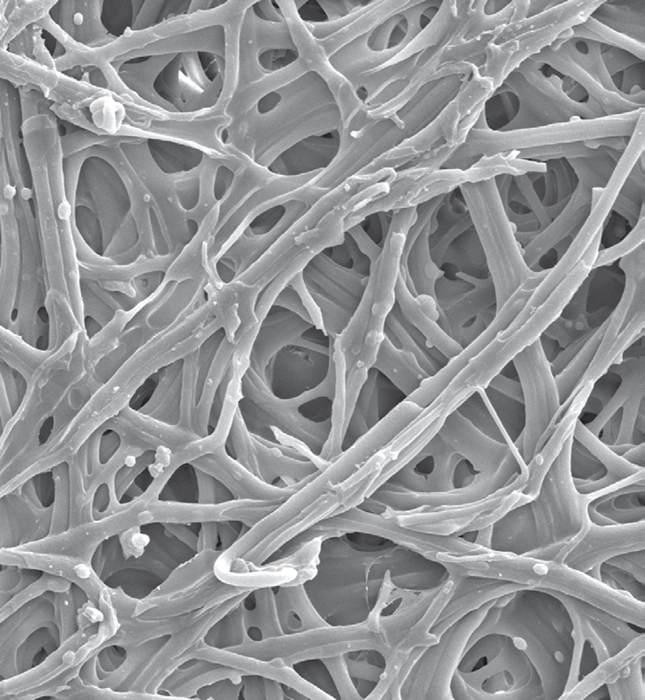
Image Credit: Luxor
Why is SEM imaging employed in collagen membrane research?
SEM imaging is an ideal instrument for examining the structure and fiber surface characteristics of collagen networks. Generally, SEM imaging of organic and biological samples such as tissue, blood vessels, and cartilage yields compelling findings.
However, these materials are very poor electrical and thermal conductors. As a result, they tend to charge heavily during scanning with an electron beam in an electron microscope.
In this study, the membrane of an inner eggshell was used as a collagen source to investigate the charging in an electron microscope. The findings demonstrated that an uncoated collagen sample does charge, even at relatively low magnifications or acceleration voltages. Gold coating was therefore identified as the optimal solution for imaging collagen.
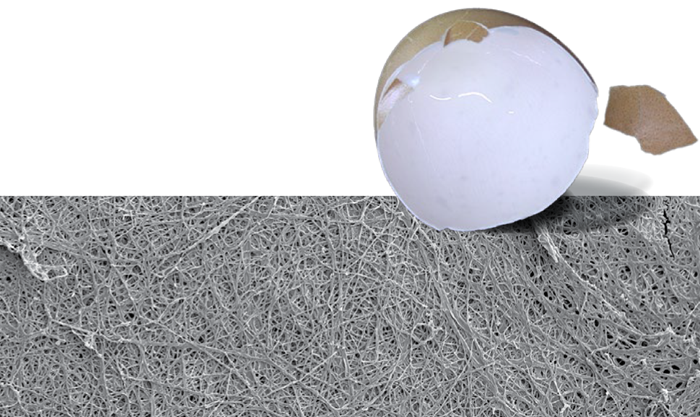
Image Credit: Luxor
What is sample charging?
SEM images are generated by scanning an electron beam across the sample, effectively adding electrons to the sample. Sample charging occurs when samples have poor electrical conductivity, indicating the lack of a conducting path for electrons to flow from the sample surface toward the sample holder.
It leads to a whole range of problems, including drift, blur, and low contrast: in other words, blurry and false images.
Applying a very thin, electrically conducting metal layer such as gold (Au) or platinum (Pt) onto the surface of the specimen enables electrons to flow from the sample surface to the sample holder, thereby preventing sample charging. This process is known as metal coating or sputter coating.
Additional benefits of sputter coating a sample include enhanced secondary electron emission, reduced beam penetration with improved edge resolution, and better protection of electron beam-sensitive samples.
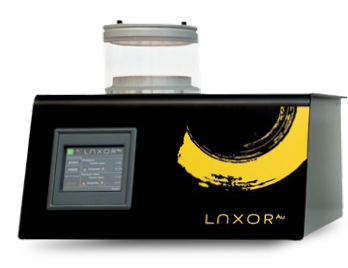
Image Credit: Luxor
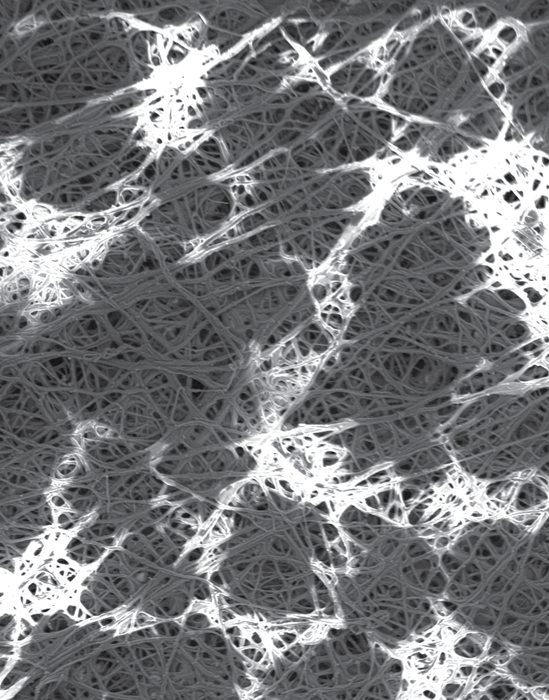
Eggshell uncoated. 800x magnification. Image Credit: Luxor
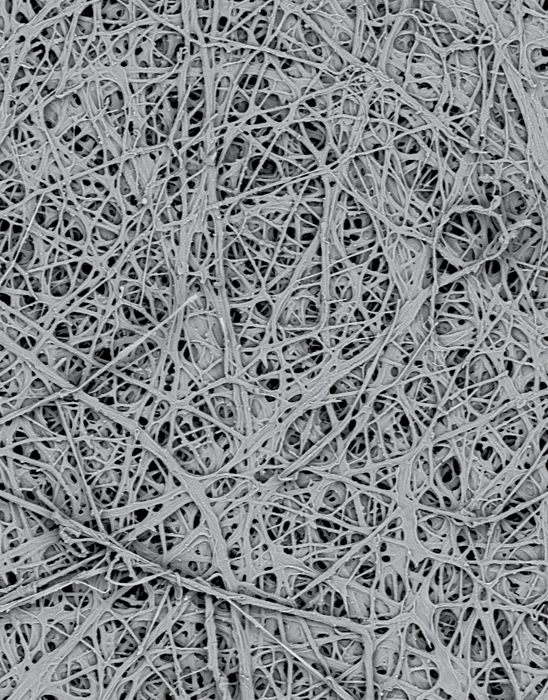
Eggshell coated. 800x magnification. Image Credit: Luxor
Why choose LUXOR?
A2 Technology: Precision Coating for High-Resolution Imaging
LUXOR’s A² technology generates a highly stable and precisely controlled plasma, enabling the deposition of thin, uniform coatings. The process starts by evacuating the chamber to create a vacuum, after which a proces gas or air is injected and a high voltage is applied to ionize the gas, initiating the plasma and the coating curent.
To maintain process stability, the coating current is continuously regulated through the controlled high-speed injection of small amounts of process gas into the chamber. This dynamic adjustment ensures that the target current is reached quickly and maintained throughout the coating cycle.
What sets LUXOR metal coaters apart from other commercially available systems is their distinctive approach to process monitoring and control, which provides exceptional precision and reproducibility.
For SEM operators, this translates into acquiring more consistent, uniform metal coatings that significantly improve image quality, enhancing both resolution and contrast.
Moreover, the coating process is fully automated, eliminating manual involvement and ensuring a seamless, hassle-free experience.
Download Luxor's eBook on electron microscopy here
Image Credit: Luxor
Innovative Upside-Down Design for Enhanced Functionality
LUXOR follows a "form follows function" design philosophy, which is reflected in the distinctive architecture of its coaters. Unlike conventional systems, the samples are suspended upside down within the coating chamber, while the target is at the bottom. Although this configuration may initially seem unconventional, it offers several significant practical advantages.
- Safety first: The sputter device has all the high voltage and current lines safely stored within the instrument housing, decreasing the risk of electric shock. This safety function enables the machine to operate with total peace of mind.
- Effortless sample handling: The upside-down design allows for easy access to the lid, which also serves as a loading station for samples. This enables the quick application or removal of samples without the use of special tongs or tweezers. This simplicity not only improves usability but also increases productivity by expediting the process.
- Clean coating process: The clean coating procedure removes loose particles, providing maximum protection for the expensive SEM column. This results in more consistent and reliable outcomes.
- 3D coating: 3D coating improves the coating quality by removing the larger particles towards the pump rather then towards the suspended samples by gravity. LUXOR’s A2 technology eliminates the need for a rotary or planetary table, making it easier to coat three-dimensional, complex and porous samples.
Fully Automated
The coating process is fully automated. Once the samples have been loaded, simply select the appropriate coating thickness and press the Start button. This user-friendly approach significantly reduces the likelihood of human error, and new operators and lab professionals can learn to use the device after only a few minutes of basic instruction.

This information has been sourced, reviewed and adapted from materials provided by Luxor.
For more information on this source, please visit Luxor.
Sponsored Content Policy: News-Medical.net publishes articles and related content that may be derived from sources where we have existing commercial relationships, provided such content adds value to the core editorial ethos of News-Medical.net, which is to educate and inform site visitors interested in medical research, science, medical devices and treatments.