Sponsored Content by LabmanReviewed by Maria OsipovaAug 31 2026
Many bioprocess and process development laboratories continue to use Sharpie markers or adhesive labels; Labman Automation broke down the issues associated with these methods to create a better solution.
The problem with manual vial labeling
Daily retains and aliquots are routinely collected from bioreactors during upstream processing to assess cell counts, pH, osmolality, viability, and other analytical parameters.
Further downstream, chromatography operations produce a huge number of fractions, flowthrough samples, wash fractions, and eluates, all of which must be precisely recorded.
These samples often require:
- Human-readable IDs
- Barcodes for LIMS integration
- Information about experiments, batches, fractions, or timepoints
- Long-term freezer storage
Unfortunately, typical labeling strategies can be ineffective in real-world bioprocess contexts.
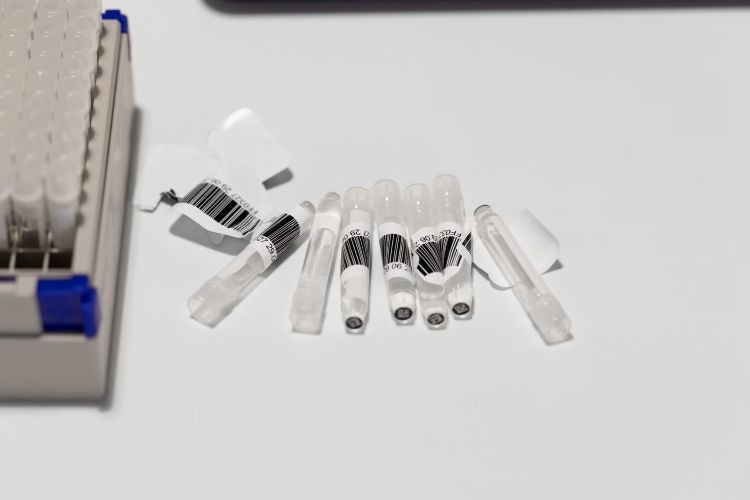
Image Credit: Labman
Sharpie markings fade and smudge
Handwritten vial marks may become difficult to read during exposure to IPA sprays, ordinary cleaning operations, condensation, or repeated handling. This means that critical sample information can easily become illegible.
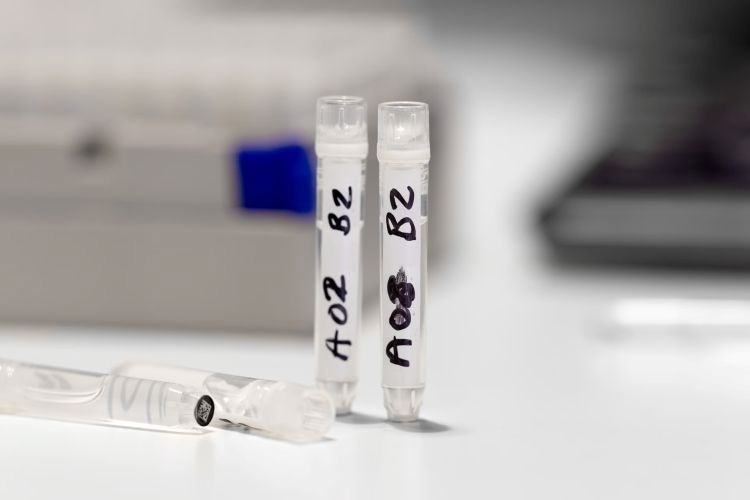
Image Credit: Labman
Adhesive labels do not always stay attached
Printed labels may peel, wrinkle, or separate when frozen, thawed, transported, or stored. Labels can potentially change vial dimensions, producing problems with automated handling systems, racks, and robotic operations.
In addition, labels, especially on smaller vials, can wrap around the circumference, making barcode scanning difficult or impossible. The small surface area can also cause labels to overlap, concealing essential information and compromising barcode readability.
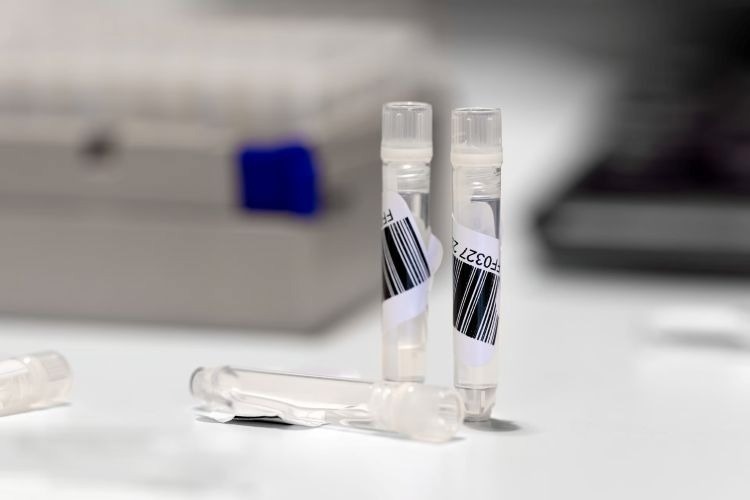
Image Credit: Labman
Manual labeling creates opportunities for error
Whether a user is collecting day 10 bioreactor samples, chromatography fractions, formulation study samples, or reference standard aliquots, manual labeling requires extra steps and raises the possibility of transcription errors.
Existing alternatives
Many laboratories employ dedicated label printers from suppliers such as Brady, Zebra, and DYMO, often coupled with electronic lab notebooks or LIMS systems to generate barcode labels before an experiment begins.
While these solutions enhance uniformity, they still rely on adhesive labels, which can become damaged, detached, or degraded during the sample's lifecycle.
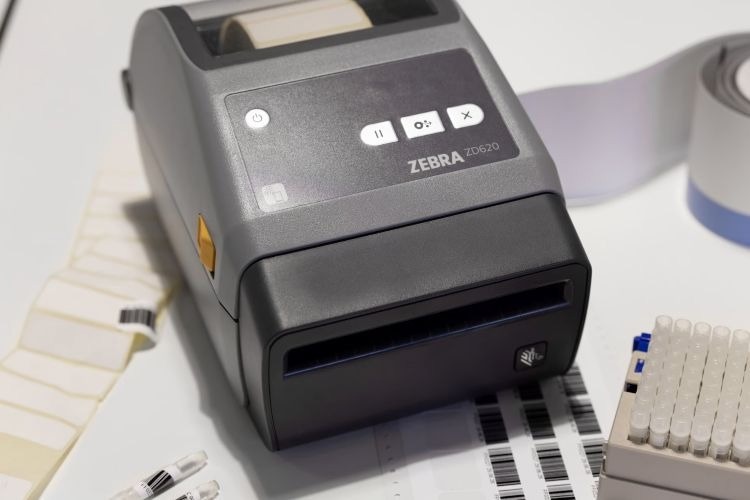
Image Credit: Labman
A more permanent approach
Imagine each vial being directly marked with a permanent, high-contrast identifier that will not smudge, wash away, or fall off.
Laser marking allows for the direct application of durable human-readable text and machine-readable barcodes to the vial surface, resulting in rigorous traceability from upstream sampling to downstream purification, analytical development, formulation studies, and long-term storage.
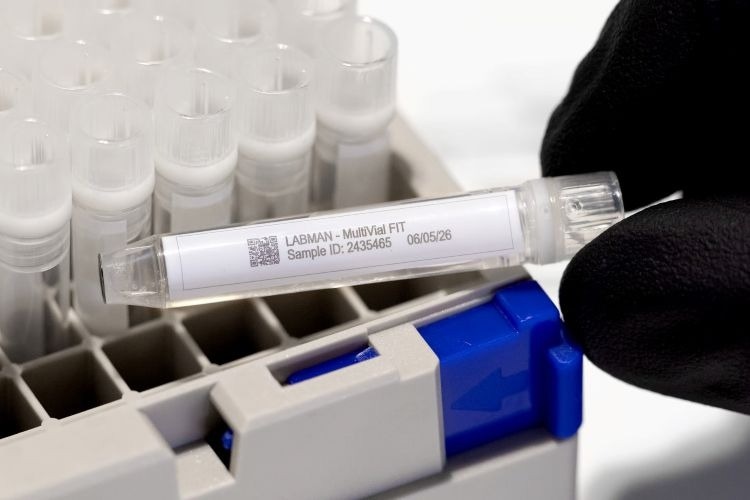
Image Credit: Labman
Introducing the Labman MultiVial®
Labman's MultiVial technology automates the direct laser labeling of laboratory vials, resulting in permanent sample identification without the use of adhesive labels or handwritten markings.
The end result is a dependable, automation-friendly technology that enables process development teams to retain sample traceability from bioreactor to purified product. Benefits include:
- No need for tedious consumable replacements
- Laser branding is suitable for GMP environments
- Effective sample tracking throughout the process
- Marking 1D and 2D codes, human-readable text, and logos
- Weighing embedded within the system covers additional workflow steps
- Markings remain permanent and clear even in freezing settings
Labman expertise: Enabling workflows
Bring the precision, speed, and safety of vial labeling for process development to labs.
-
Eliminate tedious consumables: Labs no longer require expensive and time-consuming consumables such as cryo-compatible label rolls and printer ribbons. Laser-marking technology permanently affixes the identity to the vial, eliminating the need for consumables.
-
GMP compliance: Labeling can disrupt GMP compliance by introducing new materials and adhesives. Although labels can be cleaned using chemicals, repeated cleaning can cause adhesive failure or erode printed information.
Laser-marked identifiers, on the other hand, are permanently etched onto the vial, allowing for extensive cleaning and disinfection while maintaining the integrity and readability of the vial identification.
-
Compatible with cryogenic environments: Adhesive labels can become brittle and lose legibility when exposed to cryogenic temperatures, while handwritten markings may fade or be damaged with repeated handling. Laser-marked IDs are permanently carved into the vial's surface, ensuring long-lasting, high-contrast identification that can be read throughout cryogenic storage and freeze-thawing.
Key services: Lab technology that suits everyone
Every sample is important in bioprocess and process development contexts. From upstream cell culture to downstream purification, teams rely on accurate sample identification to ensure data integrity, traceability, and confidence in outcomes.
This is not always easy to accomplish due to the constraints of manually labeled vials or handwritten IDs.
- Custom projects
- Products
- Process skids
- Software
We are lucky to have a Labman MultiVial device already up and running in our lab for laser tube marking. It saves time in the lab and keeps the label crisp even on small plastic vials. The interface for the software is easy to navigate and many colleagues are happy to use it. No more pens and stickers. A game changer, especially for small plastic vials in smart stores.
Steffen Schmidt, Principal Scientist, Novo Nordisk
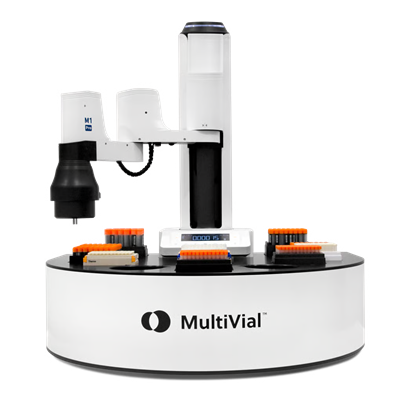
Image Credit: Labman
About Labman
Labman is a global leader in creating custom automated laboratory technologies, products, and software that empower and advance scientific discovery.
We collaborate across diverse industries, including medical, pharmaceutical, agritech, paints and coatings, and FMCG, to deliver innovative solutions.
From our state-of-the-art manufacturing facilities, Labman’s multi-disciplinary teams design, build, and support systems used worldwide, enabling groundbreaking science in leading laboratories every day.
Labman in 2025
Sponsored Content Policy: News-Medical.Net publishes articles and related content that may be derived from sources where we have existing commercial relationships, provided such content adds value to the core editorial ethos of News-Medical.Net, which is to educate and inform site visitors interested in medical research, science, medical devices, and treatments.