Sponsored Content by LabmanReviewed by Maria OsipovaAug 31 2026
Many compound management teams continue to rely on adhesive vial labels, handwritten identification, or expensive pre-labeled tubes, which cause issues throughout the sample lifetime. Labman Automation broke down the issues to find a better solution.
Stop sticky labels from slowing down compound storage
Managing thousands of chemicals in discovery chemistry and R&D requires precise sample identification, dependable traceability, and seamless integration with automated storage systems.
Many compound management teams continue to use sticky vial labels, handwritten identification, or expensive pre-labeled tubes, which cause issues throughout the sample lifespan.
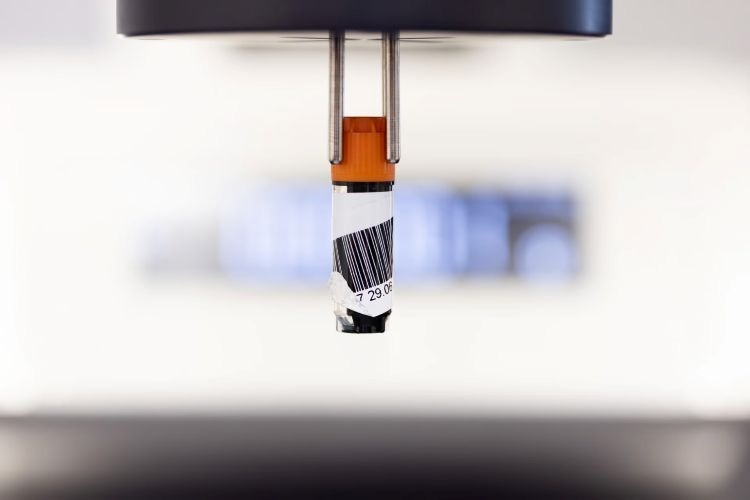
Image Credit: Labman
Requirements of modern compound management workflows
Whether you are supporting medicinal chemistry, materials science, analytical chemistry, or drug development programs, every sample must be:
- Registered and monitored from receipt until disposal
- Linked to compound data in the LIMS or inventory system
- Compatible with both operators and automation systems
- Supportive of high-density storage and retrieval platforms
From chemical weighing and aliquoting to long-term storage, each vial should be easily recognized.
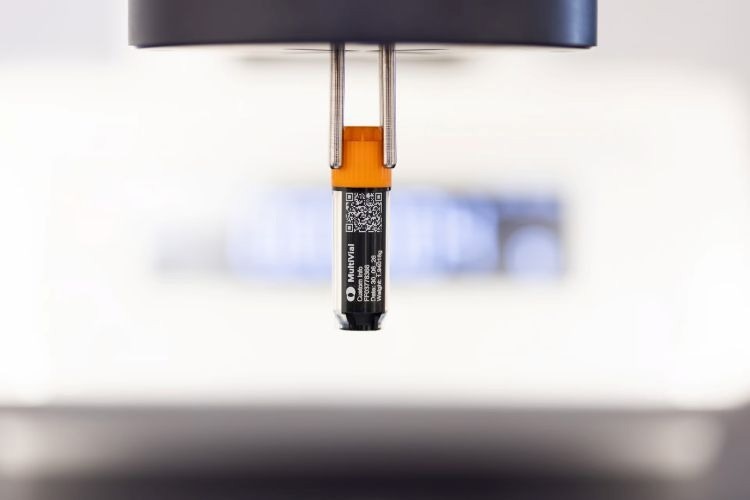
Image Credit: Labman
Common challenges in compound storage labs
Sticky labels cause automation problems
Many compound management teams use adhesive labels to provide human-readable information to conventional barcoded tubes. However, labels can:
- Catch during automated storage and retrieval
- Jam high-density tube racks
- Repeated handling may cause peeling, wrinkles, and damage
- Raise compatibility concerns with automated stores
Minor label protrusions can have an influence on performance in labs that use automated systems from vendors such as Hamilton, Micronic, Azenta, or other sample management platforms.
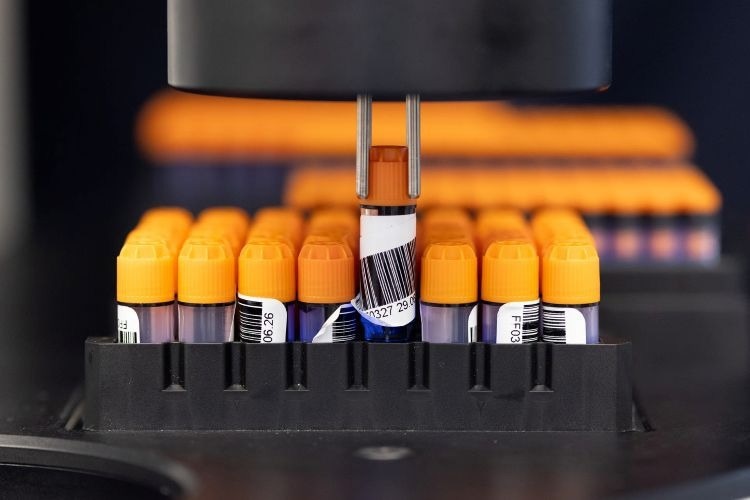
Image Credit: Labman
Dual-coded tubes are expensive
Pre-labeled and dual-coded tubes offer both machine-readable and human-readable identification, although they often come with high maintenance costs. Many laboratories are looking for more adaptable ways to include sample IDs, project identifiers, and human-readable language without relying on pricey consumables.
Barcodes alone slow manual workflows
Automation systems love barcodes; not all scientists do. When technicians are physically sorting compounds, verifying racks, executing weighing operations, or preparing assay plates, scanning tubes takes up unnecessary labor.
Operators can easily identify samples with human-readable vial markings, eliminating the need for additional scanning.
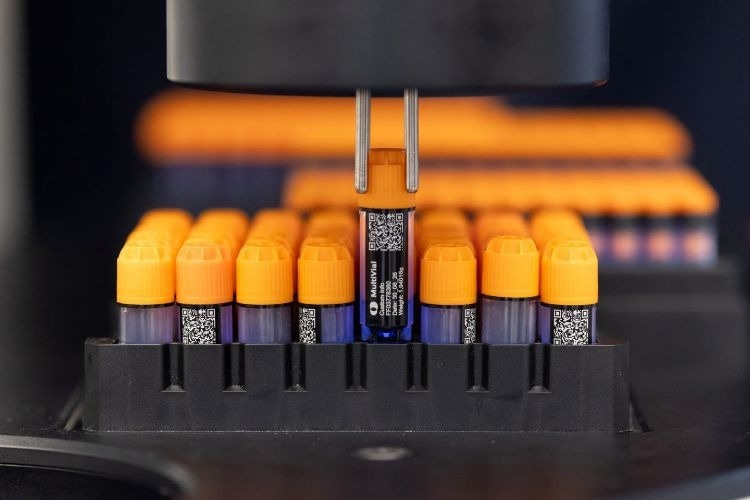
Image Credit: Labman
Permanent laser marking for compound management
Laser marking is quickly becoming a viable replacement for physical labels in complex storage situations. The versatility of laser marking gives numerous advantages while reducing the problems associated with adhesive labels.
- Permanent identifiers that will not peel or smudge
- Instantly apply customizable markers
- Stores well in high-density racks as it has no impact on vial diameter
- It does not diminish over time
- Vials may be entirely cleaned with solvent, making them suitable for GMP conditions
- High-resolution marking allows for accurate code reading in automated procedures
Laser marking creates a long-lasting identifier that becomes part of the tube itself. There are no adhesive labels and no label upkeep. Ultimately, there is no possibility that labels may interfere with automated systems.
Labman MultiVial®
Labman MultiVial® labels tubes and vials with human-readable text, barcodes, and unique identification in seconds. The system can mark plastic or cushioned glass and accepts vials ranging from 1 to 50 ml from practically any manufacturer, including Azenta, Corning, ThermoFisher, Micronic, and many more.
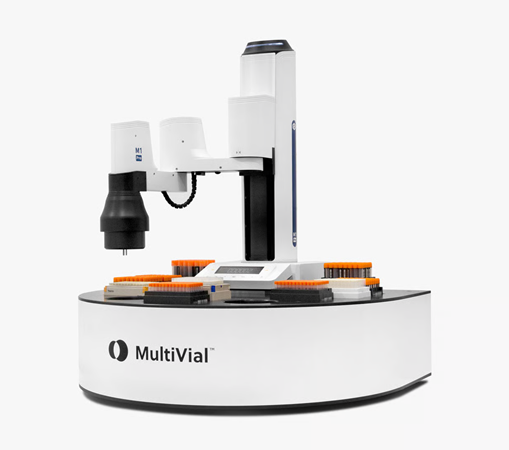
Image Credit: Labman
The MultiVial obtains information from a variety of sources within the system, including the bottom 2D code, the date, the .csv input file, and the weight of the vial, thanks to an integrated high-precision balance. This can then be etched on the side of the vial, even on tiny vials, in extremely great detail, all without the constraints of adhesive labeling.
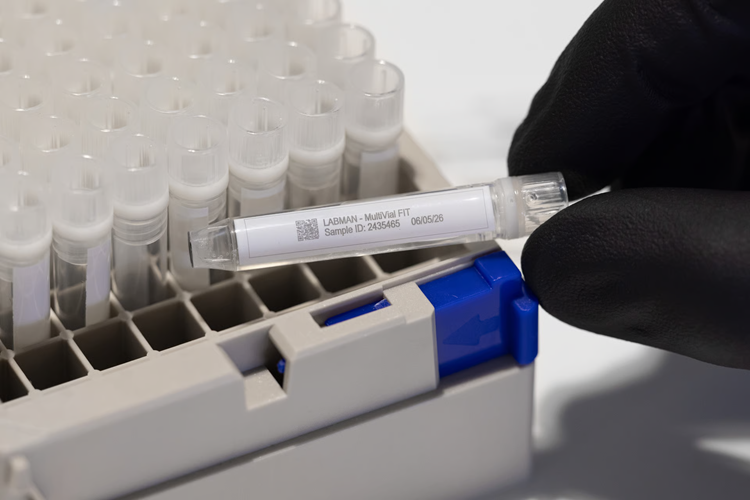
Image Credit: Labman
Labman expertise: Enabling workflows
Bring the precision, efficiency, and safety of vial labeling for compound management into the laboratory.
-
Integrate MultiVial with existing infrastructure using Labman's open API, including LIMS platforms, compound registration systems, and inventory databases. Create a connected workflow in which sample data and physical sample identification are synchronized from the start.
-
Improve traceability by replacing sticky labels with permanent, automation-friendly vial marking. Increase sample visibility for technicians, keep barcodes compatible with automated systems, and improve traceability throughout the compound management process.
-
MultiVial's integrated precision weighing module may be traced and added to the tube's human-readable information, automating additional workflow steps inside a single system.
Key services: Lab technology that suits everyone
Managing thousands of chemicals in discovery chemistry and R&D requires precise sample identification, dependable traceability, and seamless integration with automated storage systems. This is not always easy to accomplish due to the limits of sticky labels.
- Customized projects
- Products
- Process skids
- Software
We are lucky to have a Labman MultiVial device already up and running in our lab for laser tube marking. It saves time in the lab and keeps the label crisp even on small plastic vials. The interface for the software is easy to navigate and many colleagues are happy to use it. No more pens and stickers. A game changer, especially for small plastic vials in smart stores.
Steffen Schmidt, Principal Scientist, Novo Nordisk
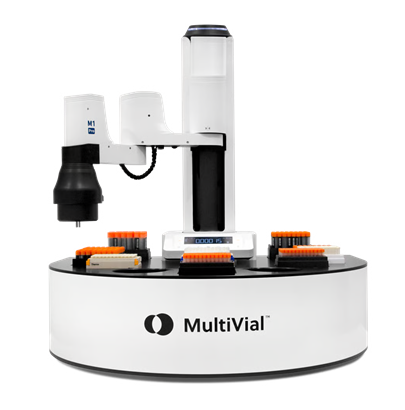
Image Credit: Labman
About Labman
Labman is a global leader in creating custom automated laboratory technologies, products, and software that empower and advance scientific discovery.
We collaborate across diverse industries, including medical, pharmaceutical, agritech, paints and coatings, and FMCG, to deliver innovative solutions.
From our state-of-the-art manufacturing facilities, Labman’s multi-disciplinary teams design, build, and support systems used worldwide, enabling groundbreaking science in leading laboratories every day.
Labman in 2025
Sponsored Content Policy: News-Medical.Net publishes articles and related content that may be derived from sources where we have existing commercial relationships, provided such content adds value to the core editorial ethos of News-Medical.Net, which is to educate and inform site visitors interested in medical research, science, medical devices, and treatments.