From InovivReviewed by Olivia Frost
This article and associated images are based on a poster originally authored by Abhinav Kumar, Zubair Israr, Elizabeth Mouchet, Jin Xu, Sinead Sunner, Blandine Rougemont, Liu Shi, Andy Walker, and Martin Bachman and presented at ELRIG Drug Discovery 2026 in affiliation with Inoviv.
This poster is being hosted on this website in its raw form, without modifications. It has not undergone peer review but has been reviewed to meet AZoNetwork's editorial quality standards. The information contained is for informational purposes only and should not be considered validated by independent peer assessment.

Tauopathies, including Alzheimer's disease (AD), Pick's disease, progressive supranuclear palsy (PSP), and corticobasal degeneration (CBD), share Tau aggregation but differ in the composition of 3R/4R Tau isoforms. AD harbors both 3R and 4R Tau isoforms alongside amyloid-beta pathology (Aβ42/40 ratio reflects plaque burden), while Pick's is 3R-dominant, and PSP/CBD are 4R-dominant.
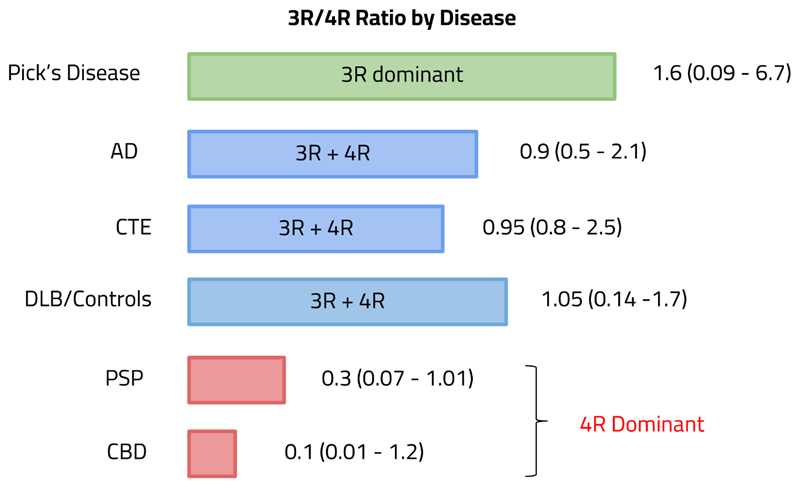
Figure 1. Distribution of 3R/4R Tauopathies. Image Credit: Chatterjee, M., et al. (2024); Kumar, M., et al. (2026)1,2
Up to 57% of AD patients exhibit TDP-43 pathology, which modulates Tau exon 10 splicing and the 3R/4R ratio, increasing diagnostic complexity. Single-epitope immunoassays collapse co-circulating proteoforms into one signal, limiting resolution of overlapping species. Targeted proteomics can profile these proteoforms, reveal co-pathologies and define molecular signatures unavailable to immunoassays.
INOVIV reference standards
Inoviv produces full-length reference standards and 13C- and 15N-labeled full-length internal standards. Adding the latter to clinical samples prior to any sample preparation steps helps maintain absolute quantitation in mass spectrometry assays (Figure 2).
Calibration curves are constructed with full-length reference standards that underwent thorough quantification using an orthogonal, peptide-based quantitative LC-MS assay.
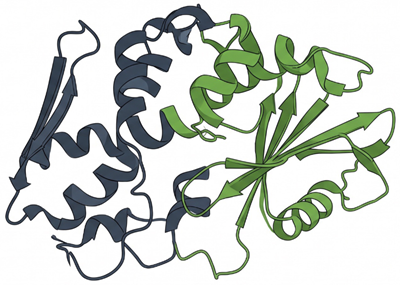
Full-length reference (light) standard for each target protein and isoform. Image Credit: Image courtesy of Abhinav Kumar et al., in partnership with ELRIG (UK) Ltd.
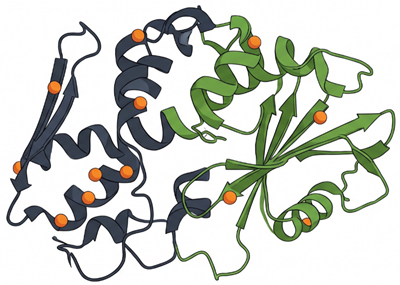
Full-length internal (heavy) standard for each target protein and isoform. Image Credit: Image courtesy of Abhinav Kumar et al., in partnership with ELRIG (UK) Ltd.
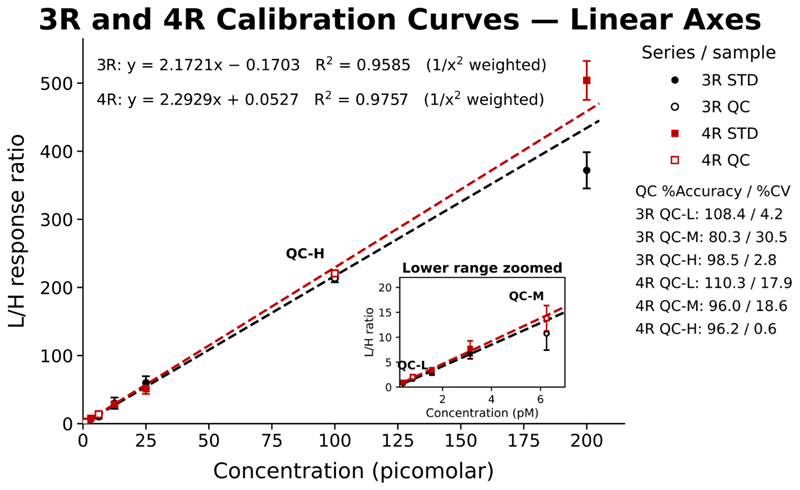
Figure 2. Calibration curves using full-length 3R and 4R Tau reference standards spiked with corresponding full-length internal standards. Image Credit: Image courtesy of Abhinav Kumar et al., in partnership with ELRIG (UK) Ltd.
Sample preparation
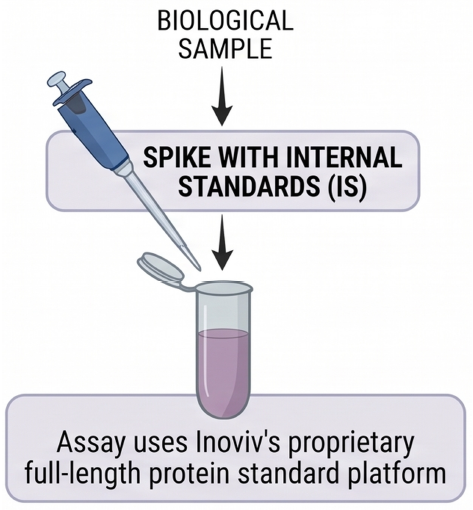
Image Credit: Image courtesy of Abhinav Kumar et al., in partnership with ELRIG (UK) Ltd.
Incubate with antibody conjugates
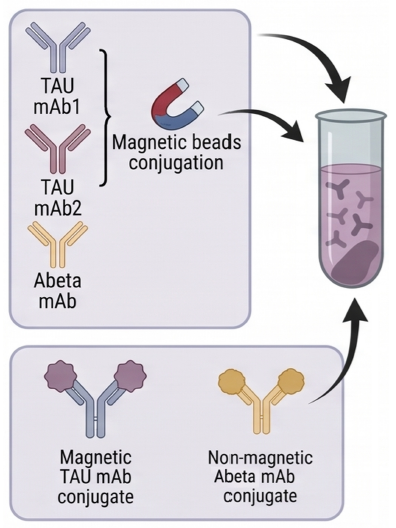
Image Credit: Image courtesy of Abhinav Kumar et al., in partnership with ELRIG (UK) Ltd.
Capture, wash, and digest
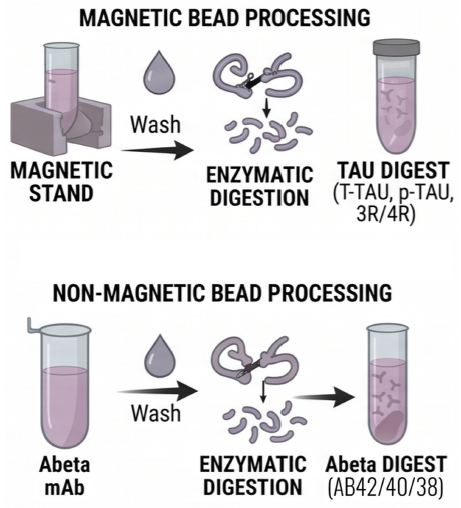
Image Credit: Image courtesy of Abhinav Kumar et al., in partnership with ELRIG (UK) Ltd.
Sample pooling
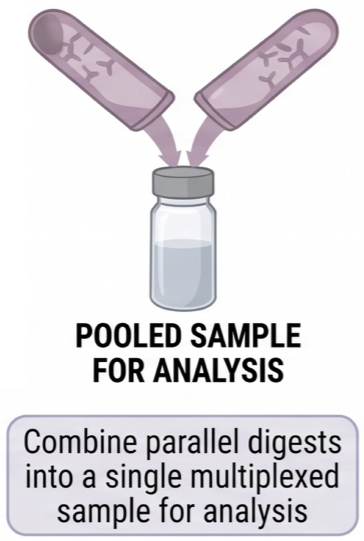
Image Credit: Image courtesy of Abhinav Kumar et al., in partnership with ELRIG (UK) Ltd.
LC-MS/MS analysis using nanoflow
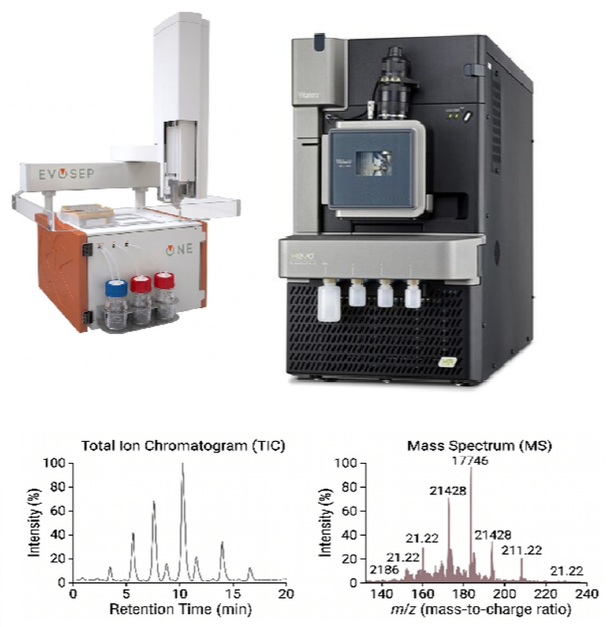
Image Credit: Image courtesy of Abhinav Kumar et al., in partnership with ELRIG (UK) Ltd.
Patient stratification
- The assay demonstrated significant changes between healthy and diseased samples (Figure 3).
- Due to difficult access to CSF from patients with confirmed PSP and other rare diseases associated with severe 3R/4R imbalance (typically diagnosed post-mortem), the assay has not been fully tested in a relevant clinical cohort.
- This 3R/4R assay can be integrated to stratify patients with PSP from other copathologies.
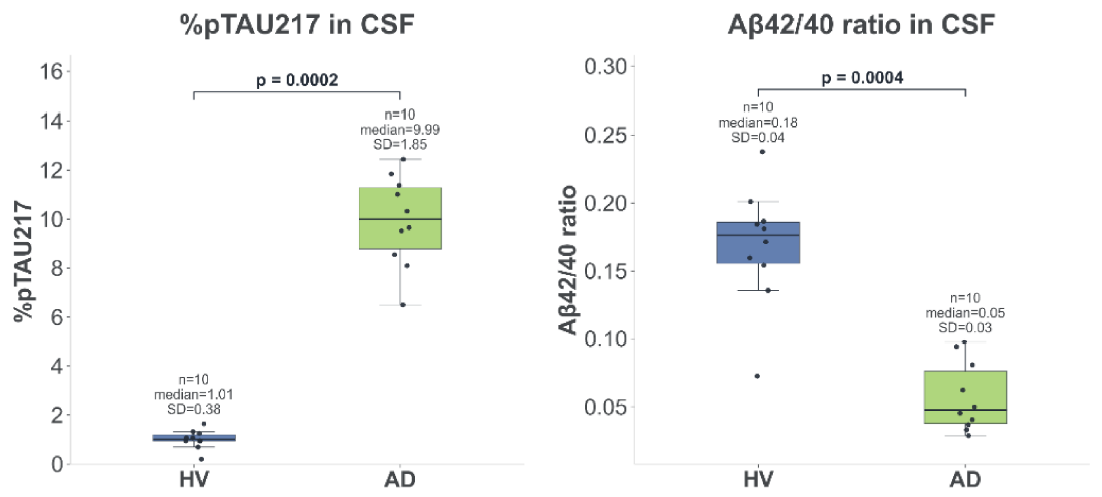
Figure 3. Measurement of pTAU217 and Aβ42/40 ratio in the same set of CSF samples (healthy vs AD) using the study's co-IP-MS platform. The change in % pTAU217 and Aβ42/40 ratio in AD samples correlates with published work. Image Credit: Image courtesy of Abhinav Kumar et al., in partnership with ELRIG (UK) Ltd.
Analytical performance
Mass spectrometry can achieve extremely high technical reproducibility when reanalyzing the same sample, with CVs for IS-normalized peak areas below 1%. When combined with full-length internal standards added prior to sample preparation, this reproducibility extends to the entire complex IP LC-MS workflow.
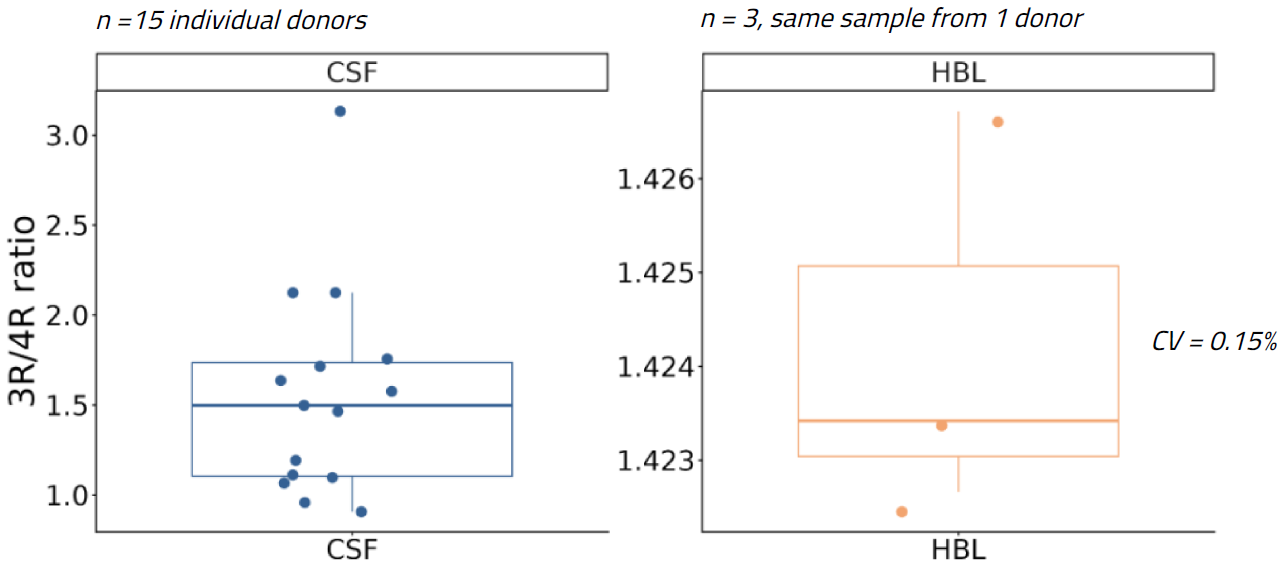
Figure 4. Measurement of 3R/4R ratio in healthy control CSF 500 µL volume (n=15). The mean ratio observed was 1.5, which is closer to the measurement in the human brain lysate (HBL). The same HBL samples were prepared three times, and the observed CV was <1%. Image Credit: Image courtesy of Abhinav Kumar et al., in partnership with ELRIG (UK) Ltd.
Such low technical variability then reveals true biological variability between individuals, as exemplified by the 3R/4R Tau isoform ratio in a set of CSF samples from 15 healthy donors (Figure 4).
Highlights
- Key biomarkers implicated in neurodegeneration including Tau and amyloid beta (Aβ) can be accurately quantified from clinical samples using targeted liquid chromatography mass spectrometry (LC-MS).
- Multiplexed immunoprecipitation enables the enrichment of all Tau and Aβ species from the same sample.
- Different solid supports allow the use of suitable digestion conditions for each protein class.
- Full-length isotopically labeled protein isoforms preserve absolute quantitation through the IP process.
- Mass spectrometry can resolve and quantify all Tau and Aβ isoforms, including post-translational modifications, with high specificity and selectivity.
- Ultralow technical variability helps reveal subtle but significant biological differences.
Conclusions
Mass spectrometry assays can support any stage of drug discovery and development across a range of disease areas. With a strong emphasis on implementing optimal reference and internal standard strategies from the start and using innovative approaches to sample preparation, assays become future-proof, translatable across model systems, and set up for success in producing robust clinical trial data for regulatory approval.
Inoviv helps drug developers build and execute biomarker assays through our end-to-end quantitative proteomics services, and supports proteomics researchers with access to high-quality, assay-ready reference standards.
References and further reading
- Chatterjee, M., et al. (2024). Plasma extracellular vesicle tau and TDP-43 as diagnostic biomarkers in FTD and ALS. Nature Medicine, pp.1–13. DOI:10.1038/s41591-024-02937-4. https://www.nature.com/articles/s41591-024-02937-4.
- Kumar, M., et al. (2026). Molecular features of human pathological tau distinguish tauopathy-associated dementias. Cell, 189(3), pp.956–968.e13. DOI:10.1016/j.cell.2025.12.036. https://www.cell.com/cell/fulltext/S0092-8674(25)01484-9.
About Inoviv

Inoviv is a medical technology company based in Northwest England that provides high-resolution, clinically relevant proteomics services to pharmaceutical and biotechnology organizations that helps reduce risk and improve clinical trial success rates.
We generate molecular insights that transform drug development and healthcare, bringing clarity and confidence to research with our novel proteomics solutions.
About ELRIG (UK) Ltd.
The European Laboratory Research & Innovation Group (ELRIG) is a leading European not-for-profit organization that exists to provide outstanding scientific content to the life science community. The foundation of the organization is based on the use and application of automation, robotics and instrumentation in life science laboratories, but over time, we have evolved to respond to the needs of biopharma by developing scientific programs that focus on cutting-edge research areas that have the potential to revolutionize drug discovery.
Comprised of a global community of over 12,000 life science professionals, participating in our events, whether it be at one of our scientific conferences or one of our networking meetings, will enable any of our community to exchange information, within disciplines and across academic and biopharmaceutical organizations, on an open access basis, as all our events are free-of-charge to attend!
Our values
Our values are to always ensure the highest quality of content and that content will be made readily accessible to all, and that we will always be an inclusive organization, serving a diverse scientific network. In addition, ELRIG will always be a volunteer led organization, run by and for the life sciences community, on a not-for-profit basis.
Our purpose
ELRIG is a company whose purpose is to bring the life science and drug discovery communities together to learn, share, connect, innovate and collaborate, on an open access basis. We achieve this through the provision of world class conferences, networking events, webinars and digital content.
Sponsored Content Policy: News-Medical.net publishes articles and related content that may be derived from sources where we have existing commercial relationships, provided such content adds value to the core editorial ethos of News-Medical.net, which is to educate and inform site visitors interested in medical research, science, medical devices and treatments.
Last Updated: Nov 6, 2026