Introduction to Nasal Breathing
Clinical Efficacy in Sleep-Disordered Breathing
Myofunctional Therapy and Airway Function
Safety and Patient Selection
Research Gaps and Practical Implementation
References
Further reading
What happens when the mouth closes during sleep? Research on airflow, muscle training, and airway anatomy examines the science behind a widely promoted sleep practice.
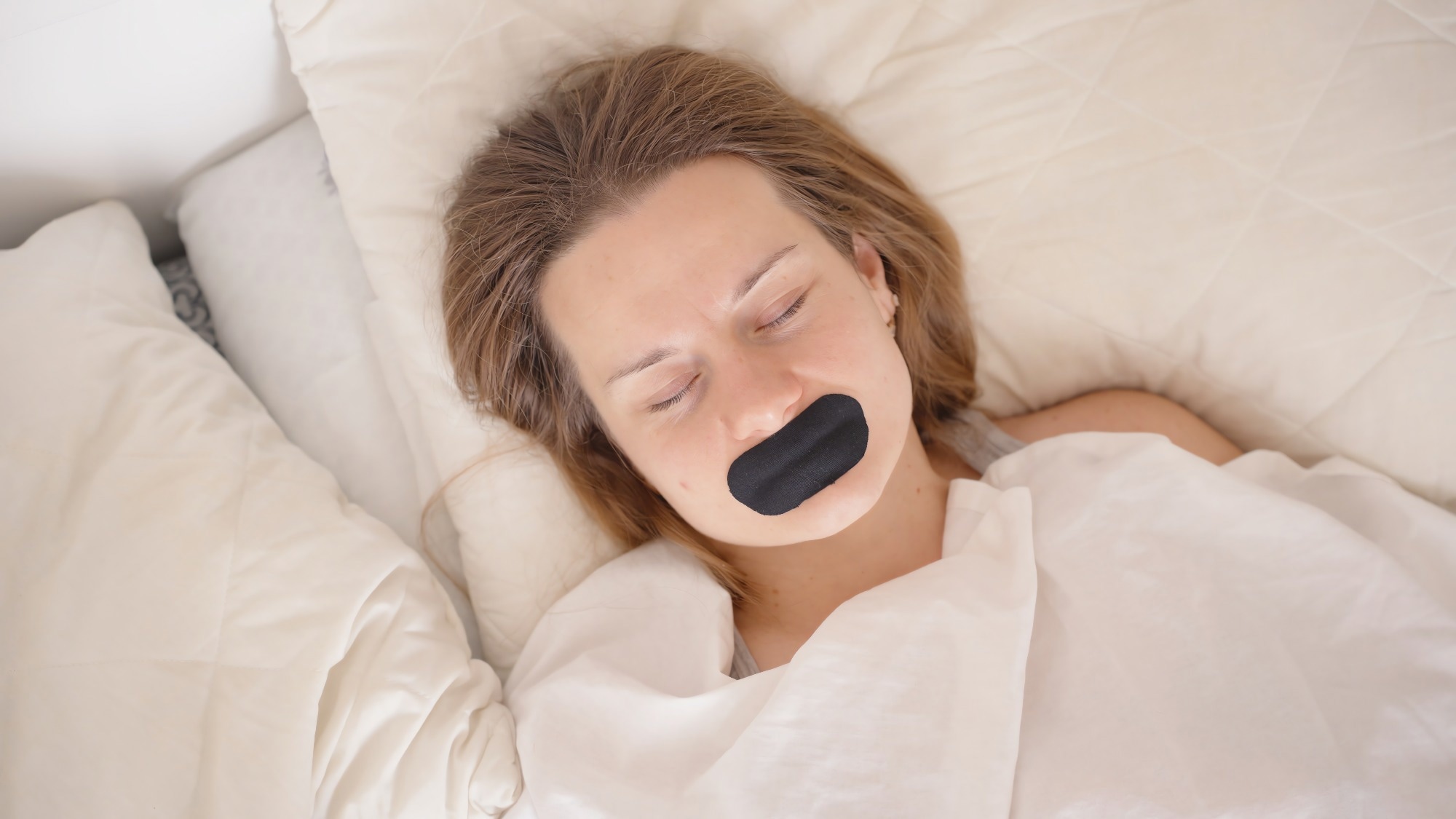 Image Credit: K.IvanS / Shutterstock.com
Introduction to Nasal Breathing
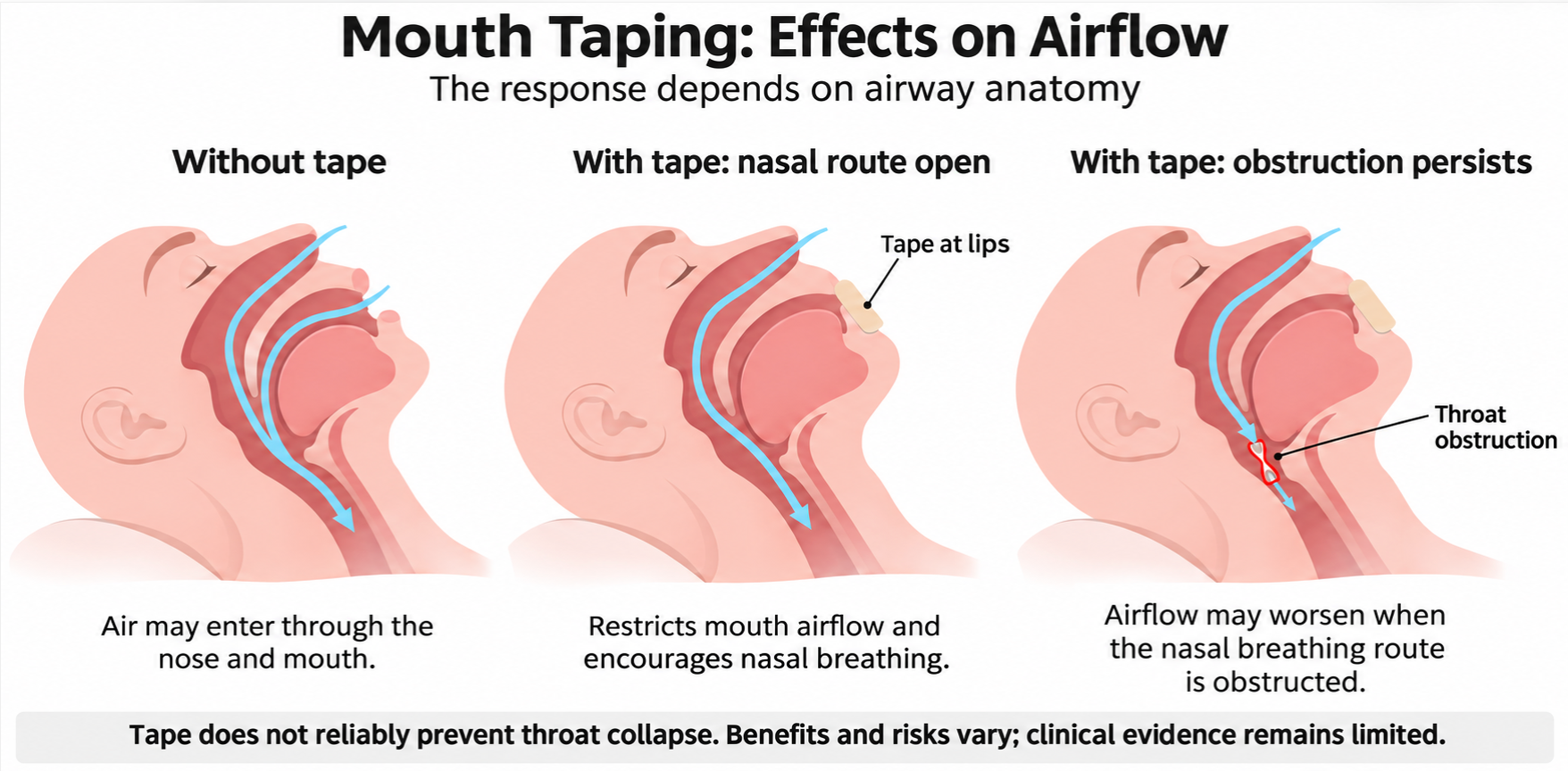
Air moves differently through the pharynx depending on whether breathing occurs through the nose or the mouth, which may influence upper airway collapse in obstructive sleep apnea (OSA). Oral breathing produces higher airflow velocities than nasal breathing, along with more negative airway pressure, which may increase susceptibility to collapse.
During nasal breathing with a closed mouth, airflow is smoother than during nasal breathing with an open mouth. Maximum velocity and pressure do not appear to differ significantly between these two nasal-breathing conditions, separating the effects of breathing route from those of mouth opening.3
Nasal breathing also carries nitric oxide, a gas that relaxes blood vessels, into the lower respiratory tract. The paranasal sinuses produce high concentrations of this gas that travel with inhaled air, thereby reducing pulmonary vascular resistance and cardiac workload.
Clinical Efficacy in Sleep-Disordered Breathing
Mouth taping involves applying adhesive tape over the lips during sleep to restrict oral breathing and encourage nasal breathing. Clinical evidence remains limited, despite social media claims of improved sleep quality, along with additional claims spanning oral health, cardiovascular benefit, immune function, and facial aesthetics.1,2,5
A retrospective preliminary study of 20 adult mouth-breathers with mild obstructive sleep apnea reported that the median apnea-hypopnea index (AHI), the number of breathing disruptions per hour of sleep, decreased from 8.3 to 4.7 events per hour during testing with silicone tape on a repeat home sleep test one week after baseline. Median snoring index decreased from 303.8 to 121.1 events per hour.7
The oxygen desaturation index, which reflects the frequency of oxygen-level drops during sleep, and lowest oxygen saturation also improved, despite no changes in mean oxygen saturation. Larger AHI improvements were associated with higher baseline AHI within the mild OSA range; however, this does not demonstrate benefit in moderate or severe disease. AHI while lying on the back also decreased. Associations with age, body mass index, and sex were not statistically significant, though the study was too small to rule out their influence.7
In a systematic review of 10 studies, two of the six studies assessing AHI found a statistically significant reduction with oral occlusion alone, both in mild OSA. The review included tape, oral patches, and chin straps, which are not interchangeable interventions. Nasal obstruction was excluded or treated in several studies, restricting applicability to people with untreated blockage.1,2,7
Several studies found no significant AHI improvement with oral occlusion alone. In a 21-person crossover trial, adding tape to a mandibular advancement device, an oral appliance that holds the lower jaw forward, improved median AHI from 10.5 events per hour with the device alone to 5.6 events per hour with combined treatment.1,2
Some studies have reported reductions in snoring; however, reduced snoring alone does not demonstrate resolution of OSA. In one trial, taping was combined with other measures; therefore, these results cannot be attributed to tape alone.
Observed changes in rapid eye movement (REM) sleep are context-dependent. Whereas one small study of patients receiving nasal bilevel ventilation found increased REM sleep after taping, a separate chin-strap study found less REM sleep than during diagnostic polysomnography or optimal CPAP. These different interventions and patient groups limit comparisons.1,2
Myofunctional Therapy and Airway Function
Orofacial myofunctional therapy (OMT) trains the mouth and airway muscles through repeated exercises. A review of 11 studies reported AHI reductions in several adult studies, particularly in mild to moderate OSA. Some studies also reported improvements in the arousal index, which reflects brief awakenings per hour of sleep, as well as daytime sleepiness and sleep quality, though responses varied and protocols were heterogeneous.5
OMT exercises target the tongue, which is pressed and slid against the roof of the mouth; the soft palate, which is exercised through sustained vowel sounds; as well as the cheek and lip muscles, which are worked through facial resistance and lip-closure exercises.5
The major difference between mouth taping and OMT is passive mouth closure versus active muscle training. Taping holds the lips together while applied, though lasting habit change or increased muscle tone has not been established. Comparatively, OMT aims to improve muscle coordination, lip seal, and tongue posture. Individual studies reported gains in lip-closure force or tongue strength, though these outcomes were not consistently measured across protocols.2,5
In children with lingering sleep apnea after tonsil and adenoid removal, a two-month OMT program combining nasal breathing, lip, and tongue-posture exercises improved lip seal and nasal breathing compared with nasal washing alone. The intervention involved exercises, with no assessment of nocturnal mouth taping.5
A more recent trial studied the hyoid bone, which anchors the tongue and throat muscles, using cone-beam CT scans over 12 weeks of OMT. Of 26 randomized Estonian participants, this exploratory imaging substudy analyzed complete data from 13 adults, including nine receiving OMT and four waitlist controls. AHI, oxygen desaturation index, and mean nocturnal oxygen saturation did not improve significantly.
Several measurements suggested less downward and backward hyoid displacement with OMT; however, incomplete assessments, the small sample, and only four controls limit interpretation. Furthermore, the relevance of these anatomical findings to airway function during sleep is uncertain.6
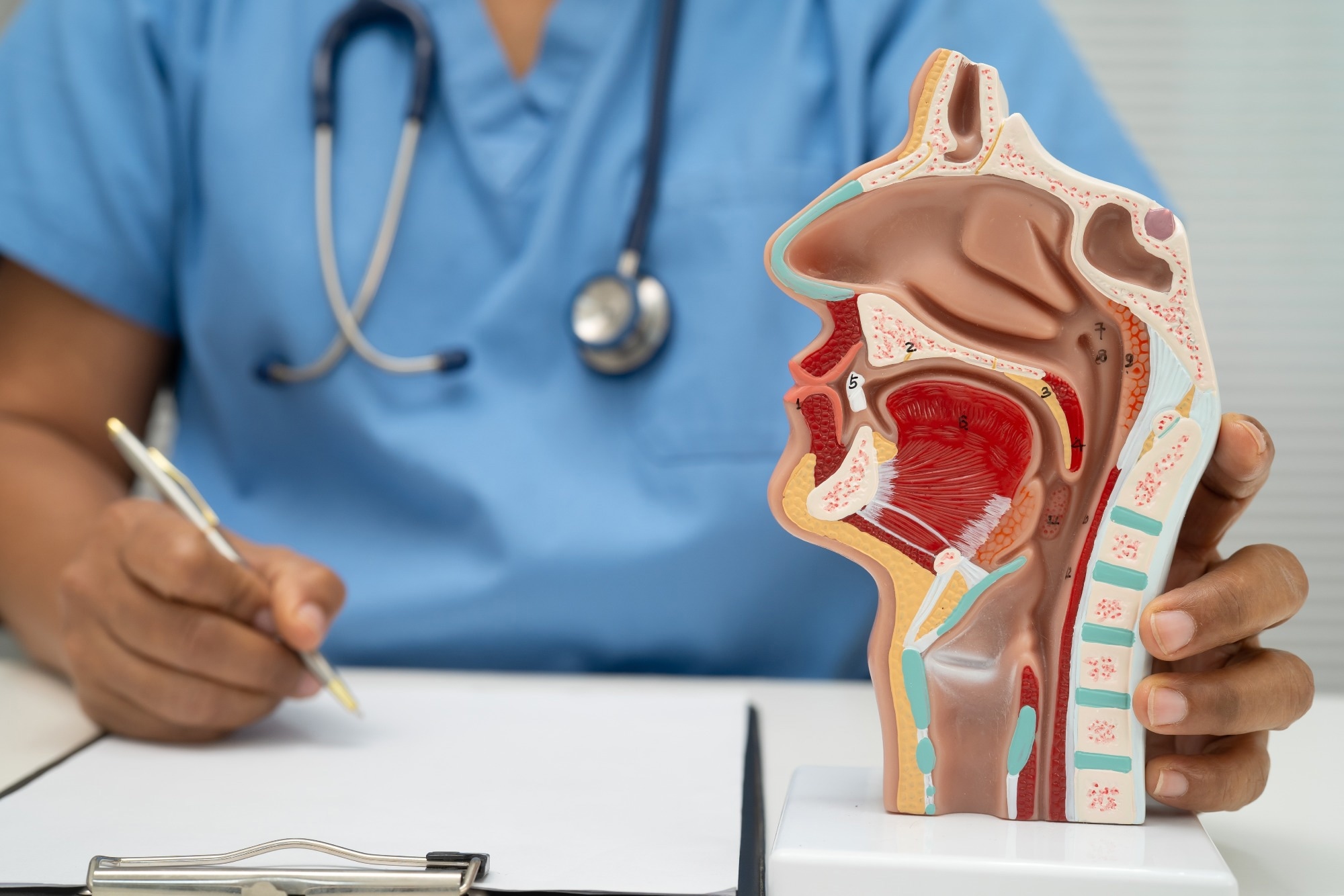 Image Credit: freshystock / Shutterstock.com
Safety and Patient Selection
Complete mouth sealing blocks oral airflow when nasal or pharyngeal obstruction is present, while partial taping and porous patches restrict airflow differently. Potential asphyxiation risk with nasal obstruction or regurgitation has been described, though these warnings describe plausible hazards, rather than measured rates of injury or death. The preliminary mild OSA study advised against taping in moderate or severe OSA because risks may outweigh benefits.
In a 54-person study during drug-induced sleep endoscopy, mouth closure improved airflow in some participants but reduced it in those with the greatest baseline oral airflow, particularly with certain patterns of palatal obstruction. Thus, nasal patency alone cannot predict a favorable response.2,7
Some studies used adhesive allergy and intolerance to mouth sealing as exclusion criteria, while the frequency of skin irritation or allergic reactions remains uncertain.2
The reviewed evidence does not establish safety for children or people with central sleep apnea. Nasal obstruction, regurgitation risk, and more severe OSA require particular caution.2,7
Medical Providers Warn Of Health Risks With Viral Mouth Taping Trend
Research Gaps and Practical Implementation
Existing trials are limited by small sample sizes, selective sample populations, short follow-up periods, and an almost complete absence of long-term safety data. Many included studies had fewer than 25 participants, and several lacked control groups.
Adherence is also a concern for exercise therapy, as participants in the 12-week OMT substudy found diary completion and the exercise program burdensome, which may have affected actual participation. Detailed adherence data were unavailable for that imaging subsample.2,6
To date, no validated screening protocol establishes that home taping is safe. Clinical assessment should address the cause of mouth breathing, nasal patency, and suspected OSA severity to guide treatment selection. Importantly, mouth taping should not replace prescribed OSA treatment.2,7
The lack of standardization across studies is another limitation. Studies used different tapes, porous patches, mouth seals, and chin straps, often alongside other treatments, limiting comparisons with consumer products. Clear clinical monitoring guidelines and long-term safety evidence are lacking. Mouth taping remains investigational; an added benefit from combining it with structured myofunctional exercise remains unproven.1,2,5,6
References
- Fangmeyer, S. K., Badger, C. D., & Thakkar, P. G. (2025). Nocturnal mouth-taping and social media: A scoping review of the evidence. American Journal of Otolaryngology, 46(1); 104545. DOI: 10.1016/j.amjoto.2024.104545. https://www.sciencedirect.com/science/article/pii/S0196070924003314?via%3Dihub
- Rhee J., Iansavitchene A., Mannala S., et al. (2025) Breaking social media fads and uncovering the safety and efficacy of mouth taping in patients with mouth breathing, sleep disordered breathing, or obstructive sleep apnea: A systematic review. PLOS ONE 20(5): e0323643. DOI: 10.1371/journal.pone.0323643. https://journals.plos.org/plosone/article?id=10.1371/journal.pone.0323643
- Suzuki, M. & Tanuma, T. (2020). The effect of nasal and oral breathing on airway collapsibility in patients with obstructive sleep apnea: Computational fluid dynamics analyses. PLOS ONE 15(4), e0231262. DOI: 10.1371/journal.pone.0231262. https://journals.plos.org/plosone/article?id=10.1371/journal.pone.0231262
- Bazak, R., Elwany, S., Mina, A., & Donia, M. (2020). Nitric oxide unravels the enigmatic function of the paranasal sinuses: A review of literature. The Egyptian Journal of Otolaryngology, 36(1), 8. DOI: 10.1186/s43163-020-00011-7. https://link.springer.com/article/10.1186/s43163-020-00011-7.
- de Felício, C. M., da Silva Dias, F. V., & Trawitzki, L. V. V. (2018). Obstructive sleep apnea: focus on myofunctional therapy. Nature and Science of Sleep, 10, 271-286. DOI: 10.2147/NSS.S141132. https://www.dovepress.com/obstructive-sleep-apnea-focus-on-myofunctional-therapy-peer-reviewed-fulltext-article-NSS
- Köster, A., Hoang, A. D., Dashuk, A., et al. (2025). Effects of Web-Based Orofacial Myofunctional Therapy on Hyoid Bone Position in Adults with Mild to Moderate Obstructive Sleep Apnea: Evidence from an Estonian Substudy of a Randomized Controlled Trial. Journal of Clinical Medicine, 15(1), 257. DOI: 10.3390/jcm15010257. https://www.mdpi.com/2077-0383/15/1/257
- Lee, Y., Lu, C., Cheng, W., & Li, H. (2022). The Impact of Mouth-Taping in Mouth-Breathers with Mild Obstructive Sleep Apnea: A Preliminary Study. Healthcare 10(9); 1755. DOI: 10.3390/healthcare10091755. https://www.mdpi.com/2227-9032/10/9/1755
Further Reading
Last Updated: Nov 25, 2026