Introduction
Why muscle is more than movement
Muscle across the lifespan
Protein: necessary, but not the whole story
Exercise and nutrition: a partnership
Beyond protein: nutrients that support muscle function
Muscle, metabolism, and chronic disease
Future directions in muscle nutrition
Conclusion: maintaining muscle throughout adulthood
References
Further reading
Aging changes how muscles respond to food and activity, raising questions about protein needs, meal timing, and which supplements deserve a place in muscle care.
 Image Credit: AYO Production / Shutterstock.com
Introduction
Skeletal muscle does more than move the body; it helps regulate blood glucose, responds to physical activity, and releases substances that communicate with other tissues. These activities have drawn attention to the role of diet and exercise throughout adulthood.
Protein is part of that picture; however, the evidence for supplements and other dietary strategies varies. This article examines protein intake, nutrients under investigation, the gut-muscle axis, and resistance exercise, while distinguishing established benefits from proposed mechanisms.
Why muscle is more than movement
Skeletal muscle accounts for a substantial proportion of body mass and is a major site of glucose uptake. In addition to providing structural and mechanical support, muscle releases signaling molecules called myokines.2
During contraction, muscle-derived molecules like interleukin-6 (IL-6) communicate with the liver, fat tissue, and other organs.2 IL-6 released briefly during exercise has different effects from persistently elevated inflammatory signaling associated with excess visceral fat. The effects also depend on its source and biological context.
Together, these metabolic and signaling roles help explain why preserving muscle matters during aging, illness, and periods of inactivity.1,2
Muscle across the lifespan
Muscle mass generally peaks in early adulthood and declines gradually from mid-adulthood, with losses often accelerating after age 60.3 Age-related muscle loss involves several interacting processes, including changes in protein turnover, the balance between muscle protein synthesis and breakdown, mitochondrial function, muscle repair, and inflammation.3,4 The ubiquitin-proteasome system and autophagy are cellular processes that help remove damaged cellular material.4
Maintaining muscle strength and function is especially relevant as people age because sarcopenia is associated with falls, disability, and other adverse outcomes. Healthier diets earlier in adulthood are more consistently associated with better physical performance later in life than with a lower incidence of diagnosed sarcopenia.6
How to Save Your Muscles From Aging
Protein: necessary, but not the whole story
Dietary protein provides the amino acids needed for muscle protein synthesis, the process of building new muscle proteins. Leucine, an amino acid found in protein-containing foods, helps activate a signaling pathway involved in this process.1
A meta-analysis of 17 randomized trials in older adults found that isolated leucine supplementation did not significantly improve total lean mass or the strength outcomes examined. Some nutrient combinations, including leucine and vitamin D, were associated with improvements in handgrip strength and gait speed. These findings cannot establish which ingredient produced the observed benefit.5
The U.S. recommended dietary allowance for protein in adults is 0.8 grams per kilogram of body weight per day. The protein review supports considering higher intakes, often around 1.0 to 1.2 grams per kilogram per day, for older adults who may respond less strongly to protein intake, particularly those who are physically active.1
The best target for an individual remains uncertain and may vary with health status and activity.1,6 Importantly, these higher targets should not be applied automatically to people with existing kidney damage.1
Animal proteins often contain higher proportions of certain amino acids than individual plant proteins. A varied plant-based diet can also provide sufficient protein; however, the cited evidence does not show that all plant and animal protein sources produce identical muscle outcomes.1,6 Comparisons also depend on digestibility, the amount consumed, and the amino acid composition of the meal.1
Exercise and nutrition: a partnership
Resistance exercise places demands on muscle that stimulate adaptation, while food supplies the energy and amino acids needed to support recovery.1,7 Older muscle often has a reduced protein-building response to a protein meal, called anabolic resistance. Exercise can improve this response, helping explain why protein intake and muscle activity should be considered together.1,3
Resistance training has particularly strong support as a strategy for managing sarcopenia.6,7 Adding protein supplements does not consistently produce further improvements in every muscle outcome; therefore, adequate protein intake should be distinguished from a universal need for supplementation.6
Researchers have also studied whether spreading protein intake across meals improves muscle protein synthesis.1 Findings in older adults are conflicting for both protein synthesis and lean mass. Furthermore, short-term responses do not establish that an even distribution prevents long-term losses in strength or physical function.1
Beyond protein: nutrients that support muscle function
Adequate overall food intake helps meet the energy demands of daily activity and exercise. Carbohydrates can support recovery after activity, with their importance varying based on the amount and type of exercise performed.7
Creatine supplementation may improve lean tissue mass and strength in older adults, particularly when combined with resistance training.8 Creatine facilitates the rapid regeneration of adenosine triphosphate (ATP), which supplies energy for brief, intense muscle contractions.8 .8
Omega-3 fatty acids have also been studied for their potential impact on inflammation and muscle metabolism. However, findings vary across outcomes, and evidence does not establish consistent benefits for muscle mass, strength, and physical performance.6,7
Low vitamin D has also been associated with poorer physical function. Still, a meta-analysis of 10 randomized trials found that vitamin D supplementation alone did not improve muscle mass, strength, or overall physical performance in community-dwelling older adults.9
This review also found a small reduction in Short Physical Performance Battery scores, a measure of balance, walking speed, and chair-rise performance. Nevertheless, this average difference does not establish clinically meaningful harm for every participant, and the findings should not be generalized to every clinical use of vitamin D.9
The gut-muscle axis is another area of research. Laboratory and animal findings suggest that short-chain fatty acids produced by intestinal microorganisms may affect muscle metabolism and inflammation. Small human intervention studies have reported some promising outcomes, though evidence remains insufficient to establish that changing the microbiome reliably prevents age-related muscle loss.10
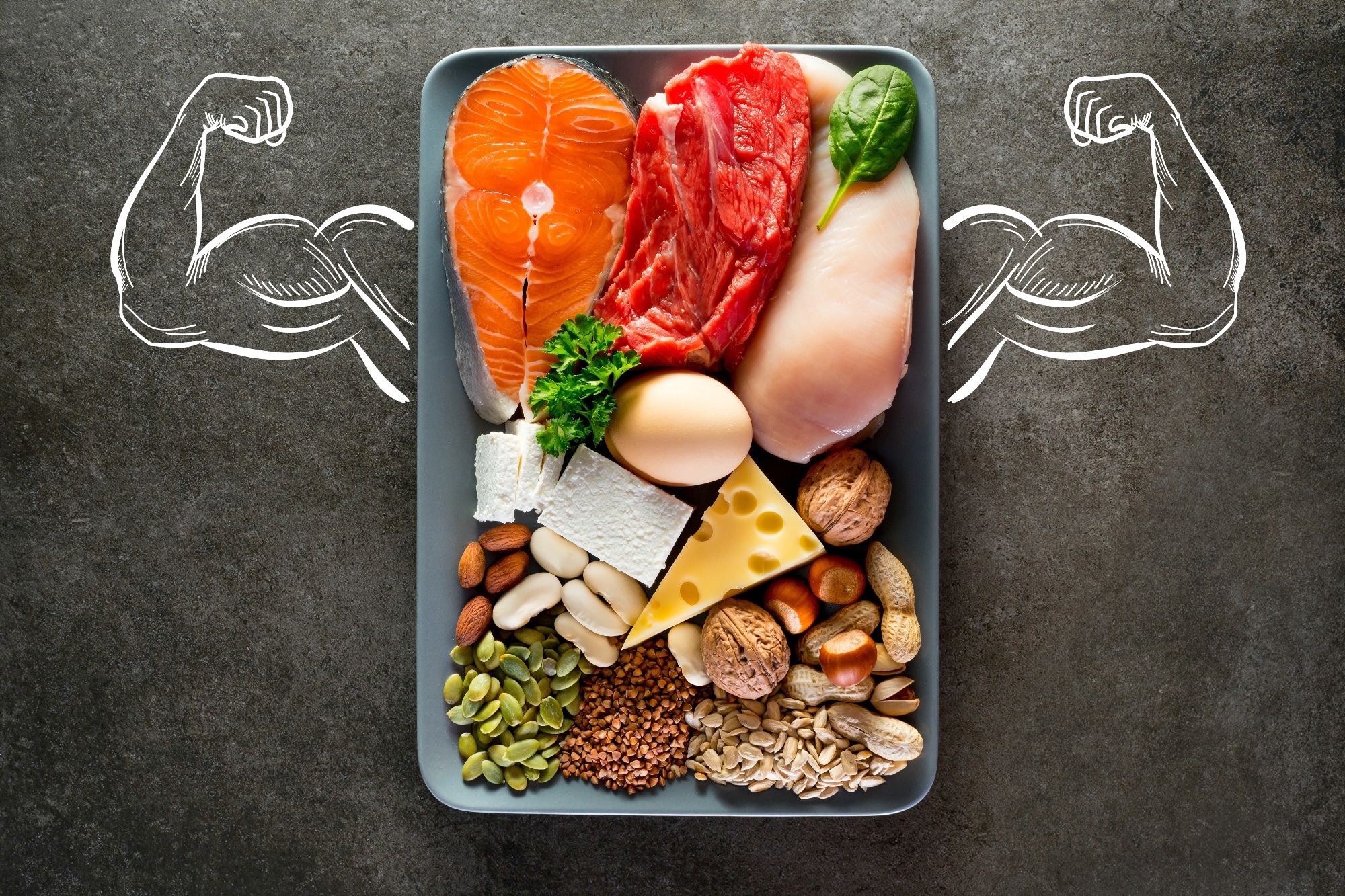 Image Credit: Evan Lorne Production / Shutterstock.com
Skeletal muscle plays a major role in glucose use, as changes in its amount and function can affect metabolic health. Sarcopenia can occur alongside excess body fat, a combination often called sarcopenic obesity.6
Low muscle mass and function can coexist with obesity and metabolic disease. Insulin resistance and chronic inflammation may contribute to both metabolic dysfunction and muscle deterioration, but these associations do not establish a single direction of causation.7 Excess fat can also accumulate within muscle, where it has been linked to poorer muscle quality and insulin resistance. Inflammation and altered muscle signaling may contribute to these relationships.3,7,10
Future directions in muscle nutrition
Researchers are investigating metabolic markers associated with sarcopenia.10 Methods that combine dietary, activity, and microbiome data may eventually help tailor interventions, but they are not established tools for diagnosing sarcopenia or prescribing individualized diets.10 Larger, longer human trials are needed to determine whether these approaches produce lasting improvements in strength and physical function.10
Conclusion: maintaining muscle throughout adulthood
Skeletal muscle contributes to mobility and metabolic health throughout life. Adequate food and protein intake, overall diet quality, and regular resistance exercise provide a sound basis for supporting muscle health.6,7
Supplement benefits vary by formulation and outcome. Creatine has evidence for improving lean tissue mass and strength when combined with resistance training, while isolated leucine, vitamin D alone, and microbiome-based approaches have less consistent or insufficient evidence for preventing muscle loss.5,8,9,10
References
- Morgan, P. T., Witard, O. C., Højfeldt, G., et al. (2025; first published online 2023). Dietary protein recommendations to support healthy muscle aging in the 21st century and beyond: considerations and future directions. Proceedings of the Nutrition Society 84; 245-258. DOI: 10.1017/S0029665123003750. https://www.cambridge.org/core/journals/proceedings-of-the-nutrition-society/article/dietary-protein-recommendations-to-support-healthy-muscle-ageing-in-the-21st-century-and-beyond-considerations-and-future-directions/A60A684B6FA52A6C5BFC315A98BF8146.
- Nishii, K., Aizu, N., & Yamada, K. (2023; first published online 2022). Review of the health-promoting effects of exercise and the involvement of myokines. Fujita Medical Journal 9(3); 171-178. DOI: 10.20407/fmj.2022-020. https://www.jstage.jst.go.jp/article/fmj/9/3/9_2022-020/_article
- McCormick, R., & Vasilaki, A. (2018). Age-related changes in skeletal muscle: changes to lifestyle as a therapy. Biogerontology 19(5), 519-536. DOI: 10.1007/s10522-018-9775-3. https://link.springer.com/article/10.1007/s10522-018-9775-3
- Hughes, D. C., Baehr, L. M., Waddell, D. S., et al. (2022). Ubiquitin ligases in longevity and aging skeletal muscle. International Journal of Molecular Sciences 23(14); 7602. DOI: 10.3390/ijms23147602. https://www.mdpi.com/1422-0067/23/14/7602.
- Guo, Y., Fu, X., Hu, Q., et al. (2022). The effect of leucine supplementation on sarcopenia-related measures in older adults: a systematic review and meta-analysis of 17 randomized controlled trials. Frontiers in Nutrition 9; 929891. DOI: 10.3389/fnut.2022.929891. https://www.frontiersin.org/journals/nutrition/articles/10.3389/fnut.2022.929891/full.
- Robinson, S., Granic, A., Cruz-Jentoft, A. J., & Sayer, A. A. (2023). The role of nutrition in the prevention of sarcopenia. The American Journal of Clinical Nutrition 118(5); 852–864. DOI: 10.1016/j.ajcnut.2023.08.015. https://www.sciencedirect.com/science/article/pii/S0002916523661131?via%3Dihub.
- Feng, L., Li, B., Yong, S. S., et al. (2024). Exercise and nutrition benefit skeletal muscle: from influence factor and intervention strategy to molecular mechanism. Sports Medicine and Health Science 6, 302–314. DOI: 10.1016/j.smhs.2024.02.004. https://www.sciencedirect.com/science/article/pii/S2666337624000258?via%3Dihub
- Candow, D. G., Forbes, S. C., Chilibeck, P. D., et al. (2019). Effectiveness of creatine supplementation on aging muscle and bone: focus on falls prevention and inflammation. Journal of Clinical Medicine 8(4); 488. DOI: 10.3390/jcm8040488. https://www.mdpi.com/2077-0383/8/4/488
- Prokopidis, K., Giannos, P., Katsikas Triantafyllidis, K., et al. (2022). Effect of vitamin D monotherapy on indices of sarcopenia in community-dwelling older adults: a systematic review and meta-analysis. Journal of Cachexia, Sarcopenia and Muscle 13(3); 1642-1652. DOI: 10.1002/jcsm.12976. https://onlinelibrary.wiley.com/doi/10.1002/jcsm.12976.
- Xu, Y., & He, B. (2025). The gut-muscle axis: a comprehensive review of the interplay between physical activity and gut microbiota in the prevention and treatment of muscle wasting disorders. Frontiers in Microbiology 16; 1695448. DOI: 10.3389/fmicb.2025.1695448. https://www.frontiersin.org/journals/microbiology/articles/10.3389/fmicb.2025.1695448/full.
Further Reading
Last Updated: Nov 3, 2026
 Women provide more lifetime elder care than men, study shows