Introduction
What is grip strength?
Grip strength as a marker of aging
Clinical implications and disease associations
Can grip strength be improved?
Conclusions
References
Further reading
A quick handgrip test may reveal far more than muscle strength; emerging evidence suggests it can provide valuable insights into biological aging, chronic disease risk, functional decline, and long-term survival.
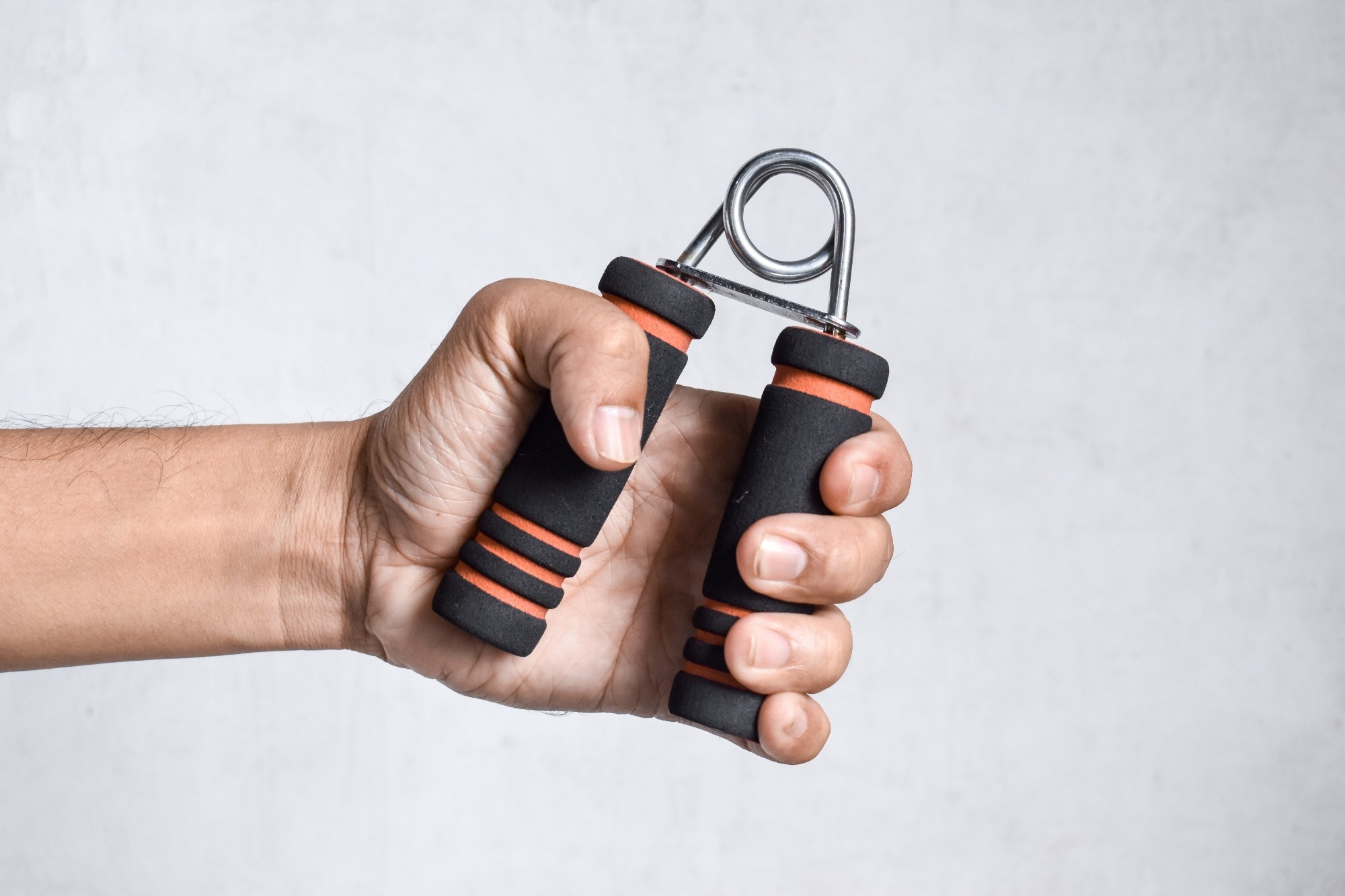 Image Credit: Zay Win Htal / Shutterstock.com
Introduction
By 2050, the World Health Organization predicts that adults 60 years of age and older will represent 22% of the global population, a significant demographic shift from 12% in 2015, accompanied by a rise in age-related health issues.4 These trends emphasize the importance of simple methods like grip strength assessment to monitor muscle function, biological aging, and overall health.
What is grip strength?
Handgrip strength is defined as the maximum force exerted by the hand during a voluntary squeezing action. Clinically, grip strength is measured using a dynamometer, which patients squeeze with maximal effort in a seated position with the wrist neutral and the elbow flexed at approximately 90°. Repeated measurements are obtained to improve the reliability of the results.2,4
Grip strength varies by sex, with men typically stronger than women and declining with age. Several grip strength thresholds have been proposed to predict clinical and functional outcomes; in one large prospective cohort, all-cause mortality risk declined with increasing grip strength up to about 42 kg in men and 25 kg in women2; however, interindividual variability in strength limits the universal applicability of these values.1,2
Grip strength as a marker of aging
Grip strength can be used to assess reduced muscular strength and physiological resilience that accompanies advancing age. For example, older individuals with lower grip strength often experience mobility issues and, as a result, are at a greater risk of falling. The presence of frailty and sarcopenia, a syndrome characterized by low muscle strength, reduced muscle quantity or quality, and impaired physical performance, worsens grip strength, thereby exacerbating functional decline in the elderly.1,3
Reduced grip strength has been associated with accelerated biological aging, including epigenetic changes like DNA methylation age acceleration.3 Grip strength has also been associated with aging-related laboratory markers, including leukocyte count, neutrophil and lymphocyte measures, neutrophil-lymphocyte ratio, and erythrocyte sedimentation rate, supporting its relationship with systemic inflammation and immune aging.4 These observations suggest that declines in muscle strength may reflect molecular, cellular, and physiological changes related to age and overall health status.
“In older adults, the preservation of grip strength, dexterity, and proprioceptive function is strongly associated with independence, reduced fall risk, and improved quality of life.5”
Grip strength has clinically useful predictive value for future disability and loss of independence, as demonstrated by established correlations between lower strength and physical disability, hospitalization, and reduced ability to perform daily tasks. Consequently, assessing grip strength can identify individuals at a greater risk of declining functional status, enabling earlier interventions to preserve mobility and independence in aging populations.1
Link between grip strength & your health
Clinical implications and disease associations
Grip strength has significant implications, as it is associated with a wide range of disease outcomes and overall health status, including cardiovascular diseases, diabetes, multimorbidity, cognitive impairment, depression, malnutrition, fractures, falls, and all-cause mortality.1 In prospective data from 28 countries, a stronger handgrip was inversely associated with all-cause mortality, although the same study did not find a robust association with cancer-specific mortality.2 Research suggests that reductions in muscle strength can occur before measurable cognitive deficits arise, supporting the use of grip strength as a potential clinical indicator of neurological function.1,4
Although imaging modalities such as computed tomography (CT), magnetic resonance imaging (MRI), and ultrasound can effectively evaluate muscle mass and quality, these procedures are often expensive and may not be readily accessible to all patients. Compared with other methods, grip strength assessment is quick, inexpensive, and non-invasive, making it a practical tool for primary care, geriatric assessments, and large-scale population studies. Incorporating grip strength into standard evaluations could improve risk stratification, guide clinical decision-making, and support early interventions to reduce disease burden and promote healthy aging.1,4
Can grip strength be improved?
Physical exercise like regular resistance training is widely recognized for its ability to improve muscle strength, force production, and the overall capacity for endurance, although direct evidence that hand training slows DNA methylation age acceleration remains limited.3 Most strength-based interventions involve exercises that target grip and forearm muscles using equipment like hand grippers, elastic bands, dumbbells, or bodyweight tasks like push-ups.
Proprioceptive training similarly enhances hand function by improving joint position sense, motor coordination, and force exertion.5 Together, the combination of strength and proprioceptive training supports neuromuscular function to strengthen motor skills, particularly among older adults. A 2025 meta-analysis of randomized trials found small-to-moderate improvements in grip strength and large improvements in manual dexterity after hand-focused strength and proprioceptive training, with larger grip-strength effects in older adults than younger adults; however, evidence quality was limited by risk of bias, measurement variability, and small study numbers for some outcomes.5
In addition to physical activity, malnutrition and poor nutritional status are associated with lower grip strength in several older and clinical populations.1 Thus, nutritional assessment may complement grip-strength testing, although the reviewed evidence does not establish specific nutrient targets for improving grip strength.
 Image Credit: Microgen / Shutterstock.com
Conclusions
Grip strength depends on the coordinated function of the musculoskeletal, cardiovascular, and neurologic systems, highlighting its value as a practical indicator of biological aging and overall health status. Accordingly, integrating grip strength assessments into preventive healthcare may improve clinical risk stratification and support informed decision-making across diverse populations. However, grip strength should be interpreted alongside age, sex, body size, comorbidities, and other clinical findings rather than used as a stand-alone diagnosis.1
References
- Bohannon, R. W. (2019). Grip strength: an indispensable biomarker for older adults. Clinical Interventions in Aging; 1681-1691. DOI: 10.2147/CIA.S194543. https://www.dovepress.com/grip-strength-an-indispensable-biomarker-for-older-adults-peer-reviewed-fulltext-article-CIA
- López-Bueno, R., Andersen, L. L., Calatayud, J., et al. (2022). Associations of handgrip strength with all-cause and cancer mortality in older adults: A prospective cohort study in 28 countries. Age and Ageing 51(5). DOI: 10.1093/ageing/afac117. https://academic.oup.com/ageing/article/51/5/afac117/6593705
- Peterson, M. D., Collins, S., Meier, H. C., et al. (2023). Grip strength is inversely associated with DNA methylation age acceleration. Journal of Cachexia, Sarcopenia and Muscle 14(1); 108-115. DOI: 10.1002/jcsm.13110. https://onlinelibrary.wiley.com/doi/10.1002/jcsm.13110
- Kemala Sari, N., Stepvia, S., Ilyas, M. F., et al. (2025). Handgrip strength as a potential indicator of aging: insights from its association with aging-related laboratory parameters. Frontiers in Medicine 12. DOI: 10.3389/fmed.2025.1491584. https://www.frontiersin.org/journals/medicine/articles/10.3389/fmed.2025.1491584/full
- Akbas, A. (2025). Hand-Focused Strength and Proprioceptive Training for Improving Grip Strength and Manual Dexterity in Healthy Adults: A systematic Review and Meta-analysis. Journal of Clinical Medicine 14(19); 6882. DOI: 10.3390/jcm14196882. https://www.mdpi.com/2077-0383/14/19/6882.
Further Reading
Last Updated: Jun 8, 2026
 Could speech offer a window into aging?