In this interview, News-Medical speaks with Caltech’s Frances Arnold about directed enzyme evolution and how it grew from a practical workaround to a widely used method in protein engineering. She explains why early “rational design” approaches fell short, what directed evolution looks like in the lab (mutation, screening, and iteration), and why measurement choices often determine success. Arnold also reflects on the 2018 Nobel Prize in Chemistry and looks ahead to how AI and modern analytical tools may accelerate the next wave of enzyme engineering.
When did you start thinking of science as a career, and how did you end up in engineering?
I have to admit, I didn’t figure out what I wanted to do until I was about 30 years old, but science was always available as a career. I was good at math, and I was curious about the world. I was curious about lots of things, so I wasn’t quite sure what to do.
My father was a physicist, and he encouraged my interest in science and math. When I asked him what kind of degree I might get, because I wasn’t sure what I wanted to do with my life, as teenagers often are, he said, “Study mechanical engineering.”
“You know why?” he said. “Frances, nobody will ever want to marry you because you’re obnoxious, and at least you’ll be able to have a job.”
And he was absolutely right; I’ve always had a job.
 Image Credit: K2LStudio/Shutterstock.com
What drew you to enzyme engineering, and what was the field like when you started?
So, I got this degree in chemical engineering in the 1980s, at a time when this whole new industry was coming up: the biotechnology industry, where we could cut and paste evolution’s creations, the DNA that encodes the biological world, for the first time. That was enabled by new technologies, new ways to measure things, and new ways to manipulate the world.
As a graduate student at Berkeley, which was a center of this innovation, I said, “That’s what I want to do. I want to engineer the biological world.”
Enzymes were fascinating to me because they carry out the chemistry of the biological world. So I said, “I want to build new enzymes to solve human problems and to do chemistry in a clean, efficient way,” in a way that chemists at the time just weren’t doing.
When did you realize the usual “design it from first principles” approach wasn’t going to get you there?
Once I decided I wanted to engineer enzymes, I sat down and realized, after a couple of tough years, nobody had a clue how to do that. We knew how to manipulate the sequence, but that’s very different from being able to make something that’s better than what nature had already made, or at least works in a completely new environment.
So I had to overcome the fact that nobody knew how to do it, and that people thought it couldn’t be done.
You turned to directed evolution. What is it, and what does it look like in practice in the lab?
Well, when you don’t know what to do, it’s always a good idea to look around and see what works, and whether there’s already a method to solve the problem.
So, of course, I looked at the human methods. The structural biologists said, “Oh, you get the structure of the enzyme, and then you go in, and you manipulate it using your big brain.” Well, that method didn’t work, but there’s another method out there that’s worked for about three billion years, and that’s called evolution.
The first idea is that evolution is an algorithmic process, and so I said, “Let’s use evolution.” There’s no reason to think evolution has stopped, which involves random mutagenesis.
Evolution in the lab is just like breeding cats and dogs. You’re taking the DNA that encodes the enzyme, you’re making random changes to it, and then you search through the progeny.
You stick that DNA into bacteria, for example, and they’ll make the mutant enzymes. Then it becomes your job, as the breeder of molecules, so to speak, to go in and see which ones are starting to acquire the properties that you’re interested in.
That’s good old-fashioned analytical chemistry. So you make measurements on thousands of things and see which ones are starting to acquire those properties, and you repeat that process over and over again until you’ve bred something that’s useful.
Your 1993 paper is often cited as a starting point for directed evolution. What did you show, and how was it received?
The paper was a demonstration of something many people told me was simply impossible. I chose it to illustrate that evolution can go in all sorts of strange directions. Of course, anybody who’s bred French poodles or French bulldogs knows that evolution can go in very strange directions.
I decided to take an enzyme that’s often used in laundry detergents, a protease, and make it function in a highly non-natural environment: dimethylformamide, a really polar solvent.
There were biochemists who told me it was impossible, that an enzyme would never work in dimethylformamide. Others said, “Well, that’s stupid. Who cares about an enzyme that works in dimethylformamide?” and I just said, “Well, let’s see what happens. Let’s see if we can make enzymes work in these highly non-natural environments.”
Sure enough, the enzyme very quickly learned how to tolerate very high concentrations of that solvent.
There were two camps of adoption. One was, “Oh, that’s not science, so we’re not going to do that.” That was the academics. The other camp was, “Oh my goodness, she solved this really hard problem in a few months without any crystal structure.”
Everybody in industry settings, for example, who had interesting problems they wanted better enzymes for, started coming to me. One after another, we would solve tough problems, and people in industry immediately took it up.
People sometimes describe directed evolution as “random,” but there’s also strategy in where you start and what you measure. How do you think about that balance, especially with enzymes?
The targeted design is about where you start and what properties you’re interested in, but the actual enzyme design doesn’t have to be targeted. It’s like breeding: you have to know what you’re looking for in order to get something useful out of it.
Importantly, you don’t have to know how the enzyme works, and you don’t have to know where the beneficial mutations are. The system tells you those rules, and that’s what I love about it. When you let the system tell you what matters, you learn something that you didn’t know before, rather than just applying what you know.
There are different ways to apply these combinatorial methods, or evolutionary methods. My co-winners of the Nobel Prize, for example, designed peptides. They would make millions of peptides in a single experiment, pan them, and sort them by binding.
You can’t do that with an enzyme. The combinatorial space for a peptide, let’s say something that is 10 amino acids long, is large, but still pretty finite. If you look at all the combinations, the way that you could encode an enzyme, or a mutated enzyme, it’s bigger than the number of particles in the universe. And most of those sequences are not interesting.
For enzymes, you can’t search through millions and millions. You get tired of that very quickly. So we had to come up with a different search strategy that was appropriate for looking at smaller numbers of things, but also having a chance of finishing before the graduate student is 70 years old.
You have a line that “you get what you screen for.” What does a good screen look like in directed evolution?
Well, the first law of directed evolution is: you get what you screen for.
It’s not a trivial statement. It means that if you’ve designed your screen and your analytics to report on what you’re actually interested in, you have a chance of getting that. The farther you get away from what your ultimate goal is and what you’re actually measuring, the more likely you are to fail.
I’ll give you an interesting example. A company I was consulting for on cellulases, which are used to break down cellulose to make sugars for, say, ethanol fuels. I asked them, “How will you know if I’m successful? How will you measure the properties of this enzyme that I’m going to evolve for you? What would make you buy it?”
He looked at me and said, “Frances, we’re going to put it in the plant and see if we make more money.” I said, “Well, that doesn’t help me very much. I have to measure.”
The user wants something that works in the manufacturing facility and makes more money, but the analytics don’t tell you that. So you have to find some happy medium there.
In 2018, you won the Nobel Prize in Chemistry, and you were the first American woman to do so. What was that experience like for you?
Well, it was a huge surprise; I’m an engineer by training. I learned chemistry late in life, and some would say I still don’t know any chemistry. So it was not something I was expecting.
In fact, I was in Texas when the call came. I was in a hotel room, and it was a surprise, certainly a wonderful surprise, but I had no idea what I was in for. My life suddenly blew up like a tornado. That was my line: “Life is a tornado, and I am a leaf.”
For at least the first year, I was just inundated with all sorts of things that I had to do. And then - not luckily - I got to take a break after that because we had a global pandemic. All the traveling around the world and dealing with that stuff calmed down, so I got to catch my breath a little bit.
Ultimately, it was a wonderful recognition. Being the first American woman, given how many wonderful women chemists there are, I felt incredibly lucky and blessed to be recognized in that way. Representing that women can do some pretty creative chemistry, I felt good that that was recognized.
The Nobel recognized a method, not a specific molecule. What does that say about where chemistry is going, and where is directed evolution being used now?
Well, the Nobel Prizes are awarded based on impact. Methods can be very impactful, as we all know: ways to look at the world and manipulate it, ways to measure it. If it’s simple and it works, a lot of people will use it - that was the great thing about evolution.
I didn’t invent evolution. I invented a method to implement evolution on a time scale that matters for industry, and that piggybacked on lots of other inventions.
Applications run the gamut: therapeutic enzymes, biofuels, diagnostics, laundry detergents. Every application where an enzyme is used, and there are many more than those people are aware of, such as manufacturing, pharmaceuticals, and the food industry.
If you need your enzyme to have more robustness in a process or a different kind of selectivity as a catalyst, directed evolution is easily the method of choice.
AI and machine learning are increasingly part of protein engineering, and Pittcon is all about measurement. How do you see AI and analytical chemistry shaping what comes next for directed evolution?
All the products of evolution have provided a huge database that explores how sequences encode functions. We saw how AlphaFold used the database of sequences and structures that human beings have deposited into this database. It used it to build models that would predict the structures of a protein given the sequence.
The next big frontier is to predict the function of a protein given the sequence, or, even better, given a function: what is the sequence that does that? We’re still a way away from doing that with enzymes, but not too far, especially given directed evolution’s ability to take something that’s lousy and turn it into something beautiful and useful.
If AI can generate the lousy starting point for something we can’t find in nature, for example, then we have the problem solved. You can use AI and combine it with these evolutionary methods to pretty quickly generate enzymes for, I would hope, virtually any chemistry.
The next few years will hopefully be very interesting in this field. That’s my goal: over the next five or 10 years, to be able to genetically encode any chemistry within reason.
I’m absolutely thrilled to be at Pittcon. My PhD thesis was on chromatography, so I have a deep love for analytical methods. I switched fields after that, but I’ve always relied on analytical chemistry.
Much of what we do in moderate- or high-throughput screening relies on the latest tools, so my laboratory stays up to date. We’re very pleased to use the clever inventions the analytical community comes up with, so recognition from this community means a lot.
Making enzymes evolve in the lab with Nobel Laureate Frances H Arnold at Pittcon 2026
About Frances Arnold
Frances Arnold is the Linus Pauling Professor of Chemical Engineering, Bioengineering, and Biochemistry at the California Institute of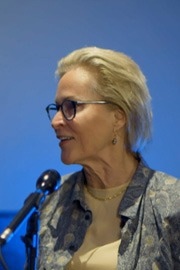 Technology and director of the Donna and Benjamin M. Rosen Bioengineering Center. Her research spans enzyme design and evolution, biocatalysis, protein engineering, synthetic biology, and AI/ML-guided protein engineering. At Caltech, she leads a laboratory that pioneered directed evolution methods for enzymes and continues to develop new approaches for creating and optimizing biocatalysts. Arnold earned a BS from Princeton University and a PhD from the University of California, Berkeley. Her work was recognized with the 2018 Nobel Prize in Chemistry.
About Pittcon
Pittcon is North America’s largest conference and exposition in laboratory science, attracting thousands of industry, academia, and government attendees and exhibitors from around the world in. Pittcon goes beyond the typical conference; it's a global community dedicated to advancing science through education, collaboration, and philanthropy. By bringing together scientists, researchers, educators, students, and industry leaders, Pittcon creates opportunities to learn, connect, and inspire innovation. Beyond the event itself, more than 90% of Pittcon's net proceeds support science education and outreach initiatives locally and globally, funding scholarships, grants, STEM programs, laboratory improvements, and other efforts that strengthen communities and expand access to science.
Pittcon delivers world-class educational and professional development opportunities through its Technical Program, Short Courses, and Networking Workshops and Roundtables. Attendees can explore the latest scientific research through symposia, oral and poster presentations, enhance their skills with expert-led deep-dive courses, and connect with peers through interactive workshops and networking experiences designed to foster collaboration and career growth.
The Pittcon Expo brings the scientific community together in an immersive environment where attendees can discover the latest laboratory technologies, meet with leading instrument and service providers, and experience science in action. Beyond the exhibit booths, the Expo Floor features engaging attractions, educational experiences, demonstrations, and networking spaces, while receptions, parties, and social events create opportunities to build lasting connections with colleagues from around the world.
 Pittcon addresses synthetic psychedelics crisis; Boston 2025 to advance collaboration