In this interview, News Medical-Life Sciences speaks with Dr. Laura Ajram, Chief Executive of the British Neuroscience Association (BNA), about her career in neuropharmacology, the importance of patient involvement in neuroscience research, and the role of cross-sector collaboration in advancing drug discovery. Dr. Ajram discusses how her experience across academia, industry, healthcare, and the charity sector has shaped her leadership approach and her view of the challenges facing neuroscience research.
 Image credit: meeboonstudio/Shutterstock.com
Can you please introduce yourself and tell us about your neuroscience background and your role at the British Neuroscience Association?
My original training was in pharmacology. I studied Pharmacology at King's College London, including a year in industry at GlaxoSmithKline (GSK). That experience first got me interested in working with pharmaceutical companies and understanding how research translates into drug discovery.
I then went on to do a PhD in neuroscience, specifically looking at the neuropharmacology of autism spectrum disorders. My PhD was jointly based at King's College London and Eli Lilly, giving me a strong balance between academic and industry research. I was also fortunate that my PhD involved both preclinical and clinical research. That gave me exposure to many aspects of neuroscience and helped shape my career. Rather than moving exclusively into academia or industry, I became interested in working at the intersection of different sectors, bringing together people with different expertise and perspectives to advance research.
As Chief Executive of the British Neuroscience Association, how would you describe your work to someone outside science, and what led you to take on this leadership role?
The British Neuroscience Association, or BNA, is a membership organization that supports neuroscientists throughout their careers, whether they're working in a laboratory, a university, or a clinical setting. We help our members progress in their careers and research through training, networking, events, and opportunities to connect with other people working in neuroscience.
To learn more about the BNA and its membership opportunities, visit the BNA website by clicking here.
As Chief Executive, I lead the strategy behind how we do that. A big part of my role is making sure we support our members in the best way possible, understand what they need, and ensure the events, training, and opportunities we provide are genuinely valuable to them. I also look after the team and oversee the organization's strategic and operational priorities.
I think what attracted me to this type of leadership was my experience working across different sectors. I've always been interested in connecting people and finding ways to bring different groups together to achieve something they might find difficult to do independently.
Your background is in pharmacology and the neuropharmacology of autism spectrum disorders. How has that shaped the way you think about unmet needs and opportunities in neuroscience and mental health?
I was lucky to work with patients early in my career, and that fundamentally shaped how I think about research and drug discovery.
During my PhD, I met people living with the conditions I was researching. That was particularly important in autism because it's such a heterogeneous condition. Everyone I spoke to had different experiences, challenges, and expectations for research. It really highlighted that you cannot take a one-size-fits-all approach, particularly in mental health and neurodevelopmental conditions.
It also showed me how important it is to involve patients, clinicians, caregivers, and people with lived experience right from the beginning of research. I carry that into my work at the BNA. When we plan research initiatives or bring different organizations together, I make sure all those perspectives are represented. We often involve charities representing particular conditions, people working in drug discovery, and clinicians who are seeing patients every day. We need to understand the individuals we're trying to help and what they actually want from research, rather than assuming what would be most beneficial.
 Image credit: Pressmaster/Shutterstock.com
You've worked across academia, the NHS, charities, and industry. Is there a specific lesson that most strongly influences how you now lead a national neuroscience organization?
One of the biggest lessons I've learned is that people can believe they're working towards the same goal but have very different expectations of what success looks like. For example, in an academic-industry partnership, everybody might agree on the overall scientific objective. However, when you speak to the different partners, you often find their priorities differ slightly. The academic researchers might be particularly interested in publishing a paper or investigating a specific scientific question. The industry partners might be focused on understanding the underlying biology as quickly as possible so they can decide whether to progress a drug discovery program.
Neither approach is necessarily wrong. They're just different motivations, and understanding those motivations is really important. I think that has shaped how I approach leadership and partnerships. I try to understand what people are actually trying to achieve, what they need, and how the BNA can best support them.
It's about having those conversations early, communicating clearly across groups, and making sure everyone understands what they're working toward. Sometimes everyone wants to reach the same destination, but some want to get there as quickly as possible, while others want to explore something unexpected and interesting along the way. Both approaches can be valuable, but the key is understanding those expectations from the start.
The ELRIG Early Career Impact Award recognized your work's influence on the drug discovery community. Looking back, which decision or aspect of that program do you think made the biggest difference, and why?
When I received the award in 2021, I was a Program Manager at Medicines Discovery Catapult, and I received it for setting up the Psychiatry Consortium - a cross-sector partnership involving 8 international organisations. What was really unusual at the time was that the award had traditionally recognised scientists for delivering research projects or achieving scientific breakthroughs, rather than individuals who enabled those projects to happen. I think ELRIG recognizing a program manager was transformational for several reasons.
Firstly, it showed me that what I was doing was a career in its own right and that it was valued. I was working at the intersection of different groups, not necessarily driving the science myself, but being the glue that brought everything together. Having that recognized mattered, and it helped set me up for a career doing similar things in other roles.
I also think it sent an important message to other early-career professionals: there are lots of different career opportunities for people with a research background. At the time, career options could still feel quite binary. You either went into industry or stayed in academia and worked toward becoming a professor, but many other roles let people with scientific backgrounds make a real difference. During my PhD, I didn't know what a program manager was. Before that role, I worked as a translational research facilitator, and I'd never even heard those words before I saw the job description, but I remember reading it and thinking that these were exactly the things I wanted to do.
Sharing those opportunities with others through the award was really valuable. I think early-career researchers should understand they can contribute to science in many ways, even if they're not the person conducting the experiments.
How important is it to align academia, industry, and healthcare sectors to help scientific discoveries progress?
One of the most important things is understanding each partner's goals and aligning everyone from the start. Different organizations can have different priorities, even when they're working towards the same scientific objective. Academic researchers, industry partners, and clinicians might all approach a project from slightly different perspectives. That's why communication and understanding those motivations are so important.
I think there's enormous value in bringing together people with different expertise, particularly when you're trying to progress research towards something that could eventually benefit patients. My experience working across pre- and clinical research, as well as academia and industry, has shown me how important those connections are. It's about involving the right people, including patients and those with lived experience, rather than thinking about research in isolation.
As CEO, what new partnerships would you most like the BNA to initiate or deepen in the coming years?
This is really important to me. We describe ourselves as the voice of neuroscience in the UK, and I'd like the BNA to be involved in every major neuroscience initiative. It's amazing that so many research institutions, companies, and other organizations want to invest in neuroscience and start new projects. But I think one of the risks is that we end up duplicating effort.
When the landscape is disconnected, funding can go into research that others already know hasn't worked, or two groups can work on the same thing independently without knowing about each other. I'd really like the BNA, as a national organization, to become a central point of knowledge about what's happening across neuroscience in the UK. We try to work with as many groups as possible and build partnerships with major initiatives to make sure the right people are involved.
 Image credit: PeopleImages/Shutterstock.com
I'd also like there to be somewhere people can go when they're looking at the UK neuroscience landscape and want to understand what's happening. For example, if somebody wanted to know what's happening in motor neuron disease research, I'd like us to be able to point them towards the key researchers, the major initiatives, the funding opportunities, and the organizations working in that area.
Essentially, I'd like the BNA to become a central hub that connects all those different activities. There's already so much happening, which is fantastic, but that also makes it quite challenging to bring everything together. That's something I'd really like us to work towards.
What role do you see the BNA playing in shaping public and policy conversations, and how might that differ from what individual researchers can achieve alone?
We have prizes recognizing excellence in public engagement, and we use them to platform people doing this work particularly well. It's important to recognize researchers who communicate their science and involve the public, and to share their experiences so others can learn from them. We recently held a webinar with Alzheimer's Research UK for researchers on how to engage the public and involve people in their research.
We also have policy work and initiatives under our Credibility in Neuroscience program to ensure neuroscience research is as credible, reproducible, and reliable as possible. Part of that is knowing the information we communicate is reliable and understandable to the public. Historically, I think we've done a lot as a research community to make sure patients understand the research happening in areas relevant to them. But there's also a much broader general public who might only start engaging with neuroscience when something directly affects them or somebody they know.
We work with other organizations, including medical and mental health charities, to support public engagement and help make neuroscience research more accessible. The BNA plays an important role in bringing that work together and communicating neuroscience in a way people can understand and trust.
What would you most like people to say has changed at the BNA because of your time as Chief Executive?
My goal has always been for the BNA to truly represent the UK's neuroscience community. I'd love people to say that what started many years ago as an organization primarily for academics is now still supporting academics, but also includes and supports people working in industry, the NHS, the commercial sector, charities, and policy. I want us to represent and support anyone working in neuroscience.
What keeps you personally inspired and optimistic about the future of brain research, despite the complexity and long timelines involved?
There have been some really exciting breakthroughs recently that are incredibly inspiring. I don't think it's unreasonable to hope that we could see a cure for Alzheimer's within our lifetime. Previous generations might never have imagined the progress we're seeing today. We're now seeing new treatments being licensed that can slow the progression of the disease, and that's an incredible milestone. It demonstrates the impact of foundational research that scientists have been carrying out in laboratories for decades, and how that work can ultimately translate into meaningful advances for patients.
We're also seeing major national partnerships and government initiatives publicly backing this work. There's significant investment going into dementia research and neurodegenerative diseases, and we're seeing these big partnerships where industry, government, and research charities are all bringing their funding and expertise together. That's really exciting because we've moved from a historically siloed landscape to much more collaborative work. And we're beginning to see the impact of that, with research translating into potential treatments more quickly.
What upcoming BNA events or initiatives would you particularly encourage the neuroscience community to get involved with?
We've got the International Festival of Neuroscience coming up in Belfast in April 2027. It's going to be an amazing conference, bringing together up to 1,000 neuroscientists from different backgrounds and research interests. We've got some fantastic speakers, and I think it'll be a really exciting event. We hold the festival every two years in different locations around the UK. The previous event was in Liverpool in 2025, and the one before that was in Brighton in 2023.
For more information and to register for 'BNA2027 International Festival of Neuroscience in Belfast', click here
We're also hosting the Federation of European Neuroscience Societies Forum in 2028, another exciting opportunity. It's a huge international conference that brings together thousands of delegates, and we're really looking forward to it.
I think both events are fantastic opportunities for people across neuroscience to connect, share their research, and build new collaborations.
Where can readers find more information?
About Dr. Laura Ajram
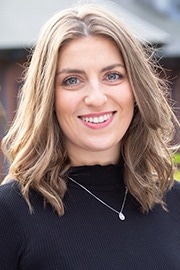
Dr. Laura Ajram is Chief Executive of the British Neuroscience Association, where she leads the organization's vision, strategy, and operations, supporting neuroscientists across academia, healthcare, industry, and the charity sector.
She holds a BSc in Pharmacology from King's College London, which included an industrial placement at GlaxoSmithKline, and a PhD in Translational Neuropharmacology from King's Institute of Psychiatry, Psychology & Neuroscience, where she investigated autism spectrum disorders.
Throughout her career, Dr. Ajram has worked at the intersection of academic research, pharmaceutical development, and healthcare, developing collaborations to advance neuroscience drug discovery. Before joining the BNA in 2023, she worked as a Translational Research Facilitator at the University of Manchester and as Programme Manager at Medicines Discovery Catapult, where she established and managed the Psychiatry Consortium, bringing together pharmaceutical companies, academic institutions, and medical charities to accelerate mental health drug discovery.
In recognition of this work, she received the ELRIG Early Career Impact Award in 2021 and was elected a Fellow of the British Pharmacological Society in 2022. She also serves on the ELRIG Board, supporting scientific partnerships and recognition across the drug discovery community.
 A loneliness trial puts personalized nature-based support on the research agenda