Introduction
Which foodborne pathogens can survive processing?
How does temperature influence microbial survival?
How do salt, acidity, and moisture affect foodborne pathogens?
Bacterial stress responses and dormancy
Biofilms and cross-contamination in food processing
How do food processing technologies control microorganisms?
Preventing persistent microbial contamination
References
Further reading
What happens to foodborne bacteria when they encounter freezing, drying, or heat? Research examines the cellular responses and food conditions that shape their fate.
 Image Credit: Corona Borealis Studio / Shutterstock.com
Introduction
Food processing and preservation aim to prevent microbial growth, reduce contamination, and extend shelf life. Some foodborne pathogens may remain viable after freezing, refrigeration, drying, and other preservation techniques.
Microbial survival depends on the specific organism, food properties, environmental conditions, and stresses encountered during processing and storage. Survival does not necessarily mean bacteria are multiplying, and the absence of detectable growth does not always indicate complete inactivation. Understanding these differences is necessary to design effective food safety strategies and prevent persistent contamination throughout the food supply chain.1,2,3
Which foodborne pathogens can survive processing?
Several foodborne pathogens can withstand conditions commonly encountered during food processing and storage. Salmonella can persist in dry foods, including low-water-activity products, while Listeria monocytogenes tolerates refrigeration, salt, acidic conditions, and desiccation. Pathogenic Escherichia coli, including serotype O157:H7, can also remain viable in food environments for extended periods.
The survival duration depends on the pathogen, food matrix, and environment, with bacterial survival and persistence ranging from several days to more than a year. While survival means continued viability, persistence is defined as repeated isolation over at least three months with the same molecular or genetic characteristics. These durations reflect different organisms and study conditions, rather than a universal survival timetable.1,2,3
Spore-forming bacteria present a distinct challenge because they can produce resistant structures that withstand environmental stresses more effectively than actively growing cells. Bacterial spores are biologically distinct from dormant or viable but non-culturable (VBNC) vegetative cells. These states involve different biological mechanisms and responses to processing.
Treatment effectiveness also depends on the organism's inherent resistance and physiological condition before exposure. A processing method that substantially reduces one pathogen may have a different effect on another, making organism-specific validation important for food safety.1,4,6
 Image Credit: industryviews / Shutterstock.com
How does temperature influence microbial survival?
Temperature affects microbial growth, survival, and inactivation in different ways. Refrigeration slows the multiplication of many microorganisms but does not eliminate all pathogens.
Listeria monocytogenes can grow at refrigeration temperatures, posing risks in ready-to-eat foods that receive no further bactericidal treatment. Other pathogens may remain viable without multiplying; therefore, refrigeration controls growth, rather than sterilizing.1,3,5
Freezing also does not guarantee pathogen elimination. L. monocytogenes and Salmonella Typhimurium, for example, have survived better in mutton juice than in beef or goat juice models during storage at −20 °C for up to 60 days. L. monocytogenes showed greater survival during freezing, while both bacteria exhibited increased cell-surface hydrophobicity and acid resistance over time. Bacterial counts declined during storage, demonstrating that survival did not mean freezing left the populations unaffected. These findings highlight how food composition influences microbial survival.3
Heat treatments, including pasteurization, reduce microbial hazards, though their effectiveness depends on temperature, exposure duration, bacterial physiology, and food composition.4
How do salt, acidity, and moisture affect foodborne pathogens?
Salt, sugar, and drying preserve food by reducing water availability or creating osmotic stress. Water activity describes how available water is to microorganisms, not a food's total moisture content.
Increasing solute concentration or removing water can hinder bacterial multiplication; however, not all pathogenic microorganisms die. In fact, some pathogens like Salmonella can remain viable in dry foods.1,2
Under osmotic and desiccation stress, Salmonella activates protective responses that change gene expression, membrane composition, and metabolism. Salmonella also accumulates compatible solutes, small molecules that help cells retain water without disrupting normal cellular functions, including trehalose, proline, and betaine. These adaptations support survival during drying and exposure to concentrated salt or sugar solutions. Persistence depends on stress intensity, exposure duration, and food composition.2
Acidic conditions can inhibit bacterial growth or inactivate cells, though some pathogens tolerate acid exposure. For example, acid resistance in Listeria monocytogenes and Salmonella Typhimurium appears to rise with longer freezing periods, particularly in mutton juice for L. monocytogenes. In this study, resistance was assessed by determining the minimum concentrations of acetic and lactic acid needed to inhibit or kill the bacteria.3
Food components, including proteins, fats, and salts, can modify microbial responses to preservation. Laboratory findings may not fully reflect pathogen behavior in actual foods; therefore, strategies involving acidity, salt, or drying require validation in the intended food matrix.1,2,3
 Image Credit: Yuliiaulia / Shutterstock.com
Bacterial stress responses and dormancy
Foodborne bacteria adapt to unfavorable conditions by modifying gene expression, regulating metabolism, repairing cellular damage, and altering their structures. Under drying and osmotic stress, Salmonella changes membrane properties, accumulates protective compounds, and adjusts metabolic activity, enabling it to persist in low-moisture environments even when active growth is restricted.2
Stress responses can also produce cross-protection, whereby exposure to one adverse condition increases tolerance to another. Osmotic or desiccation stress may increase resistance to heat and disinfectants, while freezing can alter bacterial surface characteristics and acid resistance.
Previous environmental exposure and cellular physiology can influence how pathogens respond to subsequent processing treatments. In general, these effects vary by organism and exposure conditions, as stress does not always increase resistance.2,3,4
Non-thermal treatments, including high-pressure processing, pulsed electric fields, and cold atmospheric plasma, may induce VBNC states in some microorganisms, complicating culture-based detection. Evidence for VBNC induction by pulsed electric fields is inconsistent across studies. Unlike bacterial spores, which are specialized resistant structures, VBNC cells are vegetative cells that cannot be cultured under the conditions used.6
Reduced colony counts do not always confirm complete microbial inactivation. Food safety assessments should consider cellular injury, altered culturability, and limitations of detection methods. Culture methods can be supplemented with tests of membrane integrity or metabolic activity; however, these measurements alone do not establish infectivity.1,6
Biofilms and cross-contamination in food processing
Microorganisms can be found on equipment, conveyor belts, and other food-contact surfaces, as well as in drains within food-processing environments. Some bacteria attach to these surfaces and form biofilms, which are communities of microorganisms embedded in a surrounding matrix.
Biofilms can protect bacteria from environmental stresses and reduce their susceptibility to antimicrobials, but they are not immune to treatment. Established biofilms may remain as contamination reservoirs after the original contamination event ends, particularly in hard-to-clean areas.1,2,5
Cross-contamination can occur when contaminated surfaces contact food or when microorganisms are transferred through equipment and handling practices. Ready-to-eat products are particularly vulnerable because they may not undergo another treatment that can eliminate pathogens before consumption. Effective sanitation, hygienic equipment design, and attention to hard-to-reach surfaces help limit microbial persistence and prevent contamination from recurring throughout production.1,5
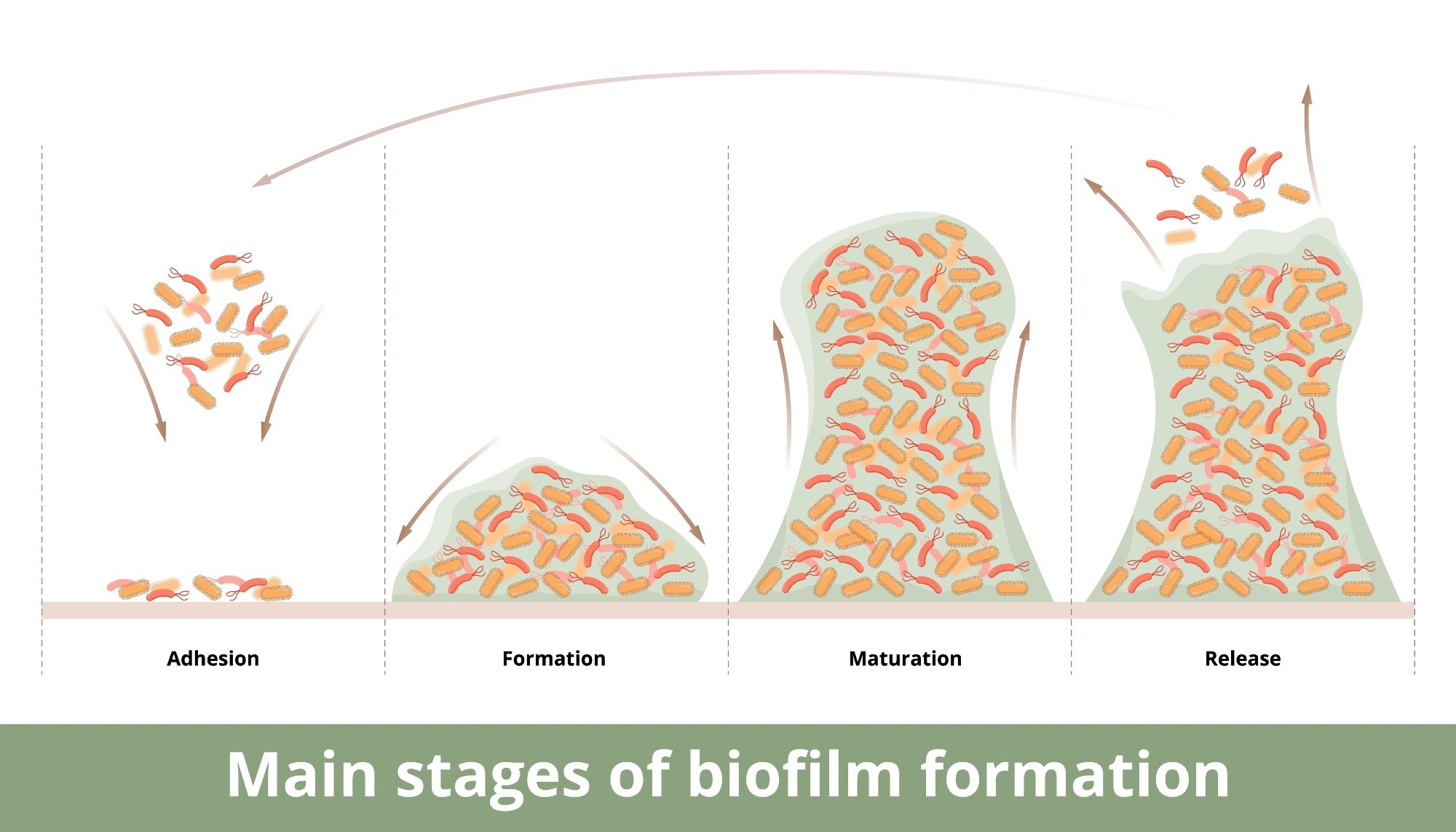 Image Credit: Olha Pohrebnyak / Shutterstock.com
How do food processing technologies control microorganisms?
Traditional methods like pasteurization reduce targeted pathogens when validated temperature and time conditions are achieved; however, they do not necessarily eliminate all microorganisms or resistant spores. Heating can also reduce heat-sensitive nutrients and change color, consistency, and taste.
Bacteria show different heat resistance levels depending on strain, physiological state, and food matrix. Thus, process validation is necessary to ensure adequate microbial control.4,6
Non-thermal technologies offer alternatives that may better preserve food quality. High-pressure processing, pulsed electric fields, cold atmospheric plasma, high-pressure carbon dioxide, and ultrasound use different mechanisms to damage microorganisms. For example, pulsed electric fields disrupt cell membranes by forming pores, cold atmospheric plasma generates reactive species, and ultrasound produces cavitation (the formation and collapse of bubbles) that can damage cells.
The effectiveness of these methods depends on treatment intensity, duration, pathogen characteristics, and food composition. Bacterial spores are generally more resistant to ultrasound than vegetative cells, and researchers often combine ultrasound with other treatments to improve microbial inactivation.6
Food components and uneven exposure can limit non-thermal treatment performance. Combining complementary preservation methods may improve microbial control, but the combined treatment must be assessed for both microbial reduction and the possibility of surviving injured or VBNC cells.6
How to prevent cross contamination
Preventing persistent microbial contamination
Preventing persistent contamination requires validated processing, appropriate storage, effective sanitation, hygienic equipment design, and environmental monitoring. Food manufacturers should consider pathogen-specific resistance, the protective effects of food composition, and the possibility that stress exposure may alter subsequent microbial behavior.
Monitoring must address both survival through processing and contamination introduced afterward, as no single preservation measure can address every hazard under all conditions. An integrated approach, supported by product-specific validation and consistent hygiene practices, offers a stronger basis for reducing contamination and protecting consumers.1,3,5,6
References
- Donkor, E. S., Sosah, F. K., Odoom, A., et al. (2025). How long do microorganisms survive and persist in food? A systematic review. Microorganisms. 13(4). DOI: 10.3390/microorganisms13040901. https://www.mdpi.com/2076-2607/13/4/901
- Oliveira, M. M., Amorim-Neto, D. P., & Sant'Ana, A. S. (2026). How Salmonella works under osmotic and desiccation stresses. Comprehensive Reviews in Food Science and Food Safety. 25(3). DOI: 10.1111/1541-4337.70439. https://ift.onlinelibrary.wiley.com/doi/10.1111/1541-4337.70439
- Kaboudari, A., & Aliakbarlu, J. (2025). Effects of freezing period and meat juice model type on the survival, hydrophobicity, and acid resistance of Listeria monocytogenes and Salmonella Typhimurium. BMC Microbiology. 25. DOI: 10.1186/s12866-025-04039-8. https://link.springer.com/article/10.1186/s12866-025-04039-8
- Guillén, S., Fernández, P. S., O'Byrne, C., & Garre, A. (2025). The stressosome and SigB influence the baseline thermal resistance but not dynamic adaptation of Listeria monocytogenes: Insights from kinetic modelling. Food Research International 221(1). DOI: 10.1016/j.foodres.2025.117165. https://www.sciencedirect.com/science/article/pii/S0963996925015030
- Nogueira, R. A., Rodríguez-Herrera, J. J., López-Carmona, J. L., et al. (2025). A formal analysis of Listeria monocytogenes cross-contamination dynamics in multispecies biofilms. npj Science of Food 9. DOI: 10.1038/s41538-025-00535-3. https://www.nature.com/articles/s41538-025-00535-3
- Wu, Y., Li, X., Ma, X., et al. (2025). The effect of non-thermal processing on the fate of pathogenic bacteria and hidden hazardous risks. Foods 14(13). DOI: 10.3390/foods14132374. https://www.mdpi.com/2304-8158/14/13/2374
Further Reading
Last Updated: Oct 25, 2026